
Botox under eyes how many units: 1-2 Unit Smooth Guide
Why Understanding Botox Units for Under-Eyes Matters
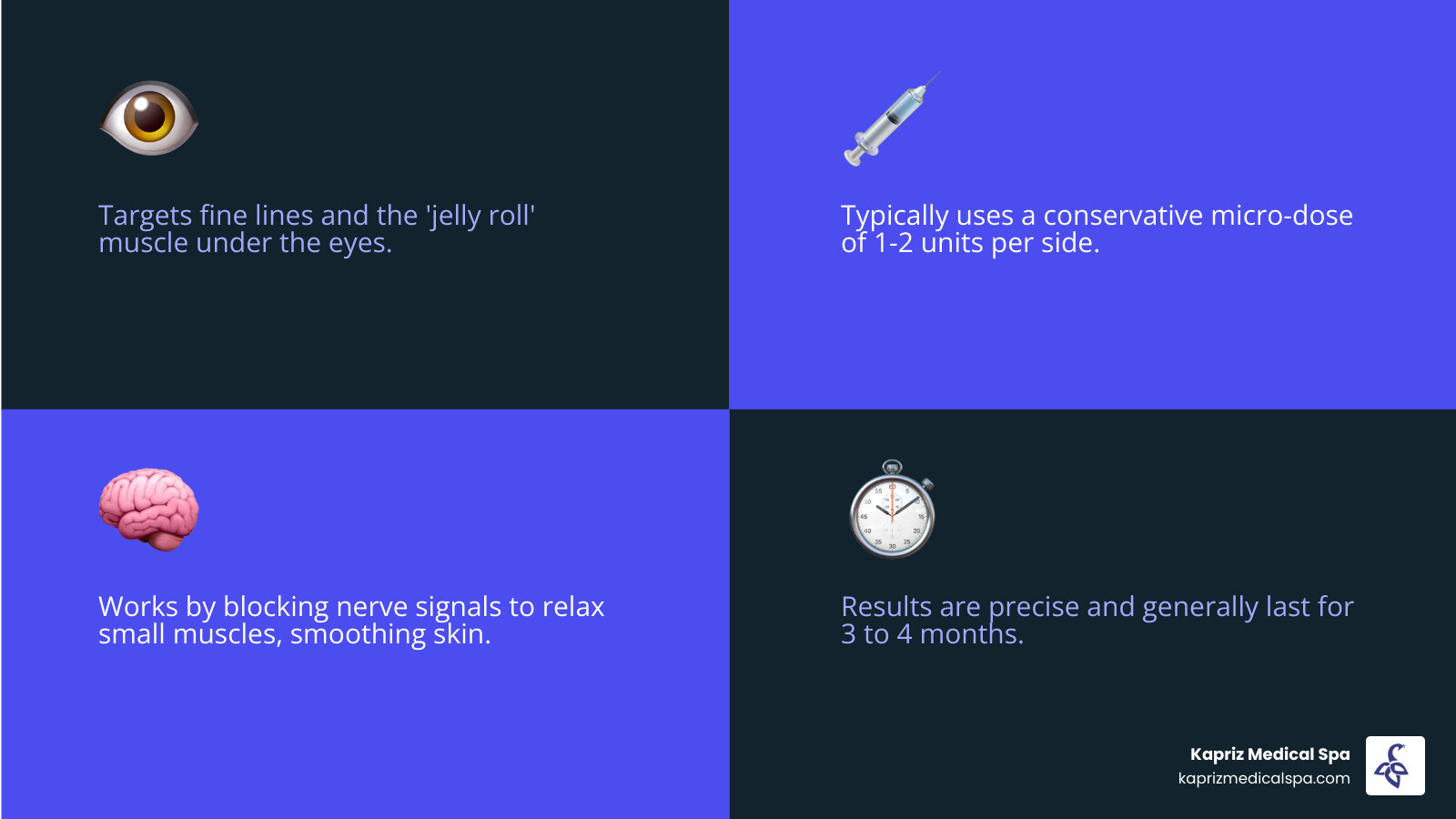
When considering botox under eyes how many units you’ll need, the answer is typically 1-2 units per side. This small dosage reflects the delicate nature of the under-eye area and the need for a precise, conservative approach.
Quick Answer for Under-Eye Botox Units:
- Typical dosage: 1-2 units per side (2-4 total units)
- Treatment area: Fine lines directly under the eyes
- Approach: Conservative, starting small
- Duration: 3-4 months
- Cost range: $200-$600 depending on location and provider
The under-eye area is unique. While the forehead may require 10-30 units or crow’s feet need 10-15 units per side, under-eye treatments demand maximum precision and restraint. This conservative approach is key to avoiding complications like eyelid drooping or an unnatural appearance.
Under-eye Botox works by relaxing the small muscles beneath the lower eyelid that create fine lines when you smile or squint. It’s important to know this is an off-label use—meaning it’s not FDA-approved specifically for this area, but it is widely and safely practiced by experienced injectors.
The treatment can address the “jelly roll” effect—the slight muscle bulge that appears under the eye when you smile. However, it will not help with under-eye bags caused by fat deposits or dark circles from pigmentation issues.
Botox under eyes how many units vocab explained:
- How Many Units Are Used for Botox?
- How to Know How Many Units of Botox You Need
- How Many Units of Botox Are Used for Crow’s Feet?
Understanding Botox for the Delicate Under-Eye Area
Botox is a brand name for botulinum toxin, a neurotoxin used in popular cosmetic treatments. It functions by blocking nerve signals that cause muscle contraction. For the under-eye area, this muscle relaxation smooths the overlying skin, reducing the appearance of wrinkles.
This is especially effective for dynamic wrinkles—the lines that appear with facial expressions like smiling or squinting. While Botox is FDA-approved for the forehead, frown lines, and crow’s feet, its use for the under-eye area is considered an off-label use. This means that while not specifically approved for this purpose, experienced practitioners have found it to be safe and effective through clinical practice.
If you’re curious about the specifics of botox under eyes how many units you might need, our detailed guide on Botox for Under Eyes: How Many Units? covers everything. You can also learn more about the broader FDA-approved uses for cosmetic treatments to understand the full scope of what Botox can do.
Can Botox Help with Under-Eye Bags or Dark Circles?
It’s important to understand the limitations of Botox for under-eye concerns. It is not a solution for every issue.
Under-eye bags are typically caused by shifting fat pads, fluid retention, genetics, or loss of skin elasticity. Since Botox only relaxes muscles, it cannot address these under-eye bags causes. In some cases, too much Botox can worsen the appearance of bags by over-relaxing the supportive muscles.
Similarly, Botox does not treat dark circles. The common dark circles causes are thin skin showing blood vessels, pigmentation, or shadowing from volume loss in the tear trough area. Botox isn’t designed to address these root causes.
For these concerns, dermal fillers as an alternative can be very effective for addressing volume loss and hollowing. Often, the best results come from combined treatments: Botox to smooth dynamic lines and fillers to restore volume. You can explore our More info about Dermal Fillers services to see how these treatments might complement each other.
Benefits of Under-Eye Botox
When used correctly, under-eye Botox offers several benefits to refresh your appearance:
- Reduces fine lines: The primary benefit is the reduction of delicate creases that form under the eyes when you smile or squint.
- Smooths “jelly roll” muscle: It effectively smooths the small muscle bulge that can appear under the eye during a big smile.
- Creates a wider, more awake look: By softening the area around the eyes, the treatment can help you appear more rested without altering your natural expression.
- Minimally invasive and quick: The procedure takes less than 15 minutes and requires no downtime, making it a true “lunchtime treatment.”
The goal is always a natural result that leaves you looking like the most refreshed version of yourself.
How Many Units of Botox for Under Eyes Are Typically Needed?
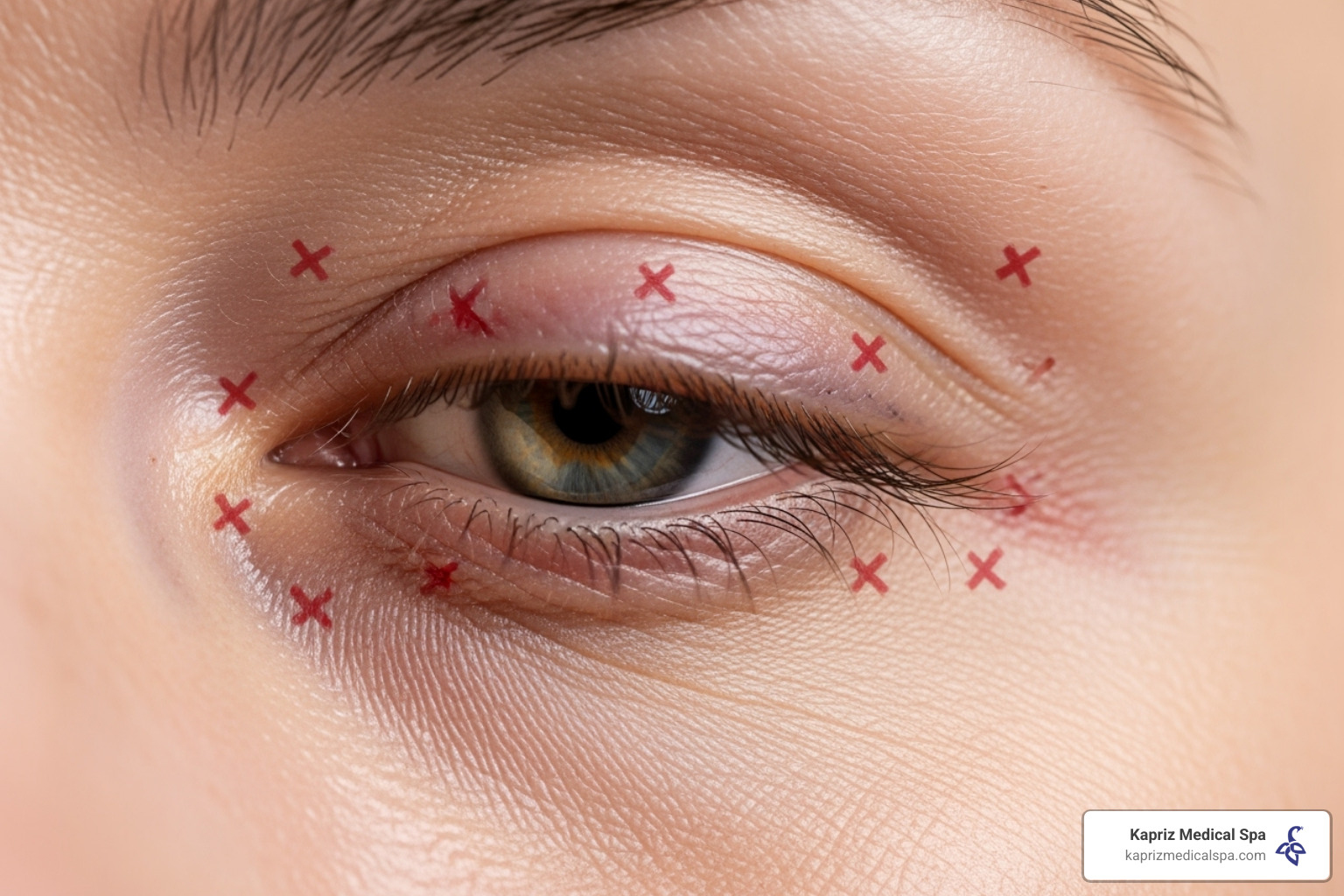
When you’re wondering botox under eyes how many units you’ll need, the answer requires a personalized approach based on several factors:
- Muscle strength: Stronger muscles may require slightly more units.
- Severity of wrinkles: Deeper lines may need a higher dose than very fine lines.
- Metabolism: A faster metabolism can affect how long your results last.
- Individual anatomy: Your unique muscle structure and movement are key.
- Personal goals: Your desired outcome guides the treatment plan.
At Kapriz Medical Spa, we take the time to understand these unique factors for each client. You can learn more about our personalized approach on our page about How to Know How Many Units of Botox You Need.
The Typical Dosage: How many units of botox for under eyes
The “less is more” philosophy is crucial for the under-eye area. The typical dosage is just 1-2 units per side (2-4 total units). This micro-dose is key to a safe and effective treatment, gently relaxing the muscles causing fine lines without affecting natural expressions.
Higher dosages, such as 8-10 units per eye, typically include treatment for adjacent areas like crow’s feet. We always start with a conservative dose, especially for first-time patients. We can add more at a follow-up, but we can’t remove it, which helps prevent unwanted side effects like puffiness or drooping.
For a deeper understanding of how Botox works and what to expect, check out our comprehensive guide: Botox Basics: Your Guide to Youthful Skin.
How Does This Compare to Crow’s Feet and Forehead Wrinkles?
The difference in dosage highlights how delicate the under-eye region is. Here’s a quick comparison:
| Treatment Area | Typical Units Per Side | Total Units | Why the Difference? |
|---|---|---|---|
| Under-Eyes | 1-2 units | 2-4 units | Tiny, delicate muscles requiring precision |
| Crow’s Feet | 6-15 units | 12-30 units | Larger, more active muscles |
| Forehead Lines | N/A | 10-30 units | Big muscle group across entire forehead |
| Frown Lines (“11s”) | N/A | 10-40 units | Very strong muscles between brows |
The dosage difference is due to anatomy. The muscles causing crow’s feet and forehead lines are much larger and stronger than the delicate muscles under the eyes. Safety is also paramount, as the proximity to important eye structures means over-injection carries higher risks, making a gentle approach essential.
If you’re curious about how we approach crow’s feet treatment, you can learn more at More info about Botox for Crows Feet.
What is the Estimated Cost for Under-Eye Botox?
Because under-eye Botox requires so few units, it is one of the more affordable Botox treatments. Practices typically charge per unit of Botox, with prices from $10 to $20. For the 2-4 units needed, the total cost per session usually falls between $200 and $600.
Factors influencing the price include geographic location and the practitioner’s experience and credentials. Investing in a highly trained provider is crucial for safety and results in this delicate area. Some practices also offer package deals when you combine treatments.
We always recommend focusing on the value and quality of the provider, as skill and precision are critical for this treatment. For detailed pricing information specific to our Jacksonville location, visit our Botox Cost Jacksonville FL page.
The Under-Eye Botox Journey: From Prep to Results
Understanding the under-eye Botox journey, from consultation to final results, helps you feel confident and prepared.

The consultation is a crucial first step. We assess your facial muscles, discuss your goals, and determine the appropriate number of botox under eyes how many units you’ll need. We will also review your medical history to ensure you are a good candidate. The procedure itself is quick, typically lasting less than 15 minutes. Results appear gradually, with initial improvements in a few days and the full effect visible in about two weeks.
Who is a Good Candidate and How to Prepare?
The best candidates are healthy adults over 18 with dynamic wrinkles (lines that appear with expression) and good skin elasticity. You should also have realistic expectations. Treatment should be avoided if you are pregnant or breastfeeding.
To prepare for your appointment and minimize potential bruising, you should:
- Avoid blood thinners like ibuprofen, aspirin, and fish oil for about a week prior.
- Skip alcohol for 24-48 hours before your visit.
- Pause harsh skincare products like retinols and strong acids in the treatment area.
- Arrive well-hydrated and avoid intense sun exposure.
The Procedure, Aftercare, and Potential Side Effects
During the procedure, the area is cleansed, and a very fine needle is used to inject small amounts of Botox into the targeted muscles. Most clients describe the sensation as a quick pinch.
For aftercare, it’s important to follow these guidelines for the first 24 hours:
- Avoid rubbing or touching the treated area to prevent the Botox from migrating.
- Skip strenuous exercise for the day.
- Keep your head liftd for the first four hours.
- Use Tylenol for any discomfort, but avoid ibuprofen, which can increase bruising.
Potential side effects are typically mild and temporary, including mild swelling, redness, or small bruises. A more serious, though rare, side effect is eyelid drooping, which results from improper injection. This highlights the importance of choosing an experienced injector. Contact your provider immediately for any significant drooping or vision changes. The American Academy of Ophthalmology provides excellent information about the science behind the treatment.
How Long Do Results Last?
Under-eye Botox typically lasts three to four months. Longevity can vary based on individual factors like a fast metabolism, intense exercise, and stronger facial muscles, which can cause results to fade sooner. With consistent treatments, many clients find their results start lasting longer.
Scheduling follow-up appointments every 3-4 months is recommended to maintain your results. If you’re just starting your Botox journey, you might find our guide on How Many Units of Botox for the First Time? helpful.
Frequently Asked Questions about Under-Eye Botox
We understand that considering botox under eyes how many units for the first time can bring up many questions. Here are the most common concerns we hear from our clients, with straightforward answers.
How many units of botox for under eyes is considered safe?
For safety, a conservative approach is essential. A safe dose is 1-2 units per side (2-4 total). This micro-dose is effective for the small under-eye muscles and minimizes risks like lower eyelid drooping. An experienced injector will start with a low dose, as more can be added at a follow-up if needed, but it cannot be removed once injected.
Will Botox under the eyes make me look unnatural or “frozen”?
No. When administered correctly in small micro-doses (1-2 units per side), under-eye Botox produces a natural, refreshed look, not a “frozen” one. The treatment subtly relaxes the muscles that cause fine lines while preserving your natural expressions. The “frozen” appearance is a result of over-injection or improper placement, which a skilled practitioner will avoid.
How do I find a qualified practitioner for this treatment?
Choosing a qualified practitioner is crucial for safety and results. Look for:
- Credentials: A board-certified dermatologist, plastic surgeon, or a licensed nurse practitioner or physician assistant working under medical supervision.
- Experience: A provider with experience in cosmetic injectables, especially for the delicate under-eye area. Ask to see their before-and-after photos.
- A Conservative Approach: A skilled injector will recommend starting with a low dose and will conduct a thorough consultation to assess your anatomy and discuss your goals.
- Professionalism: A good practitioner will answer all your questions and never make you feel rushed. Investing in expertise is essential for this treatment.
Achieve a Refreshed Look with Expert Care
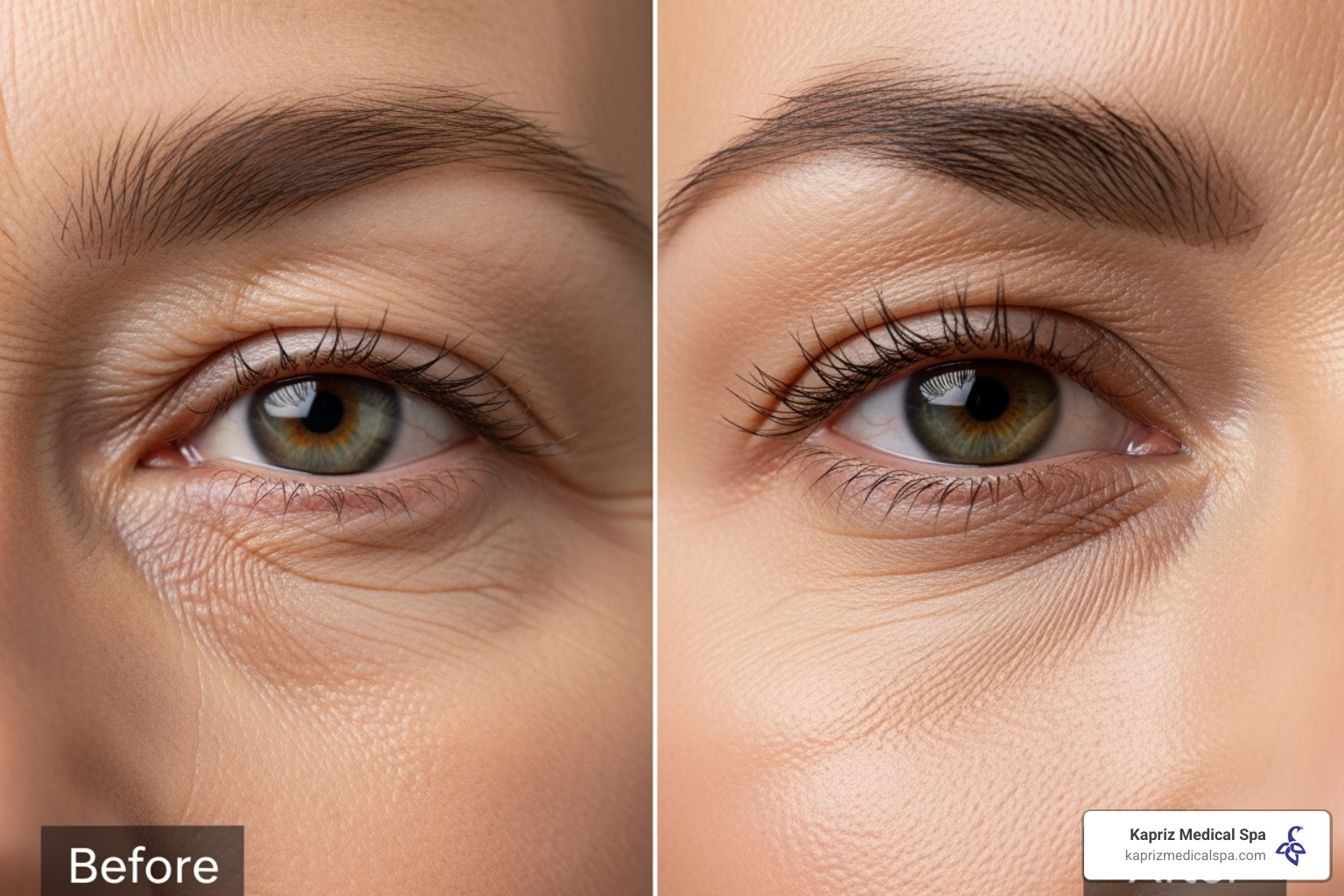
If fine lines around your eyes make you look more tired than you feel, under-eye Botox can help. With a typical dose of just 1-2 units per side, this treatment offers subtle, natural-looking results. It smooths fine lines that appear when you smile, relaxes the “jelly roll” muscle, and creates a more open, awake appearance.
Success depends on expert administration and personalized care. A skilled provider will consider your unique facial anatomy and goals to create a custom treatment plan. This isn’t a one-size-fits-all procedure.
At Kapriz Medical Spa, we specialize in personalized medical aesthetics treatments. Our team focuses on building relationships, understanding your concerns, and creating custom plans to improve your natural beauty with exceptional service. As your partner in this journey, we will carefully assess your facial structure and recommend the precise number of units needed for safe, natural-looking results.
Ready to see how a few tiny units of Botox can help you feel more refreshed and confident? We invite you to explore the possibilities with us.