
How Many Units Are Used For Botox: 7 Powerful Facts 2025
The Complete Guide to Botox Units: Area by Area Breakdown
Wondering how many units are used for botox treatments? Here’s a quick answer:
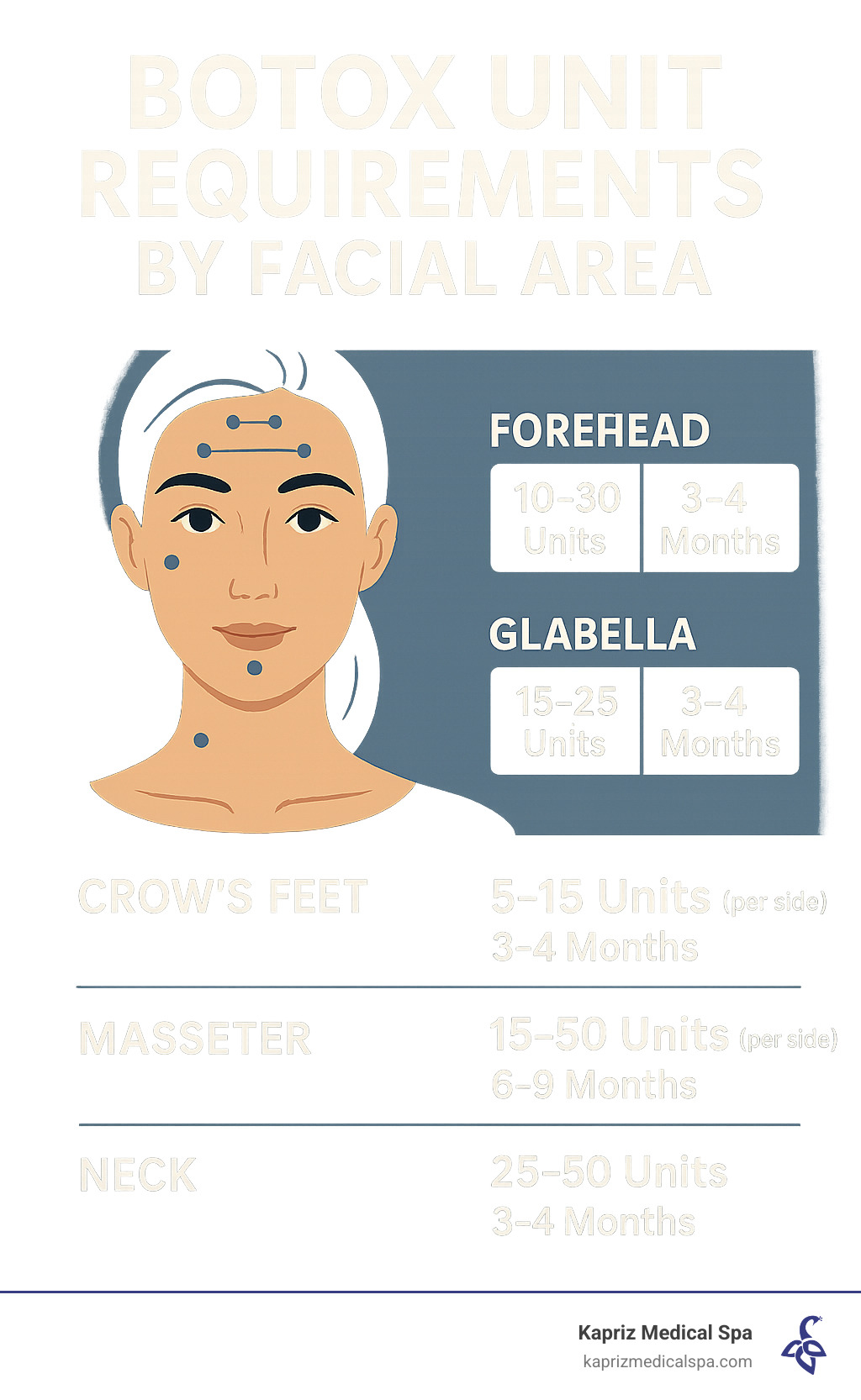
| Treatment Area | Typical Unit Range |
|---|---|
| Forehead lines | 10-30 units |
| Glabellar (11 lines) | 15-25 units |
| Crow’s feet | 5-15 units per side |
| Brow lift | 2-5 units per side |
| Masseter (jaw) | 15-50 units per side |
| Chin | 2-6 units |
| Neck bands | 25-50 units |
When you notice those fine lines becoming more pronounced, Botox can be an effective solution. The number of units needed depends on several factors: treatment area, muscle strength, gender, age, and your aesthetic goals.
Botox is measured in units, with each unit representing a standardized amount of botulinum toxin. A typical treatment session uses between 20-60 units total, spread across different facial areas. Men generally require more units than women due to stronger facial muscles.
At Kapriz Medical Spa, we assess each client individually to determine the precise number of units needed for natural-looking results. Results typically appear within 24-48 hours and last 3-4 months.
How many units are used for botox word list:
– botox for smile lines
– how many units of dysport equal botox
– how many units of jeuveau do i need for lips
What Exactly Is Botox & How Does It Work?
Botox is the brand name for onabotulinumtoxinA, a purified protein derived from Clostridium botulinum bacteria. Despite its bacterial origin, this ingredient has been extensively studied and has an excellent safety record spanning decades.
When injected into specific facial muscles, Botox blocks the neurotransmitter acetylcholine from signaling muscles to contract. This relaxes the muscle, softening wrinkles formed from years of facial expressions.
How many units are used for Botox treatments depends partly on understanding this mechanism—areas with stronger muscles naturally need more units to achieve the desired effect.
The FDA first approved Botox for cosmetic use in 2002, though it had been used medically since the 1970s for eye conditions. Today, it has numerous approved applications beyond wrinkle reduction, including treatment for chronic migraines, excessive sweating, overactive bladder, and muscle spasticity. The scientific research on therapeutic Botox continues to expand its potential uses.
Key FDA-Approved Cosmetic Zones
For cosmetic purposes, the FDA has officially approved Botox for three main facial areas:
- Forehead lines – horizontal creases that appear when you raise your eyebrows
- Glabellar lines – vertical “11” lines between your eyebrows that deepen when you concentrate or frown
- Crow’s feet – radiating lines from the corners of your eyes that show up when you smile
While these three areas have the FDA’s official approval, skilled medical professionals often safely use Botox “off-label” for other cosmetic concerns. At Kapriz Medical Spa, our experienced injectors understand facial anatomy deeply, ensuring beautiful results whether treating FDA-approved or off-label areas.
How Many Units Are Used for Botox: The Core Metric
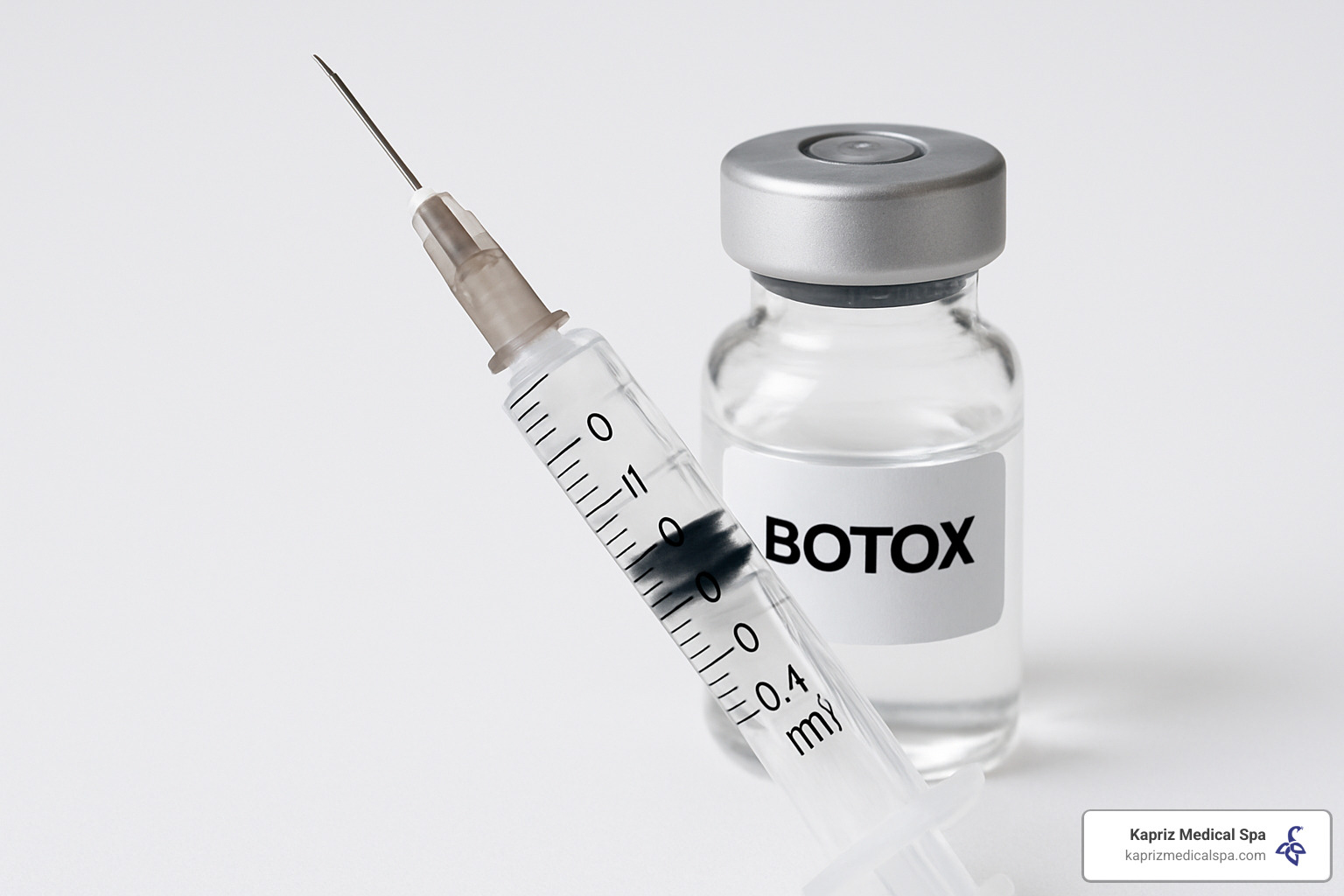
A Botox unit is a standardized measurement based on what scientists call an LD50 study—a precise amount of the active ingredient that creates a specific effect on muscles.
Botox comes in a tiny vial containing 100 units of freeze-dried botulinum toxin powder, which providers mix with saline solution before injection. Each injection typically delivers 2-4 units, not just one. For instance, when treating the “11 lines” between your eyebrows, your provider might make five separate injections with 4 units each, totaling 20 units for the area.
The unit system allows for precision, enabling your injector to customize exactly how many units are used for Botox based on your unique facial structure, muscle strength, and aesthetic goals.
How Many Units Are Used for Botox First Time?
For first-time Botox users, we typically recommend starting conservatively. While experienced users might receive 20-25 units for forehead lines, first-timers often start with 10-15 units. This careful approach helps avoid that “frozen” look that happens with too much Botox.
After your initial treatment, we’ll schedule a follow-up about 2-3 weeks later to assess results and add more units if needed. Many clients appreciate this gradual approach for natural-looking results that still allow for appropriate facial expressions.
More information about first-time dosing
How Many Units Are Used for Botox Under Eyes & Off-Label Spots?
The delicate under-eye area requires a particularly gentle touch. For under-eye treatments, we use extremely conservative dosing—typically just 1-2 units per side to avoid complications like eyelid drooping.
Other popular off-label treatment areas include bunny lines on the nose (5-10 units), lip lines or a subtle lip flip (2-6 units), corners of the mouth (3-6 units per side), and the dimpled chin (4-8 units).
At Kapriz Medical Spa in Jacksonville, our practitioners have extensive training in these specialized techniques, understanding that the perfect number of units varies from person to person.
More information about under-eye Botox
Typical Unit Ranges by Treatment Area
Let’s explore what you can expect when it comes to how many units are used for Botox in different facial areas.
Forehead & Glabella Combo
The forehead and glabella (space between eyebrows) work together, which is why we typically treat them as a unit for natural-looking results.
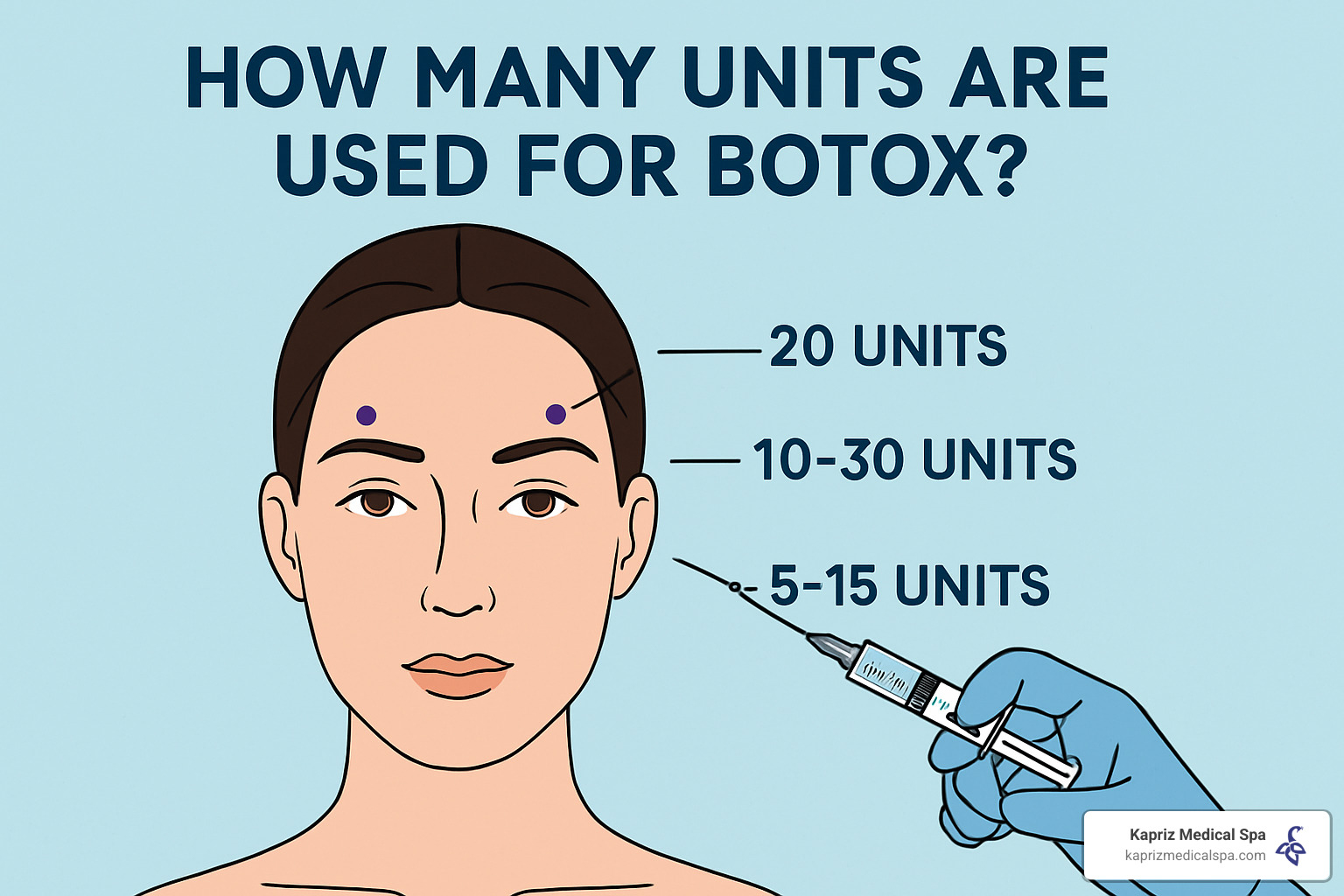
Forehead lines generally need about 10-30 units spread across 5 injection points, while the “11 lines” between your brows usually require 15-25 units distributed among 5 injection sites. Combined, that’s approximately 25-55 units total.
Treating just your forehead without addressing the glabella can create an unbalanced look or cause brow drooping, which is why we carefully balance these treatments.
More information about forehead units
Crow’s Feet & Brow Lift
Crow’s feet typically need 5-15 units per side, with placement following the natural pattern of the orbicularis oculi muscle around your eye.
For a subtle brow lift, we can strategically place 2-5 units per side to relax the muscles pulling your brows down, allowing your natural lifting muscles to give you a refreshed look.
More information about crow’s feet
Lower-Face & Neck Applications
Botox isn’t just for the upper face! Lower face and neck treatments include:
- Jaw muscles (masseters): 15-50 units per side for jaw slimming or TMJ pain relief
- Dimpled “orange peel” chin: 2-6 units
- Vertical neck bands: 25-50 units
- “Lip flip”: 2-6 units placed just above your upper lip
- Gummy smile correction: 2-5 units

Factors That Influence Your Personal Unit Count
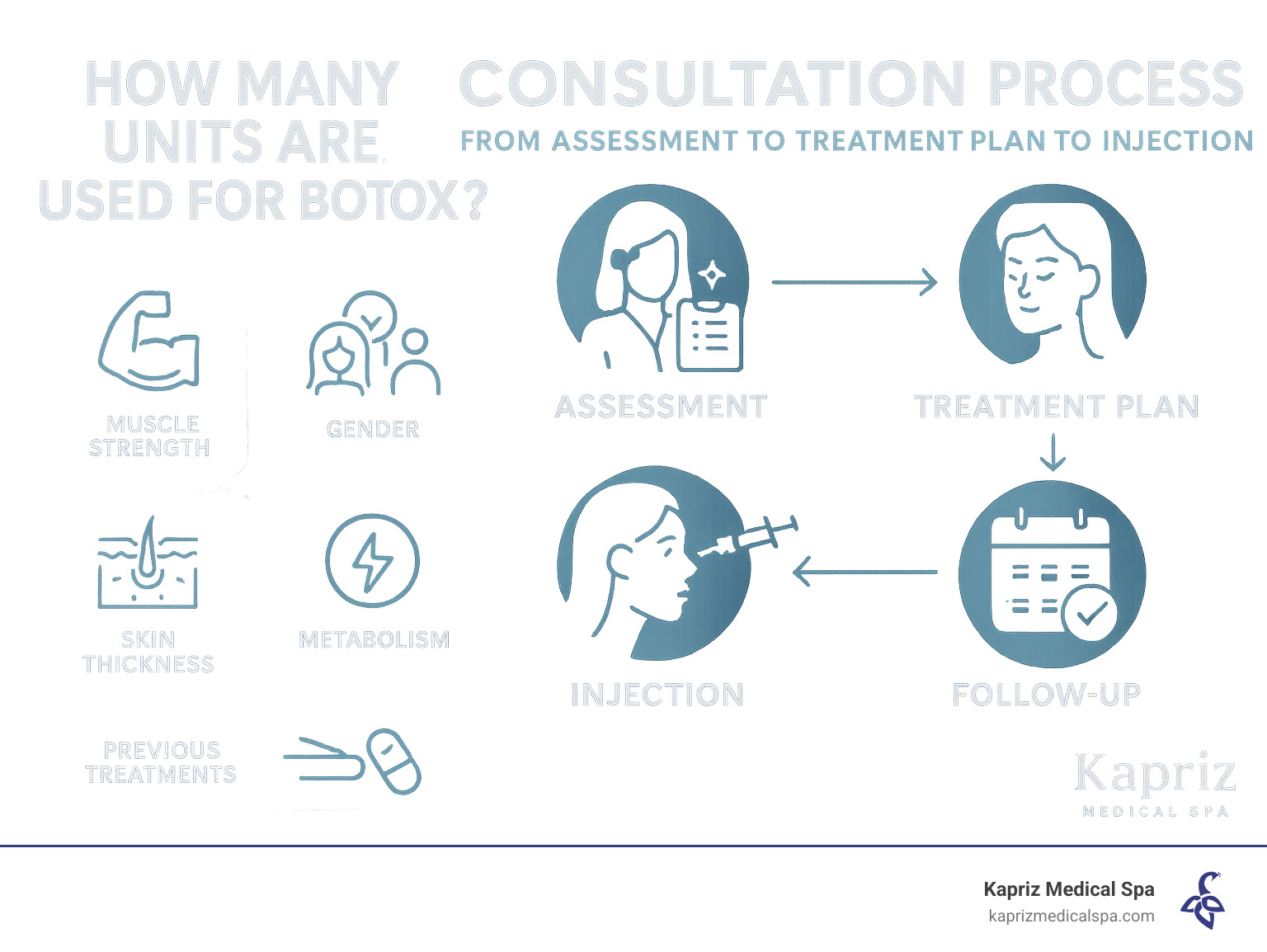
Determining exactly how many units are used for Botox for your unique face depends on several key factors:
Muscle strength: Stronger facial muscles require more units. This is why men typically need about 1.5-2 times more units than women for the same areas.
Gender differences: Men generally require higher dosages due to stronger facial muscles and thicker skin. While women might need 15-25 units for glabellar lines, men often require 20-30 units.
Age: Deeper, established wrinkles often require more units than newer, fine lines. However, long-term Botox users might eventually need fewer units as muscles become conditioned.
Skin thickness: Those with thicker skin (common in men and certain ethnicities) might need additional units to achieve visible results.
Metabolism: Those with higher metabolisms might notice results fading sooner, potentially requiring more frequent treatments.
Previous treatments: Long-term Botox users often develop weaker target muscles over time, which can reduce unit requirements.
Aesthetic goals: Whether you want subtle softening or more dramatic smoothing affects your dosing plan.
The trendy “Baby Botox” approach uses micro-doses (about 10 units per area versus the standard 20-25) to deliver extremely natural results with minimal muscle freezing—perfect for prevention and maintenance.
Assessment Tools Injectors Use
At Kapriz Medical Spa, our expert injectors use several assessment techniques:
Dynamic animation evaluation: We observe your unique muscle movement patterns during various facial expressions.
Muscle palpation: Physically feeling the strength and size of your facial muscles helps gauge appropriate dosing.
Medical history review: Previous Botox experiences, medications, and health conditions inform our recommendations.
Goal discussion: Understanding whether you want subtle or more dramatic results guides our unit recommendations.
Frequency, Longevity, Cost & Safety
Most clients enjoy their Botox results for about 3-4 months before muscle movement gradually returns. With regular treatments, results often last longer over time as muscles become “trained” to stay relaxed.
The FDA recommends waiting at least 12 weeks between Botox sessions to minimize the risk of developing antibodies to the toxin that could make future treatments less effective.
Regarding cost, how many units are used for Botox directly affects your bottom line, with prices typically ranging from $10-15 per unit. A full treatment session might cost anywhere from $200 for a single area to $600+ for multiple facial zones.
Most side effects are mild and temporary—small bruises at injection sites, slight discomfort, or occasional mild headaches. Eyelid drooping (ptosis) is rare and typically only occurs if the product migrates from the intended treatment area.
Serious complications are extremely rare when Botox is administered by qualified professionals. However, Botox isn’t recommended during pregnancy, breastfeeding, for those with certain neuromuscular disorders, or with active infections at the treatment site.
Budgeting by Unit vs By Area
At Kapriz Medical Spa, we believe in transparent per-unit pricing, meaning you pay for exactly the number of units used. This ensures you receive precisely what you need for optimal results.
Some practices use per-area pricing, where you pay a flat rate for each treatment zone regardless of how many units are actually used. While simpler, this approach may not provide the customization your unique facial anatomy deserves.
Many clients take advantage of our membership programs, which offer discounted per-unit rates for regular treatments.
More information about Botox pricing
Red-Flag Risks & How to Avoid Them
When it comes to Botox, cutting corners isn’t worth the risk. Watch for these warning signs:
- Suspiciously low pricing often indicates diluted or counterfeit product
- Non-medical settings like “Botox parties” don’t provide the sterile conditions needed for safe injections
- Skipping the consultation is a major red flag—this step is essential for your safety
- Pressure to use more units than recommended might indicate profit-focused providers
At Kapriz Medical Spa, all injections are performed by board-certified medical professionals in a clean, clinical environment with thorough consultations and safety protocols.
Scientific research on treatment intervals
Beyond Botox: Other Neurotoxins & Alternatives
Beyond Botox, several FDA-approved neurotoxins offer similar benefits:
Dysport spreads more widely after injection, making it effective for larger treatment areas like the forehead. 1 Botox unit equals roughly 2.5-3 Dysport units.
Xeomin is a “naked” toxin without protein additives, potentially beneficial if you’ve developed Botox resistance. It converts 1:1 with Botox units.
Jeuveau (“Newtox”) works similarly to Botox with a simple 1:1 unit conversion.
Daxxify offers longer-lasting results—up to 6+ months compared to the typical 3-4 months of traditional neurotoxins.
Complementary approaches to improve your results include:
- Dermal fillers add volume to deeper wrinkles and folds that Botox can’t address
- Medical-grade skincare with ingredients like retinol, vitamin C, and peptides
- Energy devices such as radiofrequency and ultrasound treatments for skin tightening
- Chemical peels to improve skin texture and reduce fine lines
Choosing the Right Injector & Clinic
The truth is, how many units are used for botox matters far less than who’s administering those units. Look for these qualities:
- Proper credentials: Board-certified physicians, physician assistants, nurse practitioners, or registered nurses with specialized training
- Experience and specialization in cosmetic injections
- Before-and-after portfolios showing natural-looking results
- Positive reviews mentioning natural results and safety protocols
- Thorough consultation processes that prioritize understanding your goals
At Kapriz Medical Spa in Jacksonville, our expert injectors combine medical expertise with an artistic eye to deliver personalized, natural-looking results that improve your natural beauty.
More information about selecting units
Frequently Asked Questions about Botox Units
How soon will I see results after my recommended units?
Most people notice the first subtle changes within 24-48 hours, with full results developing over 7-14 days as the muscles fully relax. This gradual onset allows for a natural-looking transition.
If you’re planning Botox for a special occasion, schedule your appointment at least two weeks beforehand to ensure you’ll be looking your best, with any potential adjustments already addressed.
Does needing more units mean results last longer?
While it seems logical that more Botox would last longer, that’s not actually how it works. How many units are used for Botox should be determined by your anatomy and goals—not as a strategy to extend results.
Longevity depends primarily on your personal metabolism, muscle activity patterns, and treatment history rather than unit count. Some people naturally metabolize Botox faster than others, regardless of dosage.
Most clients find their best results come from regular maintenance treatments every 3-4 months. With consistent treatment, many people actually need fewer units over time as muscles become conditioned to being more relaxed.
Can I combine units for multiple areas in one visit safely?
Absolutely! Treating multiple areas in one session is not only safe when performed by qualified professionals, it’s often preferred for creating balanced, harmonious results.
The FDA recommends not exceeding 400 total units of Botox within a three-month period, but comprehensive facial treatments typically use only 40-70 units total, well below this threshold.
Many clients choose to combine treatments for the forehead, glabella, and crow’s feet in a single visit for more natural-looking results than treating isolated areas.
More information about selecting units
Conclusion
Understanding how many units are used for botox is key to achieving that refreshed, natural look you desire. While we’ve shared guidelines throughout this article, your perfect dosage is as unique as your smile.
At Kapriz Medical Spa in Jacksonville, we believe in personalization. Our expert injectors assess your facial structure, muscle strength, and listen carefully to your goals before determining your ideal treatment plan.
Botox is both an art and a science. The number of units matters, but so does the skill of your injector, who knows exactly where to place each unit for maximum effect with minimal product.
With regular treatments customized to your needs, you’ll enjoy a refreshed appearance that still moves naturally and expresses all your emotions—just the best version of your authentic self.
Ready to find your personal Botox plan? We’d love to welcome you to Kapriz Medical Spa for a consultation. Together, we’ll determine exactly how many units will help you achieve your aesthetic goals, and start you on the path to looking as young as you feel.