
Face Peel For Dark Spots: Top 4 Peels Revealed
Why Face Peels Are Your Best Defense Against Dark Spots
Face peel for dark spots represents one of the most effective treatments for achieving clearer, more even-toned skin. Dark spots – whether from sun damage, acne scarring, or hormonal changes – can make you feel less confident about your appearance.
Quick Answer: Best Face Peels for Dark Spots
- Light Chemical Peels (AHAs): Glycolic and lactic acid for mild sun spots and surface discoloration
- Medium Chemical Peels (BHAs): Salicylic acid for post-acne marks and oily skin types
- Professional TCA Peels: For stubborn, deeper hyperpigmentation requiring expert application
- Combination Peels: Jessner’s peel for comprehensive treatment of multiple concerns
Dark spots, also called hyperpigmentation, occur when your skin produces too much melanin in certain areas. This happens for several reasons:
- Sun exposure creates age spots and freckles over time
- Post-inflammatory hyperpigmentation (PIH) follows acne breakouts or skin injuries
- Hormonal changes during pregnancy or from birth control can trigger melasma
Chemical peels work by removing the damaged outer layers of skin through controlled exfoliation. This process reveals fresh, healthy skin underneath while stimulating your body’s natural cell renewal process.
The key is choosing the right peel strength and ingredients for your specific type of dark spots and skin tone. What works for surface-level sun damage won’t be effective for deeper melasma patches.
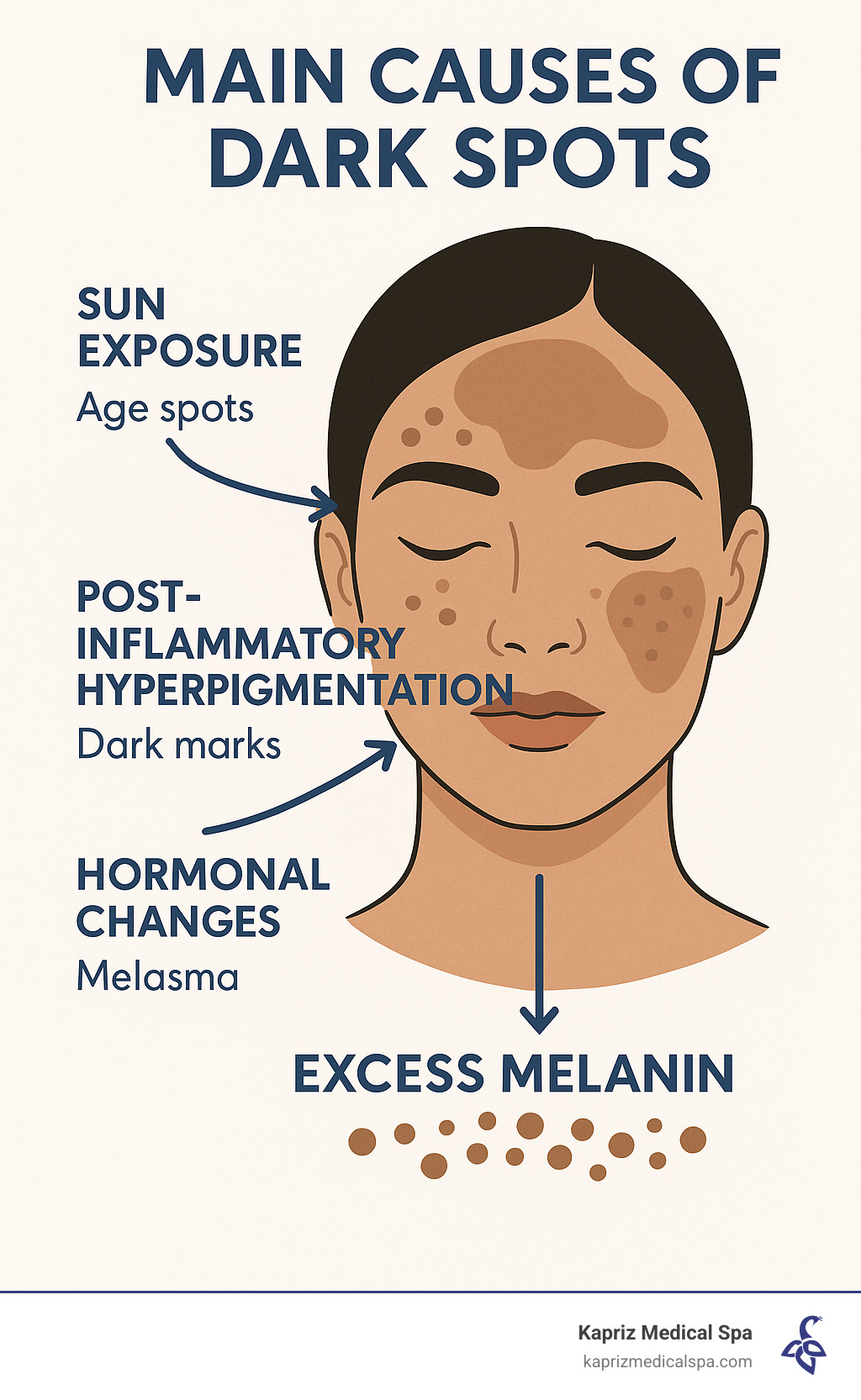
Face peel for dark spots terminology:
Understanding Dark Spots and How Chemical Peels Work
Why do some patches of skin look darker than others? It all comes down to hyperpigmentation, a harmless but often frustrating process in which your skin makes extra melanin—the pigment that gives skin its color.
Key culprits include:
- Sun damage: years of UV exposure leave age spots and freckles.
- Post-inflammatory hyperpigmentation (PIH): dark marks that linger after acne or irritation.
- Melasma: hormone-related patches that appear during pregnancy or with birth control.
Chemical peels fade these spots through controlled exfoliation. The peel loosens the bonds holding pigmented cells to the surface, so they shed more quickly. As you heal, fresh cells rise to the top—and because they contain less excess melanin, your complexion looks clearer and more even. Deeper peels also jump-start collagen production, improving overall tone and texture.
At Kapriz Medical Spa, every peel is matched to your skin tone, medical history, and lifestyle. This personalized care keeps your skin safe while maximizing results. Learn how we integrate peels into complete Facial Rejuvenation plans.
Our Top Peel Ingredients for Fading Dark Spots
Below is a streamlined look at the ingredients we reach for most often and why they work.
Alpha-Hydroxy Acids (AHAs): Gentle Brighteners
- Glycolic acid: smallest AHA molecule, speeds up cell turnover, great for fine sun spots.
- Lactic acid: naturally hydrating and kinder to sensitive skin.
AHAs work at the surface, so downtime is minimal—usually light flaking for a day or two. A series of 3–5 sessions delivers gradual, noticeable brightening. (Explore our broader Anti-Aging Skin Treatments.)
Beta-Hydroxy Acids (BHAs): Pore-Clearing Powerhouses
- Salicylic acid: oil-soluble, dives into pores to clear debris and calm inflammation—ideal for PIH on oily or acne-prone skin. Skip if you are allergic to aspirin.
Trichloroacetic Acid (TCA): When Spots Are Stubborn
Medium-depth TCA peels reach pigment nestled deeper in the skin. They are best for entrenched sun damage, melasma, or acne scarring but require professional application and about a week of healing. Learn more about our approach to Chemical Peels.
Combination Peels
Jessner’s Peel blends salicylic, lactic, and resorcinol for a multi-tasking treatment that hits pigment, texture, and breakouts in one go. We also formulate custom blends when a standard cocktail isn’t quite right for your skin.
Bottom line: the right acid or blend depends on the depth of your discoloration, your skin tone, and how much downtime you can manage.
Professional vs. At-Home: Choosing the Right Face Peel for Dark Spots
| Factor | Professional Peels | At-Home Peels |
|---|---|---|
| Acid Strength | 20–70% (adjusted on the spot) | 1–10% (fixed) |
| Safety | Supervised, peel can be neutralized instantly | Risk of burns, over-exfoliation |
| Customization | Custom to skin type, tone, and goals | One-size-fits-all |
| Downtime | Predictable, guided recovery | Results vary widely |
| Dark-Spot Results | Noticeable in fewer sessions | Slow, subtle change |
Drugstore pads can maintain glow between pro treatments, but they rarely erase established dark spots and can backfire if over-used. With a professional peel you get a full skin assessment, a product mixed for you, and expert aftercare—key advantages, especially for deeper skin tones that are more prone to post-inflammatory pigmentation.
See how we integrate professional peels into long-term Skin Care Jacksonville programs.
Your Peel Journey: Preparation, Recovery, and Maintaining Results
Prep-Work
- Comprehensive consultation and medical history review.
- Two weeks of gentle cleansing, moisturizing, and strict SPF.
- Pause retinoids and scrubs 48 hours before treatment.
- Avoid sunbathing and tanning beds—fresh damage makes peeling riskier.
What Happens During the Peel
The application lasts 15–30 minutes. You’ll feel warmth or tingling, nothing unbearable. Light peels cause mild redness; medium peels create sunburn-like swelling and skin tightening for a day or two.
Peeling usually starts on day 2 or 3 and may last up to a week, depending on depth. Let the flakes fall naturally; picking invites scarring.
Aftercare Essentials
- Broad-spectrum SPF 30+ daily—forever.
- Fragrance-free cleanser and rich moisturizer until fully healed.
- No active acids or retinoids until we give the green light.
- Hydrate inside and out (water + humidifier).
Our ZO Skin Health Jacksonville products support healing and help maintain your results. We’ll schedule follow-ups to track progress and plan any additional sessions.
Frequently Asked Questions about Face Peels for Dark Spots
Which chemical peel is best?
Surface freckles usually lift with a series of glycolic or lactic peels. Deep, long-standing spots or melasma often need a TCA or combination peel. A professional evaluation pinpoints the right depth and acid for you.
Are chemical peels safe for all skin tones?
Yes—when performed by experts. Darker complexions need gentler formulas and careful technique to avoid triggering more pigment. We may patch-test first and always tailor peel strength and timing.
How many treatments will I need?
- Light peels: 3–5 sessions, 2–4 weeks apart.
- Medium peels: 1–3 sessions, 6–12 weeks apart.
- Combination protocols fall between these ranges.
Lifestyle choices—especially sun protection—make a big difference in how quickly you see and keep results.
Conclusion: Reveal Your Brightest Skin
Face peel for dark spots can truly transform your skin – and your confidence. Whether you’re frustrated with stubborn sun damage from Jacksonville’s year-round sunshine, dealing with post-acne marks that just won’t fade, or struggling with hormonal pigmentation, chemical peels offer a proven path to clearer, more radiant skin.
The secret isn’t just in the peel itself, but in finding the right professional guidance. At Kapriz Medical Spa, we’ve seen countless clients achieve remarkable results because we take the time to understand your unique skin story. Your melasma isn’t the same as your neighbor’s sun spots, and your treatment shouldn’t be either.
A customized approach makes all the difference. We consider your skin tone, lifestyle, medical history, and personal goals before recommending any treatment. This personalized care ensures you get the safest, most effective results possible – without the guesswork or risks that come with DIY approaches.
Think of chemical peels as the beginning of your skin’s renewal journey, not a one-time fix. While many clients see dramatic improvement after their first series of treatments, maintaining those beautiful results requires ongoing commitment. Consistent sun protection, proper skincare, and periodic maintenance treatments help preserve your investment in healthier skin.
Your skin has been through a lot – from teenage acne to years of sun exposure to hormonal changes. But here’s the good news: it’s never too late to start fresh. Chemical peels give your skin the reset it deserves, revealing the bright, even-toned complexion that’s been hiding underneath all along.
We’re not just here for your treatment appointments. At Kapriz Medical Spa, we build lasting relationships with our clients, supporting you through every step of your aesthetic journey. From your initial consultation to your final follow-up, we’re committed to helping you achieve – and maintain – your best skin ever.
Ready to say goodbye to dark spots and hello to your brightest skin? Schedule your chemical peel consultation today! Our experienced team will assess your skin, answer all your questions, and create a personalized treatment plan that fits your needs and lifestyle. Your journey to clearer, more confident skin starts with a single appointment.