
Chemical Peel for Discolored Skin: 7 Powerful Ways to Glow 2025
Why Chemical Peels Are Your Secret Weapon Against Stubborn Skin Discoloration
Chemical peel for discolored skin is a proven cosmetic treatment that removes damaged outer skin layers to reveal brighter, more even-toned skin underneath. Here’s what you need to know:
Quick Answer:
– What it treats: Dark spots, age spots, melasma, acne marks, sun damage
– How it works: Controlled exfoliation removes pigmented skin cells
– Results timeline: 3-6 treatments for optimal lightening
– Best candidates: All skin types (with proper selection)
– Downtime: 1-14 days depending on peel depth
If you’ve been staring at dark spots in the mirror, wondering when they became so noticeable, you’re not alone. Those patches of uneven pigmentation – whether from sun damage, hormonal changes, or old acne scars – can make your skin look older and duller than you feel inside.
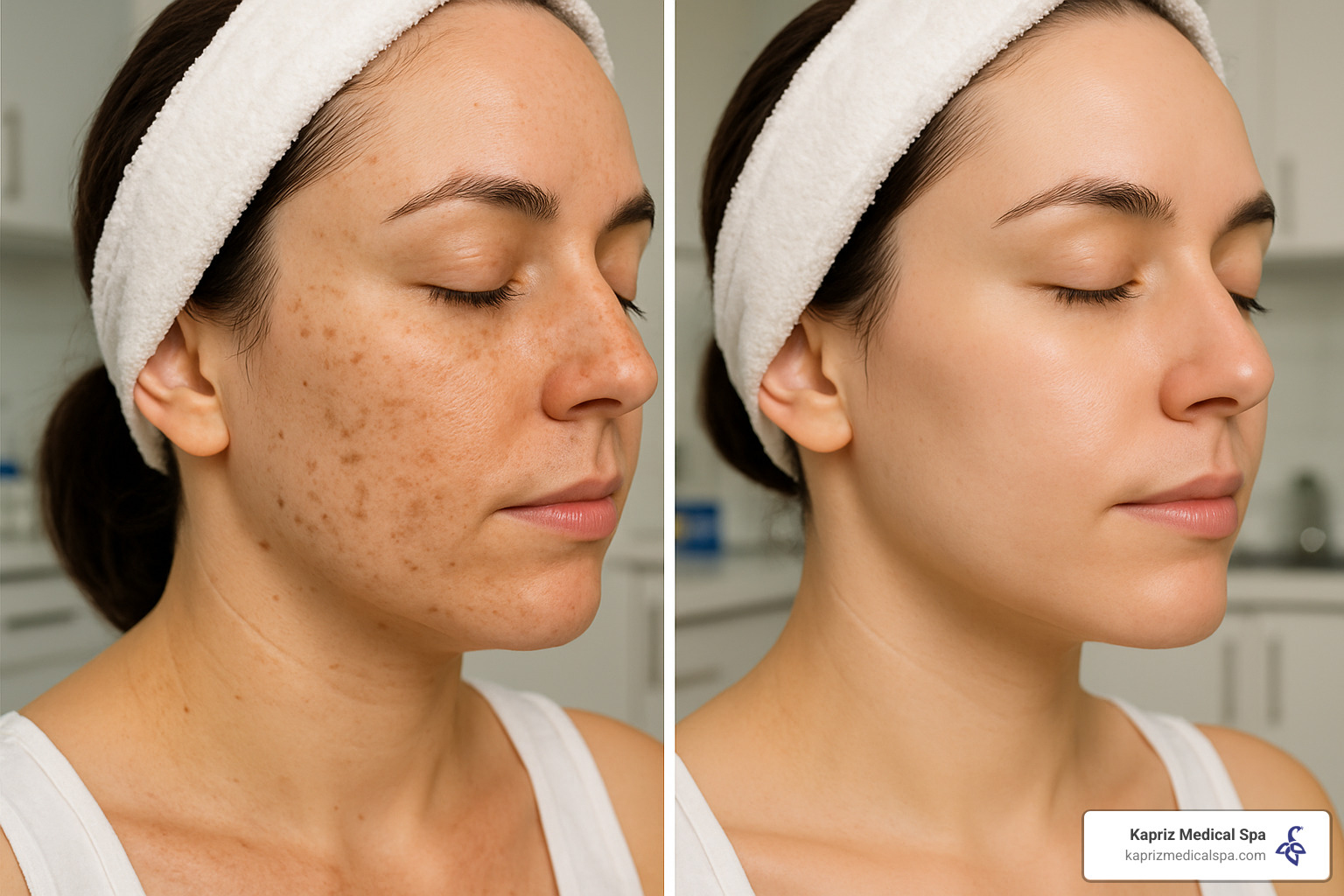
The good news? Chemical peels can improve the appearance of age spots, sun spots, freckles, and uneven skin coloring, with most patients noticing results after 3 to 6 treatments for hyperpigmentation.
At Kapriz Medical Spa, we understand that every skin concern is personal. That’s why we create customized treatment plans that address your specific discoloration patterns while working with your skin type and lifestyle.
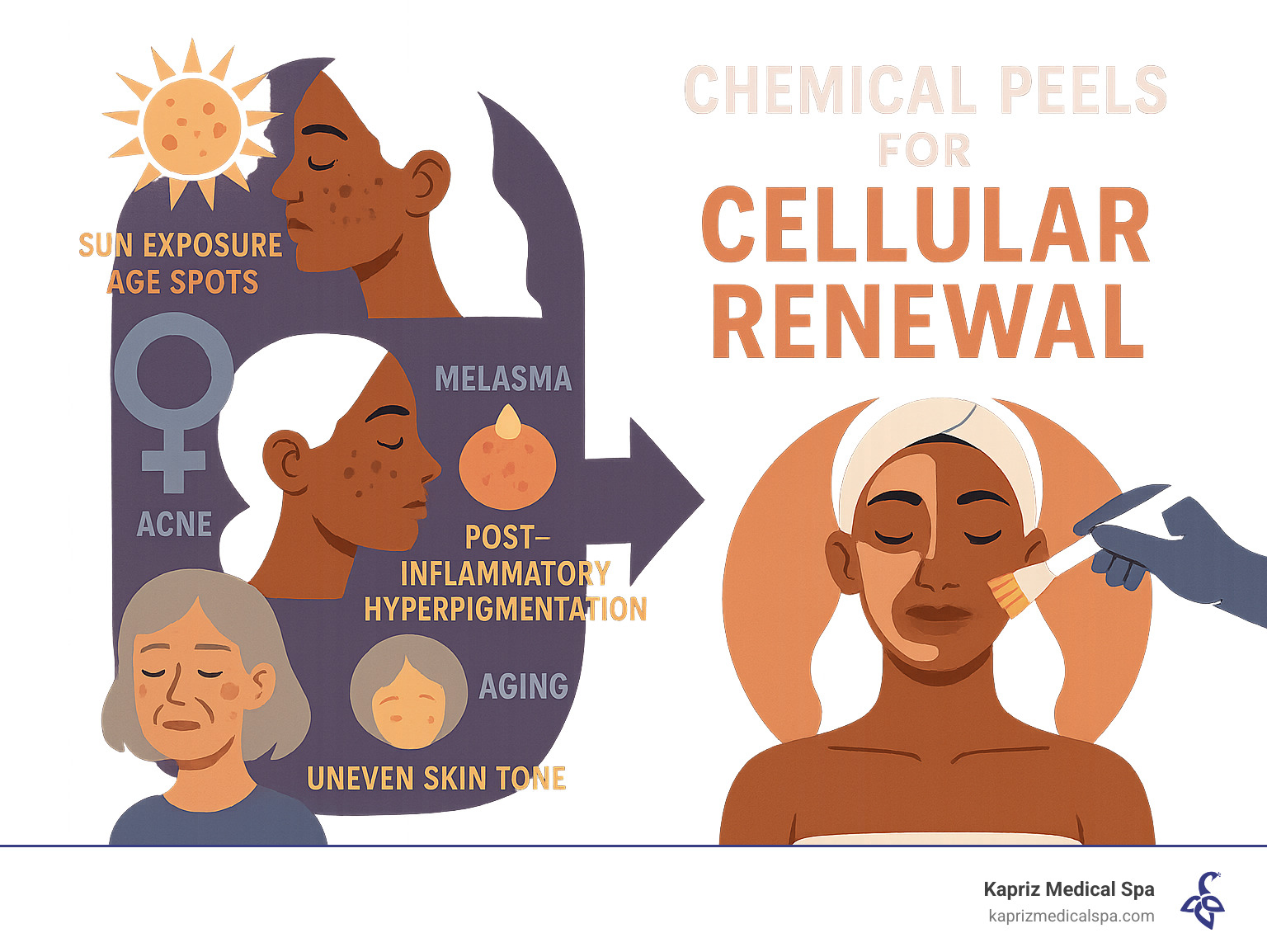
Chemical Peel for Discolored Skin: How It Works
A chemical peel for discolored skin works like carefully removing damaged pages from a book to reveal the fresh, clean ones underneath.
When you have a chemical peel, specialized acid solutions gently dissolve the bonds that hold dead, pigmented skin cells together. This allows them to shed away naturally, taking those stubborn dark spots with them.
Your skin normally renews itself every 28 days, but this process can get sluggish or uneven as we age. Dark spots form when melanin (your skin’s natural coloring) gets overproduced or trapped in certain areas.
Chemical peels essentially hit the reset button on your skin’s renewal cycle. They speed up cellular turnover while also triggering collagen stimulation, which helps create that smooth, even foundation for new skin to grow.
Glycolic acid penetrates deeply to break down cellular bonds and boost collagen production. Salicylic acid is oil-loving, making it perfect for treating post-inflammatory hyperpigmentation from old acne breakouts. Lactic acid provides gentler exfoliation while actually hydrating your skin. TCA (trichloroacetic acid) offers medium-depth penetration for stubborn discoloration. Kojic acid specifically targets melanin production.
Scientific research on peeling acids confirms that these ingredients don’t just remove pigmented cells – they actually stimulate the production of new, healthy skin cells too.
Cellular Reset: The Science Behind a Chemical Peel for Discolored Skin
When acid solutions contact your skin, they trigger a “controlled injury response.” This process causes keratinocytes (the main cells in your skin’s outer layer) to release and shed much faster than normal.
At the same time, the peel inhibits tyrosinase – the enzyme responsible for melanin production. By temporarily slowing down pigment creation while speeding up the removal of existing pigmented cells, peels create a powerful double-action brightening effect.
The process also wakes up fibroblast activity in your deeper skin layers, ramping up collagen and elastin production for improved texture and a more even foundation.
Targeting Dark Spots with a Chemical Peel for Discolored Skin
Sun spots and age spots are usually the easiest to tackle because they typically sit in the upper skin layers. These respond beautifully to glycolic or lactic acid peels.
Melasma is trickier – this hormonally-triggered condition can extend deeper into the skin. It often requires a series of medium-depth peels combined with pre-treatment agents.
Post-inflammatory hyperpigmentation from acne responds particularly well to salicylic acid peels, which can simultaneously address any lingering acne while fading those dark marks.
Freckles are typically the quickest success story, often showing dramatic improvement with light peels after just one or two sessions.
Choosing the Right Peel Depth & Formula
Finding the perfect chemical peel for discolored skin isn’t a one-size-fits-all situation. We look at three main factors: your skin type, how stubborn your dark spots are, and how much downtime fits into your life.
Light peels work on just the surface layer of your skin. They’re perfect for early signs of discoloration and light peels may be repeated every two to five weeks until you achieve your desired results. Typically, three to five peels are needed to achieve your goal for discoloration. You can literally get one during your lunch break.
Medium peels dig deeper, reaching into the upper layers where more stubborn pigmentation hides. After a medium chemical peel, treated areas take about 7 to 14 days to heal, but redness might last for months.
Deep peels are rarely recommended for discoloration since lighter options usually work beautifully. Deep chemical peels are not recommended for those with darker skin tones due to the risk of permanent changes in skin color.
| Peel Depth | Penetration | Downtime | Best For | Frequency |
|---|---|---|---|---|
| Light | Epidermis only | 1-7 days | Mild discoloration, maintenance | Every 2-5 weeks |
| Medium | Upper dermis | 7-14 days | Moderate pigmentation, sun damage | Every 6-12 months |
| Deep | Deep dermis | 2-6 weeks | Severe discoloration, precancerous lesions | One-time treatment |
More info about chemical peel options
Popular Brightening Agents & Their Strengths
Glycolic acid at 30-70% concentrations is our go-to for sun damage and age spots. Its tiny molecules penetrate deeply, making it incredibly effective for surface-level brown patches.
Salicylic acid in 20-30% concentrations is perfect for acne-related dark marks. It doesn’t just fade those marks – it actually gets into your pores to prevent new breakouts.
TCA (trichloroacetic acid) at 10-35% concentrations is our secret weapon for stubborn discoloration, especially melasma that doesn’t respond to gentler treatments.
Combination peels often steal the show because they can tackle multiple skin concerns at once. A glycolic-salicylic blend can address both sun damage and acne marks in a single session.
Session Timeline & Expected Results
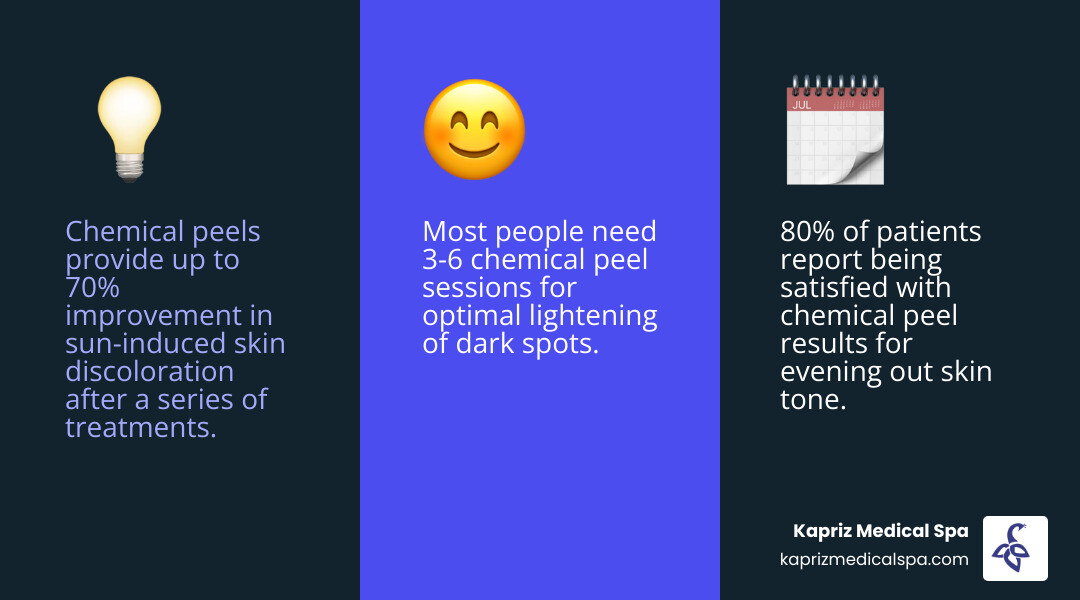
Many people notice results from a chemical peel after just one treatment, but results for hyperpigmentation patients are usually optimized after three to six treatments. Most patients need that 3-6 treatment sweet spot for optimal results.
After your first treatment, you’ll notice your skin looks brighter and feels incredibly smooth. By treatments 2-3, those dark spots start to fade noticeably. After 4-6 treatments, you’ll see significant improvement in your overall skin tone evenness.
We space your treatments 4-6 weeks apart to give your skin time to fully heal and show us how it’s responding.
Preparing, Procedure & Recovery Roadmap
Getting great results from your chemical peel for discolored skin starts weeks before you even sit in our treatment chair. We usually start your prep routine 2-4 weeks before your first peel. For patients with darker skin tones or stubborn melasma, we might prescribe special priming treatments.
The actual procedure is surprisingly straightforward. After thoroughly cleansing your skin, we’ll apply your customized chemical solution. You’ll feel some tingling or burning – that’s normal and means the peel is working. Don’t be alarmed if you see “frosting” during medium-depth peels – this white, cloudy appearance is actually a good sign.
After your peel, your skin goes through predictable healing stages. Initially, you might look like you spent too much time at the beach. Over the following days to weeks, your skin will start peeling away like a gentle sunburn, revealing fresh, bright skin underneath.
More info about customized facial treatments
Safe-Prep Checklist Before Your Peel
Two weeks before your appointment, stop using retinoids, glycolic acid products, and other exfoliants – these can make your skin too sensitive. If we’ve prescribed special pre-treatment products, start using them religiously.
One week before, discontinue electrolysis, waxing, or depilatory creams and avoid facial masks or scrubs. If you have a history of cold sores, we’ll start you on antiviral medication.
The day of your treatment, arrive with completely clean, makeup-free skin. Wear comfortable clothes and bring sunglasses and a wide-brimmed hat for your drive home.
Post-Peel Care to Lock In Brightness
For the first 24 hours, apply any prescribed ointments exactly as directed, and avoid getting water on the treated area for the first few hours. Cool compresses can help if you’re uncomfortable.
During days 2-7, gently cleanse with a mild, non-foaming cleanser and moisturize frequently. Resist the urge to pick or peel flaking skin no matter how tempting.
Use broad-spectrum SPF 30+ sunscreen religiously during this entire healing period. Your new skin is incredibly sensitive to UV damage.
In weeks 2-4, you can gradually return to your normal routine, but keep things gentle. Continue strict sun protection and don’t skip your follow-up appointments.

Special Considerations for Melanin-Rich Skin
Patients with darker skin tones can absolutely benefit from chemical peels, but they require extra care. Superficial (light) chemical peels are generally safe for all skin types, but people with darker skin tones have a greater risk of experiencing post-inflammatory hyperpigmentation after treatment.
The key is choosing the right peel depth and formulation. We typically recommend starting with very light peels and gradually increasing intensity over multiple sessions. This “slow and steady” approach minimizes the risk of triggering additional pigmentation.
Pre-treatment with hydroquinone, tretinoin, or other lightening agents is often recommended for darker skin tones to help stabilize melanin production.
Scientific research on dark-skin safety emphasizes the importance of working with experienced providers who understand the unique considerations for treating melanin-rich skin.
Minimizing Hyperpigmentation & Scarring
Gradual acid escalation: We start with the gentlest effective concentration and slowly increase strength over multiple sessions.
Antioxidant support: Pre- and post-treatment antioxidants like vitamin C, niacinamide, and green tea extract help stabilize skin cells and reduce inflammation.
Strict sun protection: UV exposure is the enemy of even skin tone. We provide detailed sun protection guidelines and may recommend physical sunscreens with zinc oxide or titanium dioxide.
Early intervention: If we notice any signs of abnormal pigmentation developing, we intervene immediately with targeted treatments.
When to Consider Alternatives
We might recommend alternatives if you have very sensitive skin, are pregnant or breastfeeding, have active skin infections, or are taking photosensitizing medications.
Alternative options include:
– Microdermabrasion for very mild surface discoloration
– Low-energy lasers for targeted spot treatment
– Topical treatments with tranexamic acid, kojic acid, or arbutin for gradual lightening
Alternatives & Complementary Treatments
While chemical peels for discolored skin deliver impressive results on their own, pairing them with other treatments can take your brightening journey to the next level.
Topical retinoids are like the perfect workout buddy for your chemical peels. They keep the cell turnover party going between your peel sessions. The trick is timing – we’ll guide you on when to pause your retinoids before peels and how to ease back into using them.
Vitamin C serums act as your skin’s personal bodyguard, providing antioxidant protection while adding their own brightening punch. They’re especially fantastic when applied in the morning under sunscreen.
Microneedling can team up with chemical peels in “peel + needling” treatments. The tiny channels created by microneedling help your peel solution penetrate more evenly.
IPL (Intense Pulsed Light) treatments complement peels beautifully. While peels exfoliate away pigmented cells, IPL uses targeted light energy to break up stubborn pigment clusters from the inside. IPL treatment can eliminate up to 70% of sun damage.
From a budget perspective, chemical peels often give you more bang for your buck compared to laser treatments. A complete series of peels typically costs less than a single laser session while delivering comparable results.
More info about facial rejuvenation
Combining Peels With At-Home Brighteners
Your home routine is where the magic really happens between professional treatments. The right at-home products don’t just maintain your results – they actually help amplify them.
Niacinamide reduces inflammation and helps regulate melanin production without causing irritation. Regular use actually helps your skin become more tolerant of stronger treatments over time.
Azelaic acid is our go-to recommendation for patients with sensitive skin or rosacea who still want to tackle pigmentation. It offers anti-inflammatory and brightening benefits without potential irritation.
The secret to long-term success is consistency over intensity. Professional peels every 6-8 weeks during your active treatment phase, combined with at-home brightening products used 3-4 times per week, create steady, sustainable improvement.
And here’s the non-negotiable part: daily sunscreen use. All the peels and brightening products in the world won’t help if you’re not protecting your investment from UV damage every single day.
Frequently Asked Questions About Chemical Peels & Discoloration
How many peels do I need for stubborn dark patches?
Most patients need 3-6 treatments for optimal results, but those really stubborn patches sometimes need extra convincing. Light peels may be repeated every two to five weeks until you achieve your desired results. Typically, three to five peels are needed to achieve your goal for discoloration.
Surface-level spots like sun damage often respond beautifully after just 2-3 treatments. Deeper pigmentation that’s been around for years might take 6-8 sessions to fully fade.
Your skin type plays a big role too. The age and size of your dark patches also matter – newer, smaller spots typically fade faster than old, established ones.
We’ll check in with you after each treatment to see how your skin is responding and adjust our game plan if needed.
Is a chemical peel painful?
Most patients describe it as a mild to moderate stinging or burning sensation that fades pretty quickly.
Light peels feel similar to a sunburn – that tight, slightly uncomfortable feeling. Medium peels can be more intense, but we’ve got cooling techniques and topical numbing to keep you comfortable.
During the first 2-3 minutes, you’ll notice that stinging sensation. In the first 24 hours, your skin might feel tight and look a bit red. Days 2-7 can bring some itching as your skin starts to peel. Once the peeling is done, you’ll be too busy admiring your glowing new skin to remember any discomfort.
How long will my new even skin tone last?
Your results can last anywhere from 6 months to several years – and the difference comes down to how well you take care of your investment.
Sun protection is absolutely non-negotiable. Daily broad-spectrum sunscreen with SPF 30 minimum isn’t just a suggestion – it’s your new best friend.
Your skincare routine becomes your maintenance crew. Consistent use of vitamin C, antioxidants, and gentle brightening ingredients helps your results stick around longer.
Our maintenance recommendations include monthly light peels or quarterly medium peels once you’ve achieved your goals, plus annual skin assessments to catch any new spots before they become problems.

Conclusion
Your journey to brighter, more even skin doesn’t have to be a mystery anymore. Chemical peels for discolored skin have helped thousands of people transform stubborn dark spots, sun damage, and uneven pigmentation into the radiant complexion they’ve always wanted.
The science is clear: most patients notice results from a chemical peel after just one treatment, but results for hyperpigmentation patients are usually optimized after three to six treatments. That means you could be seeing real improvements in your skin tone in just a few weeks.
At Kapriz Medical Spa in Jacksonville, FL, we understand that every dark spot tells a story – maybe it’s from years of Florida sunshine, hormonal changes, or old acne scars that just won’t fade. Whatever brought you here, we’re committed to creating a personalized treatment plan that addresses your specific concerns while working with your skin type and lifestyle.
We don’t believe in one-size-fits-all solutions. Your skin is unique, and your treatment should be too. That’s why we take the time to really understand your goals, assess your skin’s needs, and build a relationship that extends far beyond your first peel.
The path to clearer, more even-toned skin isn’t always quick, but it’s absolutely worth it. Our patients often tell us that achieving their skin goals has boosted their confidence in ways they never expected.
Ready to start your own change? We’d love to sit down with you and create a personalized brightening plan that fits your life. Whether you need a gentle series of light peels or a more intensive approach, we’ll guide you through every step of the process.
Your most radiant skin is waiting – and it’s closer than you think.
More info about chemical peel special
Schedule your consultation today and find how chemical peels for discolored skin can help you achieve the bright, even complexion you deserve. Your journey to beautiful skin starts with a single conversation – let’s make it happen together.