
Chemical Peel Dark Spots: 7 Powerful Ways for Amazing Results 2025
Why Dark Spots Don’t Have to Be Forever
Chemical peel dark spots treatment is one of the most effective ways to fade stubborn pigmentation and restore an even skin tone. These professional treatments work by removing damaged skin layers to reveal brighter, clearer skin underneath.
Quick Answer for Chemical Peel Dark Spots:
– How they work: Remove pigmented skin cells through controlled exfoliation
– Success rate: Can reduce dark spots by 50-75% after a series of treatments
– Types: Light, medium, or deep peels depending on pigmentation severity
– Timeline: 4-6 light peels or 1-3 medium peels spaced 2-6 weeks apart
– Recovery: 7-10 days for light peels, 1-2 weeks for medium peels
– Best candidates: All skin types with proper precautions for darker tones
Those dark patches on your face aren’t just cosmetic concerns – they’re signs that your skin has been working overtime to protect itself. Whether it’s sun damage, hormonal changes, or acne marks, these spots form when your skin produces too much melanin in certain areas.
Think of melanin as tiny umbrellas your skin creates to shield itself from damage. Sometimes these umbrellas get stuck in the “open” position, creating persistent dark areas that won’t fade with regular skincare alone.
Chemical peels offer a proven solution by speeding up your skin’s natural renewal process. Instead of waiting months or years for dark spots to fade naturally, peels can deliver visible results in just a few weeks.
Know your chemical peel dark spots terms:
– Chemical peel near me
– chemical peel for discolored skin
What You’ll Learn
In this comprehensive guide, we’ll walk you through everything you need to know about using chemical peels to tackle dark spots. You’ll find what causes different types of pigmentation, how various peel depths work to fade spots, safety considerations for all skin tones, what to expect during recovery, and alternatives to consider.
Dark Spots 101: Causes & Types
Ever wonder why some areas of your skin decided to go rogue and turn darker than the rest? Chemical peel dark spots treatment becomes much more effective when you understand exactly what you’re dealing with.
Dark spots, or hyperpigmentation, are basically your skin’s overzealous response to damage or irritation. Think of your skin cells as tiny factories that sometimes get their wires crossed and start overproducing melanin in patches.
Sun damage creates those classic brown spots we often call “age spots.” These flat, brown patches love to show up on your face, hands, chest, and shoulders – basically anywhere that’s seen a lot of sun over the years.
Post-inflammatory hyperpigmentation (PIH) is your skin’s way of leaving a calling card after any kind of trauma. Had a nasty pimple? Your skin might leave a dark mark as a souvenir. People with naturally darker skin tones tend to get these more often, and they can stick around for months or years if left untreated.
Melasma earned the nickname “pregnancy mask” because it loves to appear during hormonal changes. It creates symmetrical brown patches, usually on the face, and has a frustrating habit of getting worse with sun exposure.
The Fitzpatrick skin scale helps determine your skin’s pigmentation tendencies, ranging from very fair (Type I) to very dark (Type VI). This classification helps predict how your skin will respond to chemical peel dark spots procedures.

Why Do Dark Spots Form?
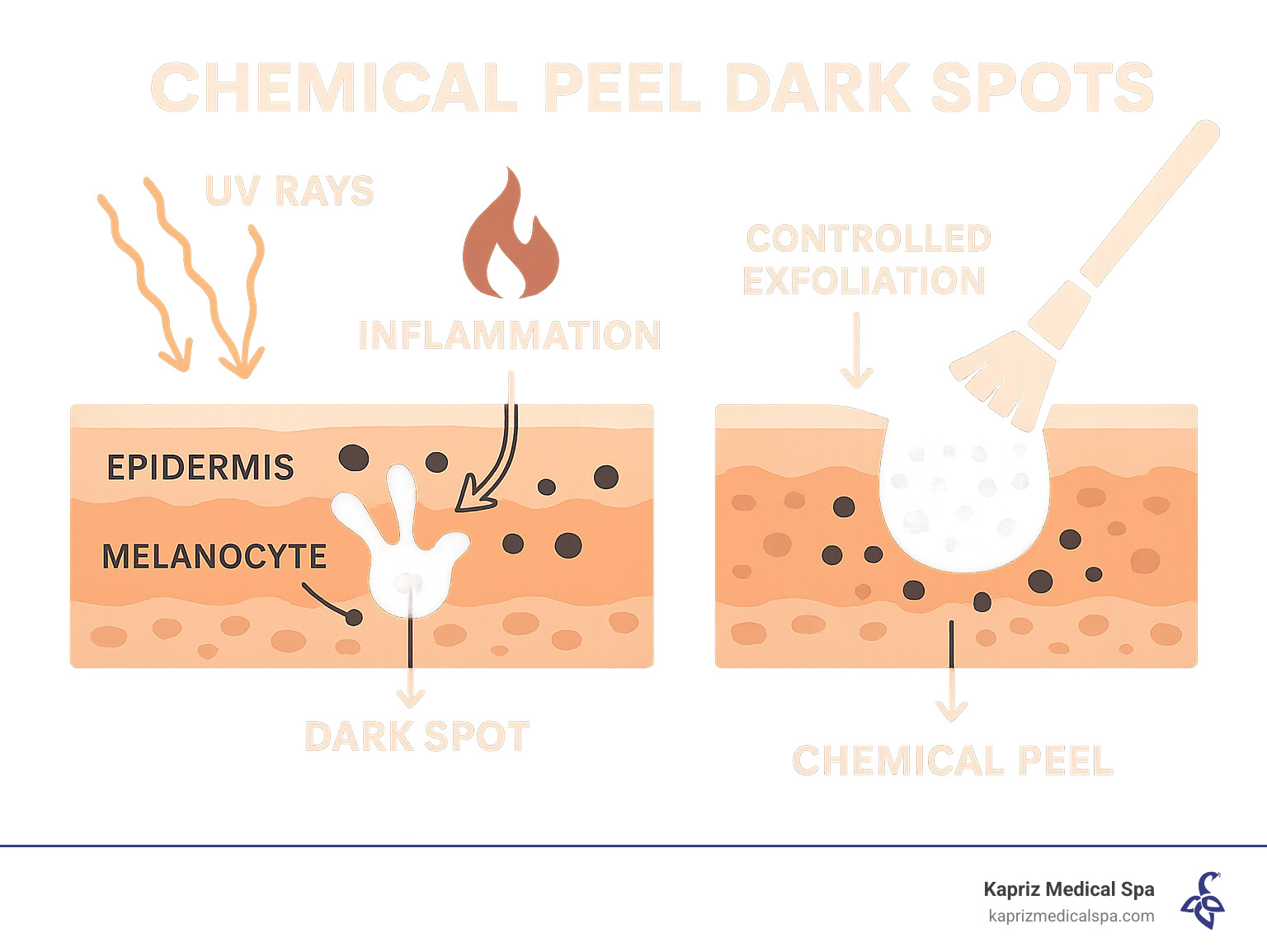
Your skin has special cells called melanocytes that act like little paint factories, producing melanin to give your skin its color and protect it from damage.
When these cells get triggered by UV rays, inflammation, or hormonal changes, they can go into overdrive mode. The key player here is an enzyme called tyrosinase, which converts an amino acid called tyrosine into melanin. Sometimes this process gets stuck in the “on” position in certain spots.
Inflammation plays a huge role too. Whether it’s from acne, a cut, or even harsh skincare products, any inflammation can signal your melanocytes to ramp up production.
Who Gets Them Most?
Darker skin tones (Fitzpatrick types IV through VI) are more prone to post-inflammatory hyperpigmentation because they naturally produce more melanin. Lighter skin tones are more susceptible to sun-induced age spots.
Sun worshippers and anyone with significant UV exposure are prime candidates for solar lentigines. Hormonal shifts make women particularly vulnerable to melasma – up to 50% of pregnant women develop these symmetrical patches.
For detailed science behind this, check out this Scientific research on hyperpigmentation.
Understanding your specific type of hyperpigmentation is the first step toward choosing the right chemical peel dark spots treatment approach.
Chemical Peel Dark Spots: How Peels Erase Pigment
Think of chemical peel dark spots treatment as hitting the reset button on your skin. Instead of waiting for those stubborn patches to fade naturally over months or years, peels fast-track the process by creating a controlled injury that forces your skin to shed its damaged, pigmented layers.
Your skin naturally renews itself every 28-40 days, but peels dramatically speed up this turnover. The process works through different acids that penetrate to various depths.
Glycolic acid is the overachiever – its tiny molecules can dive deep into your skin. Studies show that glycolic peels at 30-70% concentrations significantly reduce dark spots when done in a series of 4-6 treatments spaced 2-3 weeks apart.
Salicylic acid is particularly clever for acne-related dark spots. Since it’s oil-soluble, it can slip into your pores and tackle pigmentation where acne once lived.
Trichloroacetic acid (TCA) is used in medium-depth peels at 15-35% concentrations. TCA works by causing protein coagulation in your skin – a controlled way of encouraging damaged layers to peel away.
Lactic acid is the gentle giant, effective at removing pigment while being kinder to sensitive skin types.
Research shows that chemical peel dark spots treatment can reduce hyperpigmentation by 50-75% after a complete series.
Why chemical peel dark spots work faster than creams
While lightening creams work behind the scenes to slow down melanin production, chemical peels take a more direct approach. They physically remove the pigmented cells that are already there, then stimulate fresh cell growth underneath.
It’s the difference between trying to paint over a stain versus removing the stained layer entirely. Peels also create uniform fading across your entire face, whereas creams might create patchy results.
Mechanism by Depth
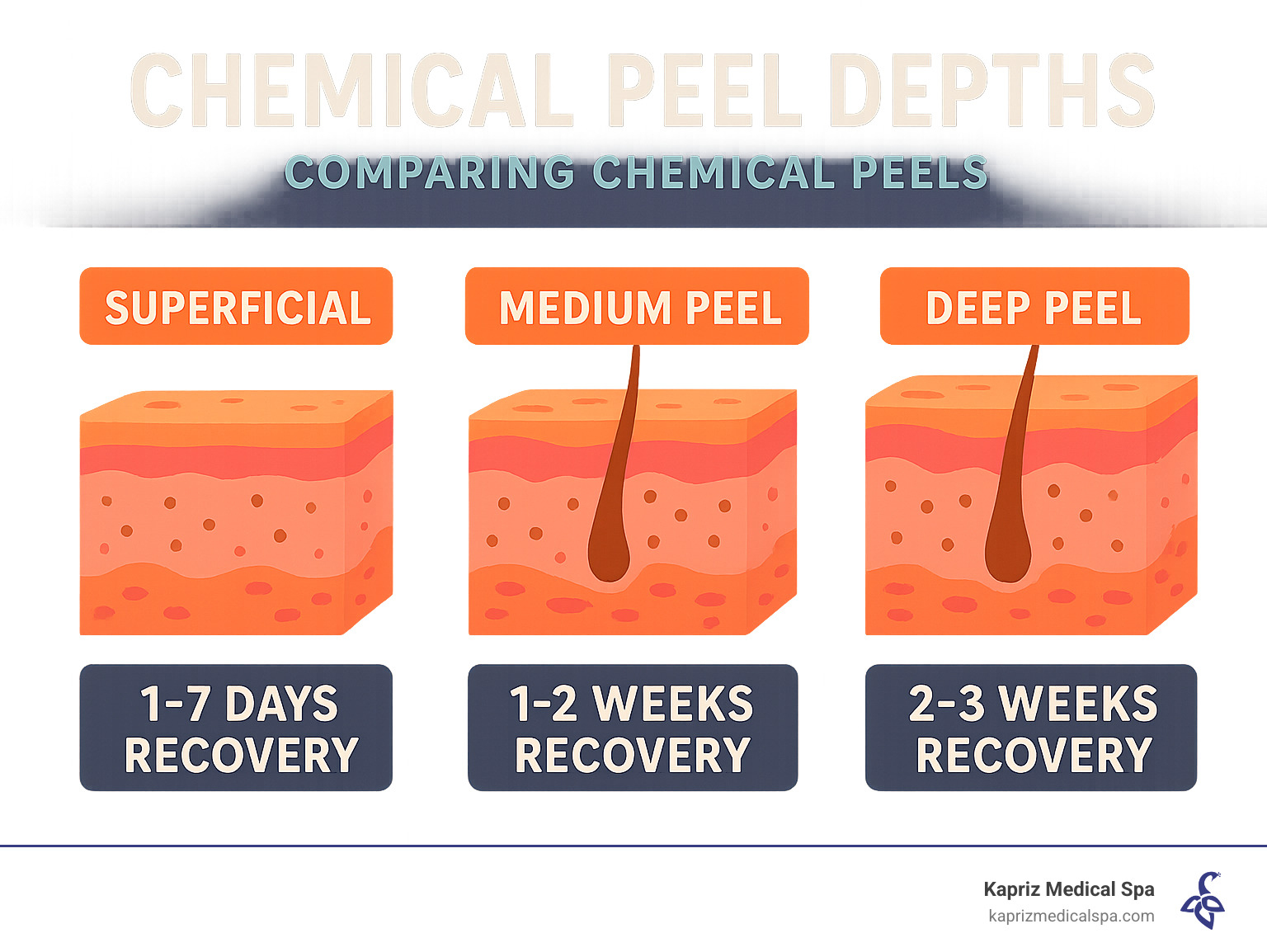
Superficial peels work like a gentle but thorough house cleaning, focusing on your epidermis. They remove dead skin cells and surface-level pigmentation without significant downtime.
Medium peels go deeper, penetrating into your upper dermis where more stubborn pigmentation lives. These cause protein coagulation and more substantial peeling. You might notice “frosting” during treatment – a white appearance that tells your provider the peel has reached the right depth.
Deep peels are the heavy hitters, reaching your mid-dermis to address severe pigmentation and significant sun damage.
How many sessions of chemical peel dark spots do you need?
Light peels typically require 4-6 sessions spaced 2-3 weeks apart. Medium peels pack more punch, so you’ll usually need just 1-3 treatments spaced 6-12 months apart. Deep peels are usually a one-and-done situation per area.
Most patients start seeing visible improvement within 4-6 weeks of beginning their treatment series. For more details about our personalized approach, check out our Chemical Peels page.
You can learn more about the science in this Scientific research on glycolic peels.
Choosing, Preparing & Safety
Getting the best results from chemical peel dark spots treatment starts long before you sit in the treatment chair. The right preparation can make the difference between excellent results and disappointing outcomes.
Not everyone is ready for a chemical peel right away. Your skin’s current condition, medical history, and lifestyle all play important roles in determining whether you’re a good candidate.

Are Chemical Peels Safe for All Tones?
While chemical peels can work beautifully on all skin tones, people with darker skin need extra care. If you have darker skin (Fitzpatrick types IV-VI), your skin has a higher risk of developing new dark spots after treatment.
Research shows that up to 30% of people with darker skin can develop post-inflammatory hyperpigmentation if their peel isn’t properly managed. But this just means we need to be smarter about our approach.
For darker skin tones, we typically start with gentler acids like lactic or mandelic acid and use lower concentrations initially. Many providers also recommend pre-treatment with bleaching agents for several weeks before your first peel.
Pre-Peel Checklist
Getting your skin ready should start 2-4 weeks before your treatment date.
The most important step is stopping retinoid products unless your provider specifically tells you otherwise. You’ll also want to start using broad-spectrum SPF 30+ sunscreen daily.
If your provider recommends pre-treatment bleaching agents, now’s the time to start using them.
One week before treatment, avoid waxing, threading, or aggressive hair removal in the treatment area. Also skip any exfoliating treatments or scrubs.
24-48 hours before your appointment, if you have a history of cold sores, you’ll need to start antiviral medication as directed. Don’t forget to arrange transportation if you’re having a deeper peel. Avoid alcohol and smoking for at least 48 hours before treatment.
Possible Risks & Side Effects
Common side effects are actually signs that the peel is working. Redness and mild swelling for 1-7 days is completely normal. Skin peeling and flaking is exactly what we want to see. You might also notice temporary darkening of your dark spots before they start to lighten.
During treatment, expect some mild stinging or burning similar to a sunburn sensation.
Serious complications are rare when peels are performed by experienced professionals, but they can include scarring, infection, permanent pigmentation changes, or reactivation of herpes simplex virus.
The best way to minimize risks is choosing an experienced provider who properly assesses your skin and provides thorough aftercare instructions.
For detailed safety information, review this Scientific research on peel safety. If you’re ready to explore treatment options, check out our Chemical Peel Special.
Recovery, Results & Maintenance
The recovery period after your chemical peel dark spots treatment is when the real magic happens. Your skin is working hard to shed those pigmented layers and reveal the brighter, more even complexion underneath.
Healing Timeline by Peel Depth
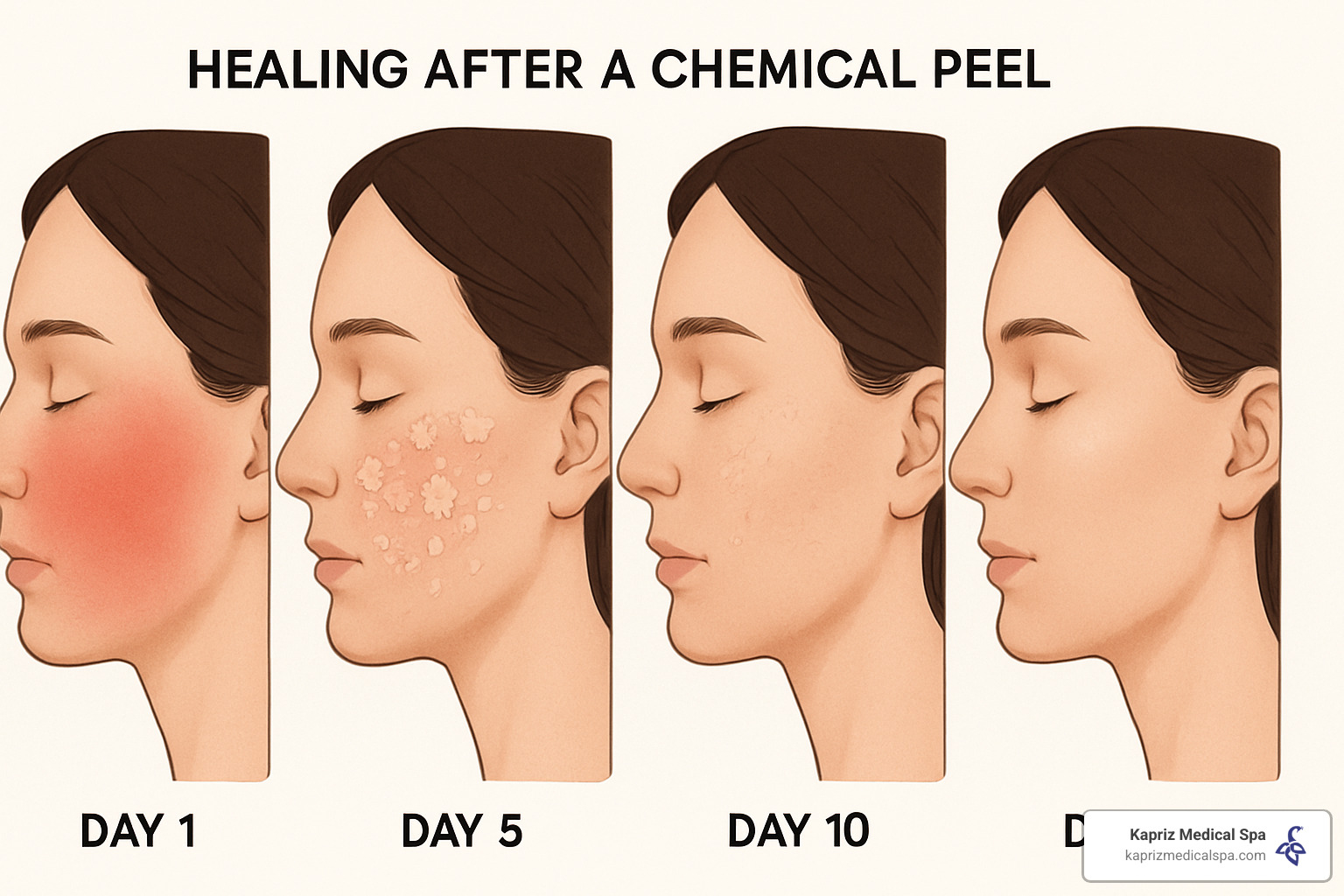
Light peels require 7-10 days of mild recovery. The first couple of days feel similar to a mild sunburn. By day three, you’ll notice light peeling starting. This peeling phase typically wraps up by day seven, revealing fresh, glowing skin underneath.
Medium peels require 1-2 weeks of healing time. The first few days bring moderate swelling and redness. Days four through seven involve more significant peeling, and you might see some crusting. Fresh, pink skin starts emerging around day eight, and the peeling continues through week two.
Deep peels require 2-3 weeks of dedicated recovery time. The first week involves significant swelling and requires special bandages. Heavy peeling occurs during the second week. By week three, you’ll see your new skin emerging.
Aftercare Essentials
Gentle cleansing is your new best friend. Use only fragrance-free, mild cleansers and pat your skin dry rather than rubbing. Apply any prescribed ointments or moisturizers exactly as directed.
Here’s the most important rule: hands off! Resist the urge to pick, scratch, or help the peeling process along. Let your skin do its thing naturally.
Sun protection becomes absolutely critical during recovery. Your new skin is incredibly vulnerable to UV damage. Use broad-spectrum SPF 30 or higher every single day, reapply every two hours when outside, and consider wearing wide-brimmed hats.
Your regular skincare routine needs a temporary makeover. Put away your retinoids, AHAs, and BHAs until your skin has completely healed. Stick to gentle, hydrating products and apply moisturizer frequently.
Long-Term Maintenance
Getting great results is just the beginning. Maintaining those results requires ongoing commitment.
Topical maintenance keeps your results looking their best. Continue using any prescribed lightening agents as directed. Vitamin C serums provide excellent antioxidant protection. Once your skin has fully healed, you can gradually reintroduce retinoids.
Consider maintenance peels every 3-6 months to keep your skin looking fresh and prevent new pigmentation from settling in.
Lifestyle factors play a huge role. Strict sun protection becomes a lifelong habit. A diet rich in antioxidants supports healthy skin from the inside out. Stay well-hydrated to help your skin maintain its new, healthy appearance.
When to Call a Dermatologist
Contact your provider immediately if you notice signs of infection like increased pain, pus, or red streaking from the treated area. Severe pain that’s getting worse instead of better isn’t normal and needs evaluation.
Watch for unusual scarring or texture changes. If your pigmentation gets worse instead of better after healing, don’t hesitate to reach out.
For comprehensive skin care services and ongoing support, explore our Skin Care Jacksonville offerings.
Alternatives, FAQs & Next Steps
While chemical peel dark spots treatment is highly effective, it’s not the only option available. Understanding alternatives helps you make the best choice for your specific needs, budget, and lifestyle.
Alternatives to Chemical Peel for Dark Spots
Topical treatments:
– Hydroquinone (2-4%): The gold standard for pigment inhibition
– Tretinoin: Accelerates cell turnover and fades spots over time
– Kojic acid and arbutin: Natural lightening agents with fewer side effects
– Vitamin C serums: Antioxidant protection and mild lightening effects
Energy-based treatments:
– IPL (Intense Pulsed Light): Can eliminate up to 70% of sun damage
– Laser treatments: Precise targeting of pigmented lesions
– Microneedling: Stimulates collagen while improving product penetration
Physical exfoliation:
– Microdermabrasion: Gentle removal of surface pigmentation
– Dermaplaning: Removes dead skin cells and fine hair
Many patients achieve optimal results by combining chemical peels with topical treatments or other procedures.
Does a Chemical Peel Remove Dark Spots Permanently?
Chemical peels can dramatically fade or eliminate existing dark spots, but they don’t prevent new ones from forming. The permanence of results depends on several factors:
Factors affecting longevity:
– Sun protection habits post-treatment
– Skin type and tendency toward pigmentation
– Hormonal factors (for melasma)
– Depth of original pigmentation
– Maintenance routine
Realistic expectations:
– Light peels: Results may last 6-12 months with proper care
– Medium peels: Results can last 1-2 years
– Deep peels: Effects may persist for up to 10 years
The key to maintaining results is consistent sun protection and appropriate maintenance treatments.
Can I Do a Chemical Peel at Home Safely?
While over-the-counter acid products are available, professional chemical peel dark spots treatment offers several advantages:
Professional advantages:
– Proper skin assessment and peel selection
– Higher acid concentrations for better results
– Safety monitoring during treatment
– Immediate management of adverse reactions
– Customized aftercare protocols
If you choose to use at-home acids, start with low concentrations (under 10%), perform patch tests, and follow all safety instructions carefully. However, for significant pigmentation issues, professional treatment is typically more effective and safer.
What is the Average Cost of a Peel for Dark Spots?
The cost of chemical peels varies significantly:
National averages:
– Light peels: $200-$500 per session
– Medium peels: $500-$2,000 per session
– Deep peels: $2,000-$5,000 per session
Factors affecting cost:
– Geographic location
– Provider expertise and credentials
– Facility overhead
– Peel depth and complexity
– Number of sessions required
Multiple light peels may cost more overall than fewer medium peels, so discuss the most cost-effective approach during consultation.
For information about anti-aging treatments that complement chemical peels, visit our Anti-Aging Skin Treatments page.
Conclusion
Your journey to clearer, more radiant skin doesn’t have to be a dream anymore. Chemical peel dark spots treatment has helped thousands of people reclaim their confidence by dramatically reducing stubborn pigmentation that once seemed permanent.
The science is clear: chemical peels can reduce dark spots by 50-75% through controlled exfoliation that removes damaged skin cells and stimulates healthy new growth. But success isn’t just about the treatment itself – it’s about finding the right approach for your unique skin type, following proper preparation protocols, and committing to the aftercare that makes results last.
Every skin tone can benefit from chemical peels when you work with experienced professionals who understand the nuances of different skin types. Whether you’re dealing with sun damage, hormonal changes, or stubborn acne scars, the right peel depth and technique can make a remarkable difference.
The most important takeaway? Sun protection isn’t optional – it’s your insurance policy for maintaining beautiful results. Combined with appropriate maintenance treatments, your investment in chemical peels can deliver lasting improvements that keep paying dividends for years to come.
At Kapriz Medical Spa in Jacksonville, we believe that great skin care is deeply personal. That’s why we take time to understand not just your skin concerns, but your lifestyle, goals, and comfort level with different treatment approaches. Our experienced team has seen how the right chemical peel dark spots treatment can transform not just skin, but confidence.
We’re not interested in one-size-fits-all solutions or pushing treatments you don’t need. Instead, we focus on building lasting relationships while delivering the optimal aesthetic outcomes that help you look and feel your absolute best.
Your clearer skin story starts with a single conversation. Don’t let dark spots continue to dim your natural radiance when proven solutions are within reach. The personalized approach you deserve is just a consultation away.
Ready to find what chemical peels can do for your unique skin? Contact us today to schedule your consultation and take the first step toward the even-toned, glowing complexion you’ve been dreaming of.
For comprehensive facial rejuvenation options that complement chemical peel treatments, explore our facial rejuvenation services.