
Does laser tattoo removal scar? 1 Secret for Safe Skin
Understanding Your Tattoo Removal Scarring Concerns
Does laser tattoo removal scar? Modern laser tattoo removal typically does not cause scarring when performed by qualified professionals using advanced equipment and proper techniques. Research shows that between 18.8% to 25% of tattoo removals may experience some scarring, but this risk is significantly reduced with proper aftercare and experienced technicians.
Quick Answer:
- Low Risk: Professional laser removal has minimal scarring risk
- Main Causes: Poor aftercare, inexperienced providers, or aggressive treatment
- Prevention: Choose certified professionals and follow aftercare instructions
- Normal Healing: Redness, swelling, and scabbing are expected – not scars
If you’re considering removing that tattoo you once loved, you’re not alone. Tattoo regret affects nearly half of all tattooed individuals, and many worry about trading unwanted ink for permanent scars.
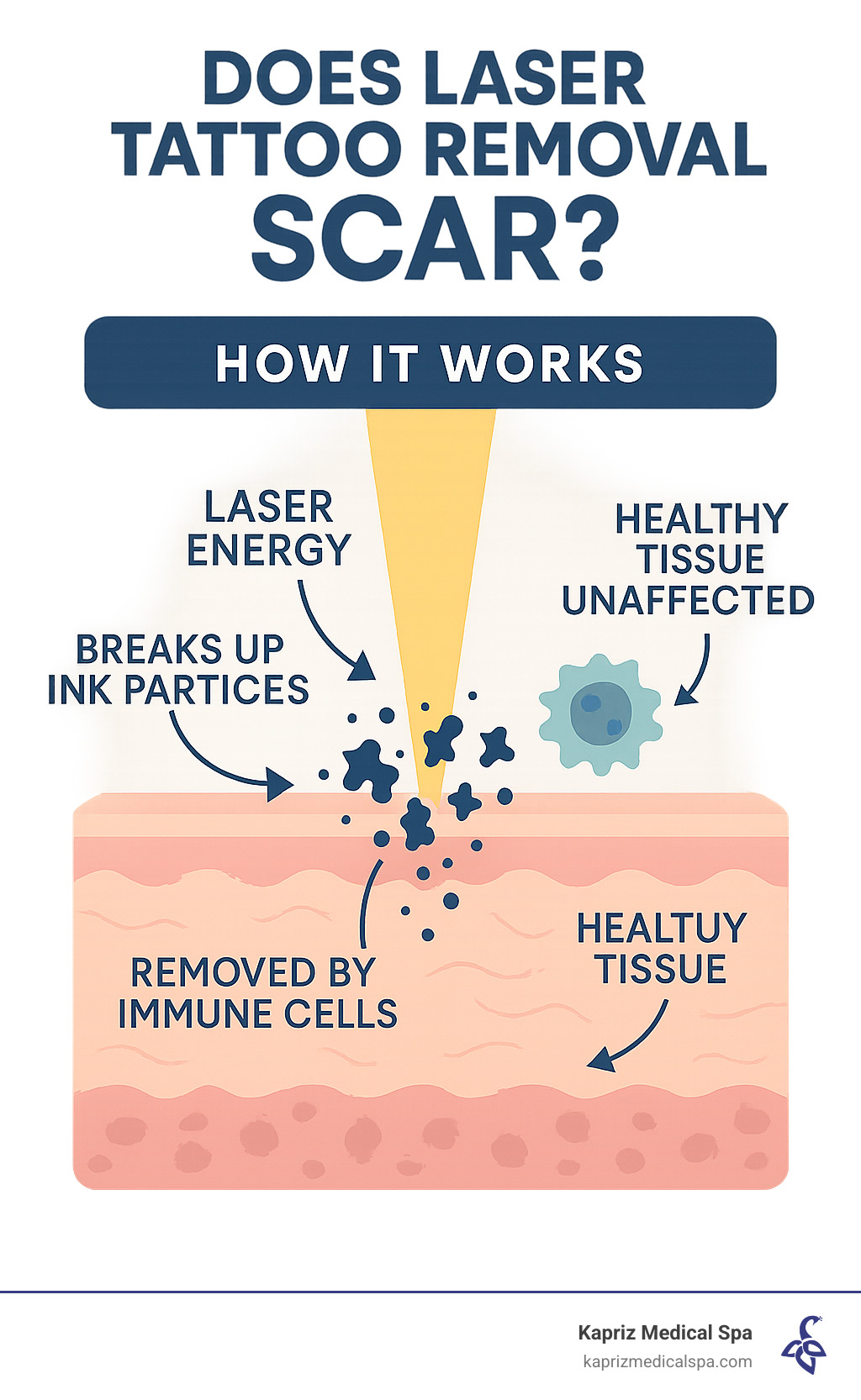
The good news? Laser technology has advanced dramatically over the past decade. Modern systems like picosecond lasers work by breaking down ink particles into tiny fragments that your immune system can naturally eliminate – all without damaging surrounding skin tissue.
However, understanding the risks is crucial for setting realistic expectations. While scarring is rare with proper treatment, certain factors can increase your risk. Your skin type, the tattoo’s characteristics, your chosen provider’s experience, and how well you follow aftercare instructions all play important roles in your final results.
At Kapriz Medical Spa, we believe in transparency. That’s why we’re sharing everything you need to know about scarring risks, prevention strategies, and what to expect during your tattoo removal journey.
The Big Question: Does Laser Tattoo Removal Scar?
Does laser tattoo removal scar? When performed correctly with modern technology, the answer is typically no. At Kapriz Medical Spa, we use advanced laser systems designed to target tattoo ink particles while leaving surrounding skin unharmed. With qualified technicians, the scarring risk is remarkably low, as modern picosecond lasers are incredibly precise.
It’s also important to note that what appears to be a “new” scar was often there all along. The original tattooing process can create minor scarring, which simply becomes more visible once the ink is removed.
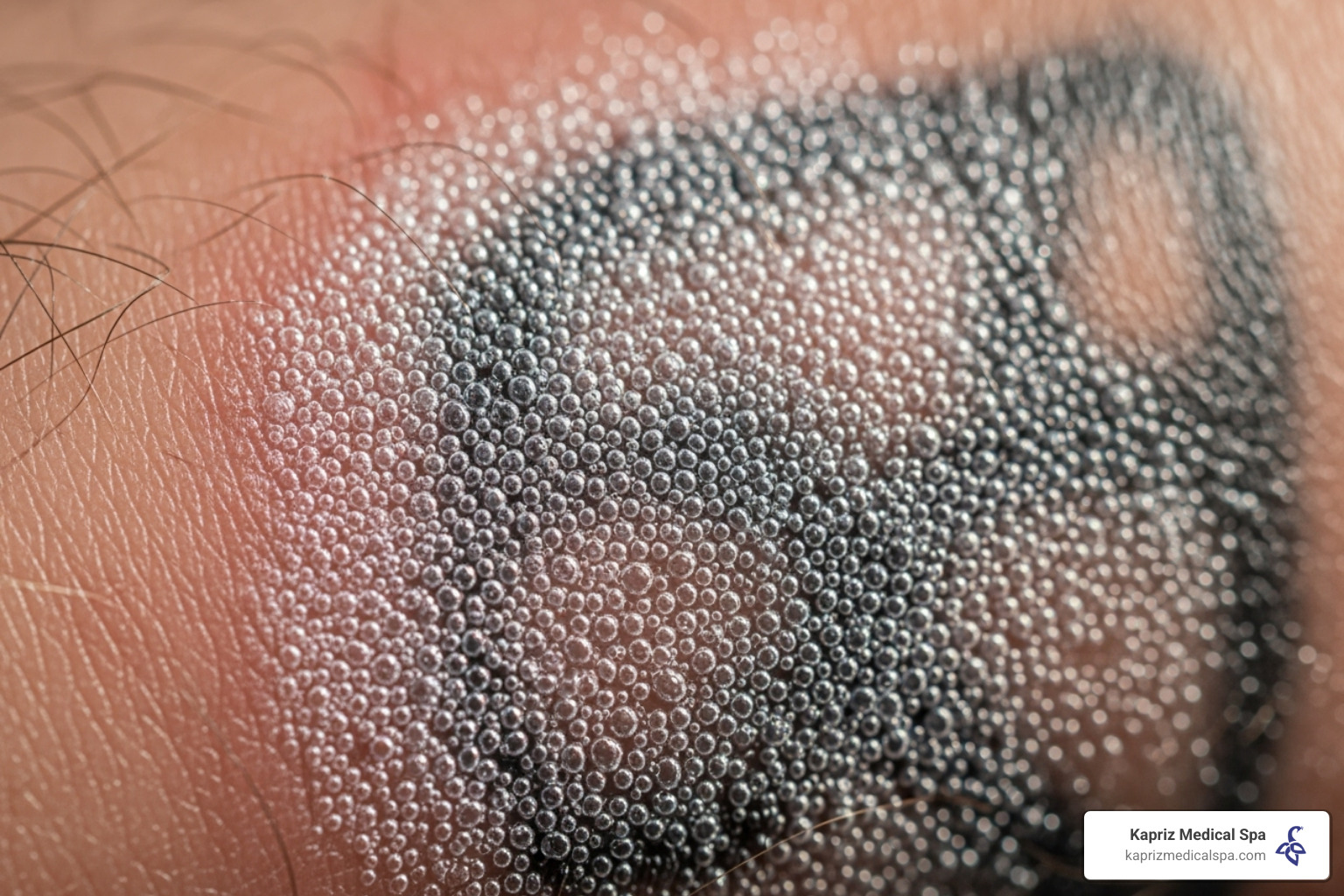
It’s crucial to distinguish between temporary side effects and actual scarring. Redness, swelling, and blistering are normal signs of your body’s healing process, not permanent damage. Your aftercare routine is your best insurance policy against complications.
Understanding the Risk: Why does laser tattoo removal scar in some cases?
While uncommon with proper treatment, understanding why laser tattoo removal scarring happens helps prevent it. The main culprits are usually preventable.
- Improper laser use: Settings that are too aggressive can burn the skin. An experienced technician knows how to calibrate the laser for your unique skin type.
- Inexperienced technicians: A lack of training can lead to misjudging skin tone, choosing the wrong wavelength, or applying inconsistent pressure.
- Poor aftercare: Skipping cleaning, sun protection, or moisturizing can lead to complications.
- Infection: Bacteria entering the treated area can trigger scar tissue formation.
- Picking scabs or popping blisters: This almost guarantees scarring by disrupting the new skin underneath and introducing bacteria.
Research shows that scarring occurs in 18.8% to 25% of cases, but this statistic often includes pre-existing scarring or issues resulting from poor aftercare, not the laser treatment itself.
The Typical Healing Process and Its Relation to Scarring
Understanding the normal healing journey helps you avoid panicking over temporary changes.
Immediately after your session, expect redness and swelling. This is a normal inflammatory response that calms down within a few hours to a couple of days.
Blistering may appear within 8 to 72 hours. These small blisters are a good sign, indicating your body is flushing out the shattered ink particles. As they heal, scabbing naturally follows. These scabs are nature’s bandages, protecting the healing tissue. Scabs are actually a sign of proper healing, creating a barrier while new skin forms.
The itching phase is a normal part of skin regeneration. Resisting the urge to scratch or pick is crucial to prevent disrupting the healing process.
This entire timeline spans a few days to several weeks. Following aftercare instructions and understanding what’s normal makes all the difference in achieving clear, scar-free results. For detailed information about our advanced laser treatments, visit our laser tattoo removal page.
How to Prevent Scarring During Laser Tattoo Removal
The truth is, preventing laser tattoo removal scars is a team effort between you and your laser specialist. While we handle the technical expertise at Kapriz Medical Spa, your commitment to proper aftercare makes all the difference. Think of it like a dance – we lead with advanced technology and skill, but you need to follow the steps to create a beautiful result.
Most scarring happens not because of the laser itself, but because of what happens afterward. The good news? You have more control over your outcome than you might think.
Pre-Treatment and In-Clinic Best Practices
Your scar prevention journey starts before you even see the laser. During your comprehensive consultation at our Jacksonville clinic, we dive deep into understanding your unique situation. We examine your tattoo’s size, colors, age, and depth, plus assess your skin type using the Fitzpatrick scale. This helps us predict how your skin will respond to treatment.
Working with a certified professional isn’t just a nice-to-have – it’s essential. Our laser technicians understand the science behind skin biology and laser physics. They know exactly how different skin types react and can spot potential problems before they happen.
We use advanced picosecond laser technology because it makes a real difference in preventing scarring. These lasers deliver energy in incredibly short bursts, shattering ink particles more efficiently while generating less heat. Less heat means less risk of thermal damage to your skin.
Every person’s skin is different, which is why we perform a skin type assessment and patch test during your first visit. This small test area helps us determine the perfect laser settings for your unique skin. We’re essentially creating a custom recipe for your treatment.
Getting the laser settings right is where art meets science. Our technicians carefully adjust the wavelength, energy level, and spot size for your specific tattoo and skin type. Too aggressive, and you risk scarring. Too gentle, and the treatment won’t be effective.
Spacing out your sessions properly is crucial – typically 6-8 weeks apart. Your body needs this time to heal and naturally flush out the broken ink particles. Rushing the process is like trying to paint over wet paint – it just doesn’t work well.
Your Role: Essential Aftercare for Scar-Free Healing
Once you leave our clinic, you become the star of the show. Your aftercare routine is honestly the biggest factor in whether you’ll develop scars or heal beautifully.
Keeping the area clean and dry sounds simple, but it’s your first line of defense against infection. Gently wash with mild soap and water daily, then pat (don’t rub) it dry. Think of it as caring for a healing wound, because that’s exactly what it is.
Applying antibiotic ointment as directed creates a protective barrier that helps your skin heal properly. Just a thin layer is all you need – more isn’t better here.
Here’s the hardest part: avoiding picking or scratching at all costs. We know it’s tempting when scabs form or the area gets itchy, but picking scabs can cause scarring. Those scabs are actually protecting the delicate new skin underneath.
Sun protection is absolutely critical during healing. Your treated skin is extra vulnerable to UV damage, which can cause scarring and permanent pigmentation changes. Always use SPF 30 or higher, or keep the area covered when you’re outside.
Staying hydrated helps improve your blood circulation, which supports your body’s natural healing processes. Your immune system works better when you’re well-hydrated.
If you smoke, now’s a great time to quit or at least take a break. Smoking affects your immune system and can slow healing significantly. Some studies show it can reduce tattoo removal success by up to 70% after 10 treatments.
The bottom line? Following these guidelines isn’t just about preventing scars – you’re actively helping your skin heal beautifully as your unwanted tattoo fades away. For more details about what to expect during your removal journey, check out our laser tattoo removal process.
Factors That Influence Scarring and Managing Outcomes
Everyone’s healing process is unique. At Kapriz Medical Spa, we understand that factors like your skin, tattoo characteristics, and overall health influence your scarring risk. This knowledge helps us create the most effective and safest treatment plan for your specific situation.
Key Factors Influencing Your Scarring Risk
- Tattoo Depth and Density: Deeper, denser tattoos may require more sessions. Amateur tattoos can have uneven ink depth, making removal more complex.
- Ink Colors: Black ink is the easiest to remove. Colors like yellow, green, and blue can be more stubborn and require different laser wavelengths and more patience.
- Tattoo Location: Areas with good blood flow (arms, legs) tend to heal faster than areas with less circulation (ankles, feet).
- Skin Tone: Darker skin has more melanin, which can compete with tattoo ink for laser energy. Our technicians are trained to use conservative settings to prevent pigment changes.
- Pre-existing Skin Conditions: A history of keloid scars, eczema, or psoriasis can affect healing. We discuss these thoroughly during your consultation to adjust your treatment plan.
- Age and Overall Health: Younger skin often heals faster, while factors like immune system strength and lifestyle choices also play a role in your body’s ability to clear the ink.
What to Do If You Develop Scars After Tattoo Removal
If scarring occurs or a pre-existing scar becomes visible, modern aesthetic treatments offer excellent solutions.
Silicone sheets and gels can flatten and soften newer, raised scars. Scar-fading creams with vitamin E or retinoids, and natural options like aloe vera, can also help.
At Kapriz Medical Spa, we offer professional treatments to dramatically improve scar appearance. Microneedling stimulates collagen to smooth indented scars. Chemical peels can address surface-level scarring and discoloration, while PRP therapy uses your body’s own growth factors to accelerate skin repair.
We will recommend the most effective approach for you during a consultation.
Laser vs. Other Methods: A Scarring Risk Comparison
It’s helpful to understand how laser tattoo removal scarring risks compare to other methods. We specialize in laser removal as it is the safest and most effective option available.
| Method | Scarring Likelihood | Effectiveness | Recovery Time |
|---|---|---|---|
| Laser Removal | Low to Very Low | High (breaks down ink for body to eliminate) | Days to Weeks (between sessions) |
| Surgical Excision | High | High (removes entire tattooed skin) | Weeks (requires stitches and wound care) |
| Dermabrasion | Moderate to High | Moderate (sands away skin layers) | Weeks to Months (raw, weeping skin) |
| Chemical Peels | Moderate to High | Low to Moderate (uses acids to peel skin) | Days to Weeks (can cause burns and hyperpigmentation) |
| Tattoo Removal Creams | High (often ineffective) | Very Low (can cause severe skin irritation, burns) | Weeks to Months (often leads to permanent damage) |
Other methods like surgical excision, dermabrasion, and chemical peels are far more invasive and carry a much higher risk of scarring, infection, and unpredictable results. Tattoo removal creams are often ineffective and can cause chemical burns, leading to permanent damage. Laser removal’s precision in targeting only ink particles makes it the gold standard for safety and effectiveness.
Frequently Asked Questions about Tattoo Removal and Scarring
When considering laser tattoo removal, questions about scarring are common. Here are answers to the most frequent concerns our clients have about does laser tattoo removal scar and its long-term effects.
What are the different types of scars that can result from laser tattoo removal?
True scarring from properly performed laser tattoo removal is rare. When issues do arise, they typically fall into these categories:
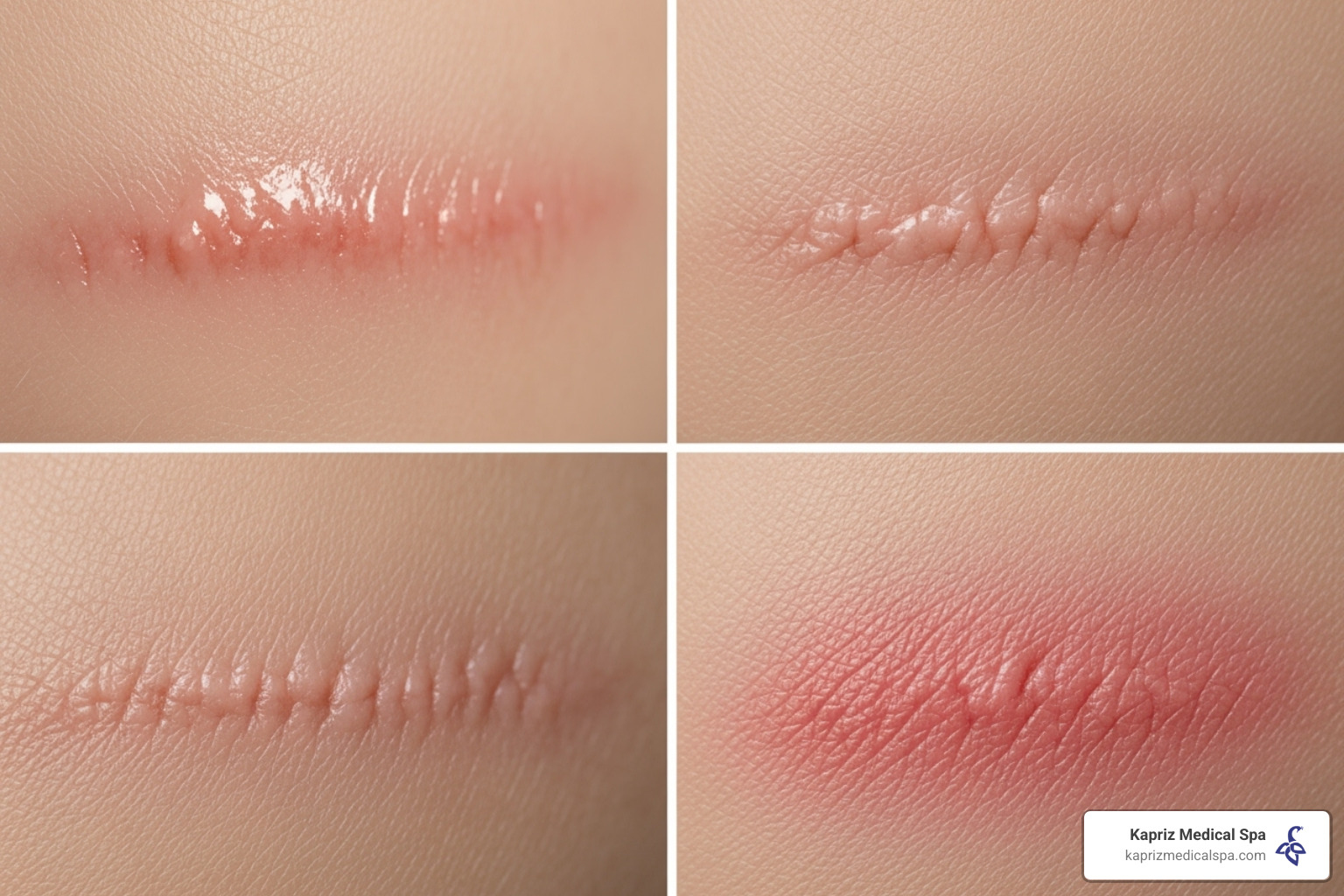
- Hypertrophic scars: Raised, red bumps that stay within the tattoo’s boundaries, caused by excess collagen during healing.
- Atrophic scars: Depressions or indentations in the skin resulting from tissue loss during healing.
- Keloid scars: Raised scar tissue that grows beyond the original tattoo area. This is more likely if you have a history of keloids.
- Pigment changes: These are not true scars but can be concerning. Hypopigmentation is a lightening of the skin, while hyperpigmentation is a darkening. These changes are usually temporary and fade over several months.
Our experienced team can identify these reactions and guide you on the best course of action.
Can pre-existing scars from getting the tattoo be removed?
Laser tattoo removal targets ink, not scar tissue. If the original tattooing process created a scar, the laser will not remove it. As the ink fades, these pre-existing scars simply become more visible.
However, we can help improve the appearance of these old scars. At Kapriz Medical Spa, we offer treatments like PRP therapy for skin regeneration and microneedling. These services boost collagen and smooth skin texture, helping old scars blend better with the surrounding skin. We will assess your tattoo for pre-existing scarring during your consultation and discuss your options.
What are the long-term effects of laser tattoo removal on the skin regarding scarring?
When performed correctly by professionals and with proper aftercare, permanent scarring is rare. The goal is clear, healthy skin with no lasting marks from the removal process.
Some subtle, often temporary, long-term changes are possible:
- Textural changes: Very slight differences in skin texture may occur, especially with deep or dense tattoos, but they are typically not noticeable.
- Hypopigmentation (light spots): Usually resolves within a year but can persist in a small number of cases.
- Hyperpigmentation (dark spots): Typically temporary and more common with darker skin tones or sun exposure during healing. It can take several months to fade.
Overall, laser tattoo removal does not harm your skin’s long-term health. With proper care, your skin should return to its natural state, just without the unwanted ink.
Begin Your Journey to Clearer Skin
Deciding to remove a tattoo is a significant step, and concerns about whether laser tattoo removal scars are valid. The reassuring answer is that with proper professional care, scarring is incredibly rare. At Kapriz Medical Spa in Jacksonville, FL, our reputation is built on delivering the results you want without the complications you fear.
Choosing a professional partner is the most critical factor in your outcome. Our team combines years of specialized training with advanced picosecond laser technology and a genuine commitment to your safety.
We believe in personalized treatment plans because cookie-cutter approaches don’t work for unique skin and tattoos. A comprehensive consultation is the first step. It’s where we assess your tattoo and skin, answer your questions, and perform a patch test to determine the optimal, safest laser settings for you.
Our commitment to safety includes spacing sessions 6 to 8 weeks apart to allow for proper healing, which is crucial for preventing complications. Whether your goal is complete removal or fading for a cover-up, we’ll create a realistic plan with you.
The journey to clearer skin doesn’t have to be uncertain. With the right team, technology, and your commitment to aftercare, you can move forward with confidence.
Ready to take the next step? We’d love to help you achieve the skin you’ve been dreaming of.