
Non-surgical facial rejuvenation: 10 Powerful Benefits in 2025
Understanding Facial Aging and Non-Surgical Solutions
Non-surgical facial rejuvenation refers to minimally invasive cosmetic procedures that improve the appearance of your skin without traditional surgery. These treatments address signs of aging with little to no downtime.
Common Non-Surgical Facial Rejuvenation Options:
– Injectables: Botox, Dysport (3-4 months duration)
– Dermal Fillers: Hyaluronic acid, calcium hydroxyapatite (6-24 months)
– Energy Devices: Lasers, radiofrequency, ultrasound
– Skin Treatments: Chemical peels, microneedling
– Combination Therapies: Thread lifts, liquid facelifts
In recent years, the allure of non-surgical facial rejuvenation treatments has captivated those seeking to refresh and improve their appearance without the downtime and risks associated with traditional surgical procedures. In 2020 alone, providers performed more than 13 million minimally invasive cosmetic procedures in the U.S., with most targeting the face.
Why this surge in popularity? The answer lies in what these treatments offer: visible results with minimal recovery time. Whether you’re noticing early signs of aging or simply want to maintain your youthful appearance, non-surgical options provide an accessible entry point into aesthetic care.
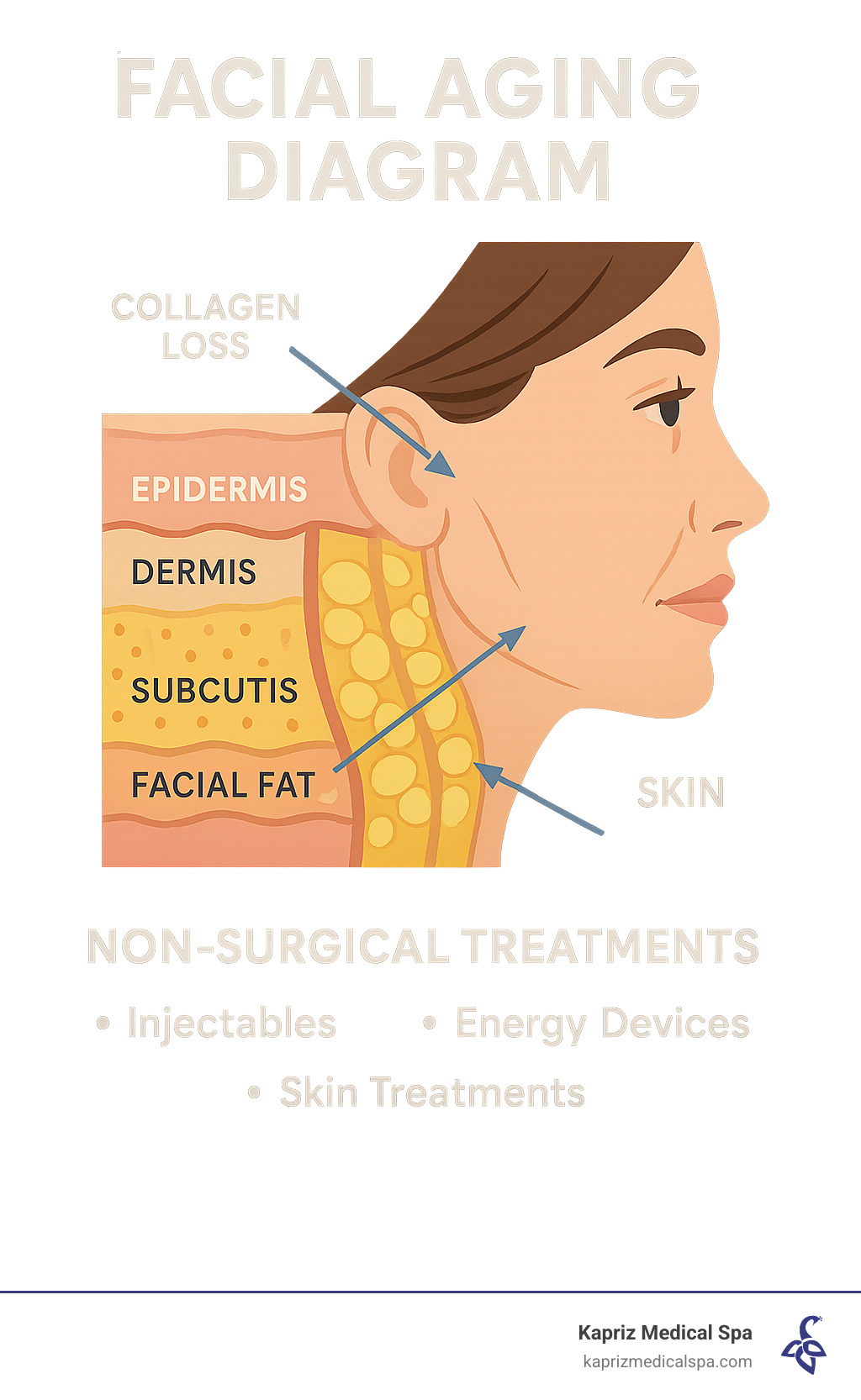
The natural aging process affects everyone differently, but typically involves:
– Loss of collagen and elastin (starting around age 35)
– Facial fat pad displacement
– Bone resorption
– Muscle tension changes
Unlike a surgical facelift that removes excess skin through incisions, non-surgical treatments work by stimulating your body’s natural regenerative processes or temporarily correcting specific concerns without permanent alterations.
Brief Overview of Non-Surgical Options
The field of non-surgical facial rejuvenation has expanded dramatically, offering solutions for nearly every concern. These treatments generally fall into several categories:
Injectables work by either relaxing muscles that cause wrinkles (neuromodulators like Botox) or adding volume to areas that have hollowed with age (dermal fillers). As Dr. Thomas Griffin, a dermatologist specializing in facial aesthetics, explains, “Injectables and fillers are a good first step for addressing early signs of aging.”
Lasers and energy-based devices use controlled heat or light energy to stimulate collagen production, improving skin texture and tightness. These treatments can address everything from fine lines to pigmentation issues.
Skin-enhancing treatments like chemical peels, microdermabrasion, and medical-grade facials work at the surface level to improve skin tone and texture.
Advanced technologies including thread lifts, radiofrequency devices, and ultrasound treatments provide lifting effects without surgery.
At Kapriz Medical Spa in Jacksonville, FL, we’ve seen how these non-surgical options have transformed our clients’ confidence and appearance without the need for lengthy recoveries or surgical risks.
What Is Non-Surgical Facial Rejuvenation?
Non-surgical facial rejuvenation refers to a collection of gentle, minimally invasive procedures that refresh your appearance without the need for surgery. Think of these treatments as your skin’s personal trainer—they work with your body’s natural processes to restore a more youthful look, without the commitment of going under the knife.
These treatments share several appealing characteristics that make them increasingly popular:
They’re truly minimally invasive—using tiny needles, topical applications, or energy devices rather than surgical scalpels. You’ll visit a comfortable office setting like our Kapriz Medical Spa, rather than a surgical center. Most treatments actively stimulate your body’s own collagen production, creating natural-looking improvements. Best of all, you’ll walk away without any visible scarring and typically return to your normal activities with quick recovery times.
“The beauty of today’s non-surgical options lies in their versatility,” explains Dr. Nazanin Saedi, a board-certified dermatologist. “Modern treatments can address multiple aging concerns simultaneously—from pigmentation issues to muscle activity, volume loss, and redness—often in a single visit.”
These treatments offer the perfect solution if you’re curious about aesthetic improvements but aren’t ready for surgery. They’re also ideal for maintaining results between surgical procedures or enhancing surgical outcomes.
How It Differs From a Surgical Facelift
While both approaches aim to restore youthful contours, the similarities largely end there. Understanding these differences helps set realistic expectations:
| Factor | Surgical Facelift | Non-Surgical Rejuvenation |
|---|---|---|
| Procedure Type | Invasive surgery with incisions | Minimally invasive with injections or energy devices |
| Anesthesia | General anesthesia or deep sedation | Topical numbing or local anesthesia |
| Procedure Length | 3-5 hours | 15-60 minutes (treatment dependent) |
| Recovery Time | 2-4 weeks | Hours to days |
| Results Duration | 7-10+ years | 3 months to 2 years (treatment dependent) |
| Downtime | Significant; social downtime of 2+ weeks | Minimal; often same-day return to activities |
| Scarring | Permanent scars (typically hidden) | No visible scarring |
| Cost | $8,000-$15,000+ | $300-$5,000 (treatment dependent) |
| Risk Level | Higher risk of complications | Lower risk profile |
| Result Intensity | Dramatic, comprehensive changes | Subtle to moderate improvements |
As a Cleveland Clinic facial plastic surgeon explains, “Surgical facelifts require incisions, general anesthesia and hospital stays for dramatic, permanent changes. Non-surgical approaches use gentle injections or energy-based treatments for more subtle, temporary results with far less downtime.”
At Kapriz Medical Spa, we believe both approaches have their place in aesthetic medicine. Many of our clients achieve beautiful results with non-surgical options, particularly those with early or moderate signs of aging. For those with significant skin laxity or advanced aging concerns, we provide honest assessments about when surgery might be more appropriate.
Signs of Aging It Can Address
Non-surgical facial rejuvenation effectively tackles a wide range of aging concerns, with specific treatments custom to each issue:
When it comes to wrinkles and fine lines, these treatments excel at smoothing both dynamic wrinkles (those caused by muscle movement, like crow’s feet and forehead lines) and static wrinkles (those visible at rest, like smile lines). The delicate fine lines around your eyes and mouth respond particularly well to non-surgical approaches.
Volume loss happens naturally as we age, leaving hollow temples, sunken cheeks, and thinning lips. Non-surgical treatments can restore this lost volume, recreating youthful contours and definition without surgery.
For skin texture and tone issues, these treatments improve rough texture, enlarged pores, acne scars, sun damage, and redness—concerns that surgery doesn’t typically address. Many clients are surprised by how much fresher their skin looks after addressing these often-overlooked signs of aging.
Even mild to moderate skin laxity responds well to non-surgical treatments. Early jowl formation, mild neck sagging, drooping brows, and eyelid hooding can all improve without surgery.
“The dermis contains collagen, elastin and hyaluronic acid—all of which decline with age,” explains Dr. Sepideh Saber. “Around 35, we begin losing significant amounts of these substances, leading to visible laxity and other aging signs.”
While non-surgical treatments work wonders for many concerns, they can’t match surgery’s lifting power for severe skin laxity or dramatic facial sagging. This is why we begin every client relationship at Kapriz Medical Spa with a thorough, personalized consultation. We’ll help determine which treatments will give you the best results for your specific concerns, ensuring your investment brings the improvements you’re seeking.
Popular Treatments & How They Work
The world of non-surgical facial rejuvenation offers a diverse array of treatments, each targeting different aspects of facial aging. Understanding how each works helps you make informed decisions about your aesthetic journey.
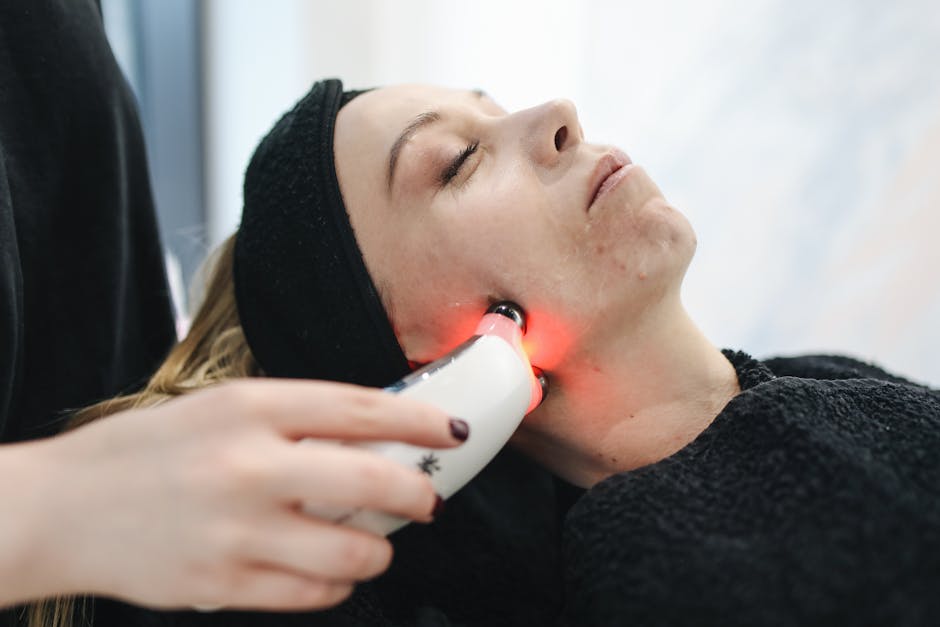
At Kapriz Medical Spa, we offer comprehensive options custom to your unique needs. Let’s explore the most effective treatments available today:
Botulinum Toxin (Botox, Dysport)
Did you know that botulinum toxin injections have seen an astounding 621% increase in popularity over the past two decades? It’s no wonder they remain the most requested non-surgical cosmetic procedure worldwide.
These remarkable neuromodulators temporarily block nerve signals to targeted facial muscles, gently limiting their ability to contract. This relaxation not only smooths existing dynamic wrinkles but also prevents new ones from forming. As one board-certified plastic surgeon at UT Southwestern explains, “Botulinum toxins gently weaken targeted facial muscles to reduce wrinkles like ’11s’ and crow’s feet, and can lift brows when properly placed.”
Botox and Dysport shine when treating forehead lines, those pesky frown lines between your eyebrows (often called “11s”), crow’s feet around your eyes, and even bunny lines on your nose. They can also lift downturned mouth corners, smooth neck bands, and even define your jawline through masseter reduction.
The treatment itself takes just 10-15 minutes, feels like a small pinch, and requires zero downtime—you can return to your normal activities immediately afterward. Results appear within 3-7 days, reach their peak at 2 weeks, and typically last 3-4 months.
At Kapriz Medical Spa, our expert injectors use precise techniques to ensure your results look completely natural. We carefully select injection points to maintain your expressiveness while reducing those unwanted wrinkles.
Learn more about botulinum toxin safety
Dermal Fillers
Dermal fillers have truly revolutionized non-surgical facial rejuvenation by restoring lost volume and reshaping facial contours—all without surgery.
“Dermal fillers add volume for six to 12 months with a simple injection,” notes a Cleveland Clinic facial plastic surgeon. These gel-like substances are strategically placed beneath the skin to restore lost volume, smooth deep lines, improve facial contours, and create better symmetry and balance.
The most popular fillers are hyaluronic acid (HA) products like Juvederm and Restylane, beloved for their natural look and reversibility, lasting 6-18 months. For deeper lines and more substantial volume needs, calcium hydroxyapatite (CaHA) fillers like Radiesse offer a thicker consistency and 12-18 months of results.
If you’re looking for longer-lasting options, Poly-L-Lactic Acid (PLLA) fillers like Sculptra work as biostimulators, gradually building your own collagen for results that can last up to 2 years. For those seeking a semi-permanent solution, Polymethyl Methacrylate (PMMA) fillers like Bellafill can address deep wrinkles and acne scars for 5+ years.
Fillers work wonders on nasolabial folds (those smile lines), marionette lines, cheek hollowing, temple depressions, tear troughs under the eyes, thin lips, and even jawline definition. Some can even refresh aging hands!
Your treatment will take between 15-60 minutes depending on the areas treated, with most fillers containing lidocaine for comfort. Results are typically immediate (except for biostimulators like Sculptra), with possible bruising and swelling for 1-7 days.
At Kapriz Medical Spa in Jacksonville, our injectors are skilled in the “Injecta-Lift™” technique, placing fillers deeply on the bone for natural-looking, three-dimensional results that never look overdone.
More info about dermal fillers
Laser, Light & Energy Devices
Energy-based treatments represent some of the most sophisticated options in non-surgical facial rejuvenation, often addressing multiple concerns in a single session.
Laser resurfacing comes in several varieties, each with its own benefits. Ablative lasers like CO₂ and Erbium remove outer skin layers for dramatic improvement of wrinkles, scars, and texture—though they require more downtime. Non-ablative lasers work more gently, heating deeper skin without damaging the surface to stimulate collagen with minimal recovery time. Fractional lasers like Fraxel and Halo offer a middle ground, treating a fraction of the skin at a time for impressive results with moderate recovery.
Intense Pulsed Light (IPL) therapy uses broad-spectrum light to target pigmentation, redness, and vascular lesions while improving overall skin tone. Most clients experience minimal downtime, making it perfect for busy schedules.
For skin tightening, Radiofrequency (RF) treatments heat deeper skin layers to stimulate collagen production and address mild to moderate skin laxity. These treatments are often combined with microneedling for improved results.
If you’re looking for more significant lifting, Ultrasound Therapy (Ultherapy) uses focused ultrasound waves to target the same deeper tissue layers as a surgical facelift. The results develop gradually over 2-3 months as your body produces fresh collagen, with effects lasting 1-2 years.
“Lasers break down dead skin cells and target wrinkles, age spots, scars, blood vessels, and blemishes, with recovery times varying by device,” explains one facial plastic surgeon we work with.
Most energy treatments take between 30-90 minutes, with comfort levels varying (we typically use topical anesthesia for your comfort). Downtime ranges from 1-14 days depending on the intensity of your treatment, with results appearing gradually over 1-6 months as collagen rebuilds. We generally recommend annual maintenance treatments to preserve your results.
Skin-Boosting Adjuncts
While injectables and energy-based treatments form the foundation of non-surgical facial rejuvenation, several complementary treatments can improve and extend your results.
Platelet-Rich Plasma (PRP) therapy—sometimes called the “Vampire Facial” when combined with microneedling—uses your body’s own healing factors to stimulate rejuvenation. This regenerative treatment processes a small sample of your blood to concentrate the platelets, which can then be injected into the skin or applied topically to accelerate healing and boost collagen production. The results develop gradually over 2-3 months, creating natural improvements in skin quality.
At the cutting edge of regenerative aesthetics, Exosome Therapy uses cell-derived vesicles containing powerful growth factors and proteins. As one regenerative medicine specialist explains, “Exosomes isolated from mesenchymal stem cells are processed and applied topically to stimulate collagen production and cellular renewal by triggering the skin’s natural healing processes.” This advanced treatment is particularly effective for texture and tone issues.
Medical-Grade Skincare products contain higher concentrations of active ingredients than over-the-counter options. Professional-strength retinoids accelerate cellular turnover, while potent antioxidants fight free radical damage. Growth factors stimulate collagen production, peptides help firm the skin, and specialized serums target specific concerns like pigmentation. These products complement in-office treatments and extend their benefits.
For more intensive exfoliation, Chemical Peels use controlled chemical solutions to remove damaged skin cells. Light peels brighten with no downtime, medium peels address texture and mild pigmentation issues, and deep peels tackle significant sun damage and wrinkles.
Microneedling creates thousands of microscopic channels in the skin, triggering your body’s natural healing response. This stimulates fresh collagen production, improves product absorption, reduces scars, and smooths fine lines—all with minimal downtime of just 1-3 days of redness.
At Kapriz Medical Spa, we believe in a comprehensive approach to facial rejuvenation. Our customized treatment plans often incorporate these supportive therapies to improve and maintain the results of your primary treatments, creating a harmonious and natural-looking outcome.
Benefits, Risks & Candidacy
Non-surgical facial rejuvenation offers numerous advantages over traditional surgery, but like any medical procedure, it comes with considerations that should be carefully weighed.
Are You a Candidate for Non-Surgical Facial Rejuvenation?
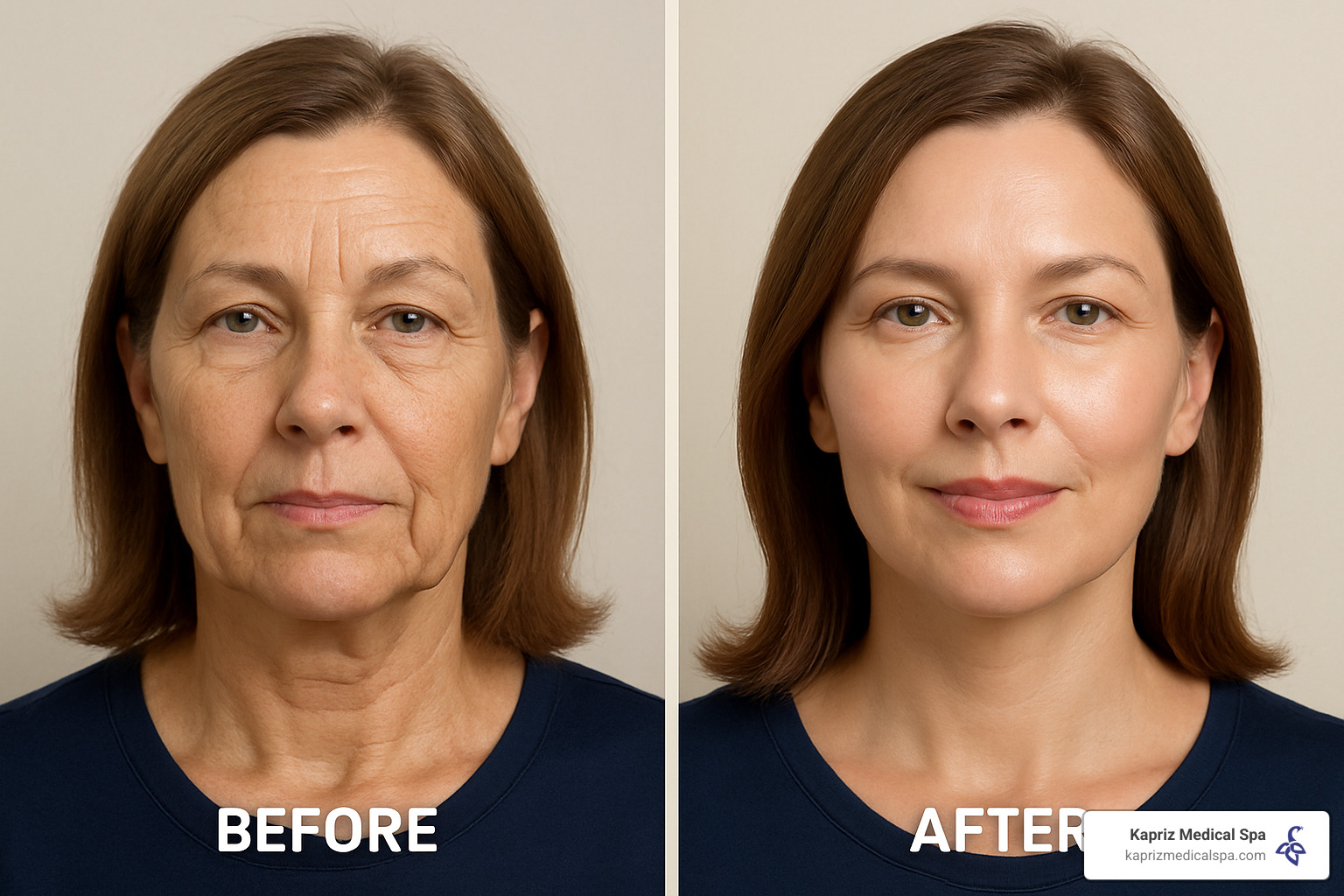
Wondering if these treatments might be right for you? The perfect candidate typically shows early signs of aging rather than advanced changes. You’re likely an excellent fit if you’re noticing those first hints of facial aging—perhaps some fine lines around your eyes, a bit of volume loss in your cheeks, or skin that’s starting to lose its youthful bounce.
Mild to moderate aging concerns respond beautifully to non-surgical approaches. If you’re seeing early jowling, developing wrinkles, or noticing your cheeks aren’t as full as they once were, these treatments can make a significant difference.
Having realistic expectations is crucial for satisfaction with your results. As a UT Southwestern plastic surgeon emphasizes, “A natural look should be the goal of any facial rejuvenation plan.” The most satisfied clients understand that non-surgical treatments offer subtle improvement rather than dramatic change. They appreciate that results develop gradually and may require maintenance.
Your overall health plays an important role too. The ideal candidate has no active skin infections, no history of abnormal scarring, and no allergies to treatment components. Your medical history helps us determine which treatments will be safest and most effective for your unique situation.
Lifestyle factors also influence your candidacy. The best results come to those willing to follow pre- and post-treatment instructions, commit to sun protection, and understand that some treatments deliver gradual improvement rather than instant results.
At Kapriz Medical Spa in Jacksonville, we take the time to understand your concerns and goals during our thorough consultations. This helps us determine whether non-surgical options will meet your expectations or if you might benefit more from surgical intervention.
When Non-Surgical Facial Rejuvenation Is NOT Recommended
While these treatments work wonders for many people, they aren’t the right solution for everyone. Being honest about limitations is part of our commitment to your satisfaction.
If you have severe skin laxity with significant jowling or neck sagging, non-surgical treatments likely won’t deliver the results you’re hoping for. When facial aging has progressed to extreme skin redundancy, surgical intervention typically provides more satisfying outcomes.
Certain medical conditions make non-surgical treatments inadvisable. These include a history of keloid scarring, active skin infections or inflammatory conditions like rosacea or psoriasis, certain autoimmune disorders, and blood-clotting issues. As a Cleveland Clinic facial plastic surgeon notes, “Individuals with active skin conditions, growths or severe scarring may not be good candidates.”
Pregnancy and breastfeeding are also temporary contraindications for most aesthetic treatments. We’ll always prioritize your overall health and safety above cosmetic concerns.
Having realistic expectations is essential. If you’re seeking dramatic, surgical-level results or hoping for permanent correction without maintenance, non-surgical options may disappoint you. We believe in setting clear expectations from the beginning.
Some treatments have limitations based on skin type. As one provider explains regarding certain lasers, they’re “not recommended for darker skin tones; limited to Fitzpatrick types I–III,” due to potential pigmentation issues in darker skin. At Kapriz, we offer safe alternatives for all skin types and will never recommend treatments that could harm your skin.
If we determine that non-surgical treatments won’t meet your goals, we’ll openly discuss alternative options or refer you to a trusted surgical colleague. Your satisfaction is our priority.
Benefits vs Potential Risks
The appeal of non-surgical treatments comes from their impressive benefits balanced against relatively minor risks.
The minimal downtime is perhaps the most attractive benefit for many busy professionals. Unlike surgery that might require weeks of recovery, most non-surgical treatments allow you to return to normal activities within hours. As one specialist puts it, “Little to no downtime makes it appealing for patients with busy lifestyles.”
Natural-looking results are another significant advantage. These treatments typically provide gradual improvement that doesn’t scream “I had work done.” They preserve your natural facial movement and expressions, and can be adjusted over time as your face continues to change.
The customizable approach allows us to create a treatment plan specifically for your concerns. We can target specific areas, combine different modalities, and adjust treatment intensity based on your preferences and comfort level.
Non-surgical options offer a lower risk profile compared to surgery. They eliminate risks associated with general anesthesia, reduce infection possibility, and generally involve fewer complications overall.
Many clients appreciate the cost-effectiveness of this approach. The lower initial investment compared to surgery and the ability to space treatments according to your budget provides financial flexibility that surgery doesn’t offer.
Of course, even minimally invasive treatments come with potential downsides. Common side effects include temporary redness, swelling, or bruising, mild discomfort during or after treatment, and skin sensitivity lasting a few days.
Less common complications might include infection (rare with proper technique), asymmetry or uneven results, allergic reactions, or pigmentation changes, especially with energy-based treatments.
With injectable treatments, there are rare but serious risks including vascular occlusion (blockage of blood vessels), tissue necrosis, and extremely rarely, vision changes. However, as a facial rejuvenation specialist notes, “Most nonsurgical facelift treatments can be done in-office without general anesthesia or hospital stay,” significantly reducing many risks associated with surgical procedures.
At Kapriz Medical Spa, we minimize these risks through extensive provider training, proper technique, and careful patient selection. We thoroughly discuss all potential complications during your consultation so you can make a fully informed decision about your care.
Costs, Longevity & Maintenance
When considering non-surgical facial rejuvenation, understanding the investment—both financial and time-related—helps you plan your aesthetic journey effectively.
How Long Do Non-Surgical Facial Rejuvenation Results Last?
The beauty of facial rejuvenation is that you have options—but those options come with different timelines. Think of it as choosing between a weekend getaway versus a longer vacation; each has its place in your life.
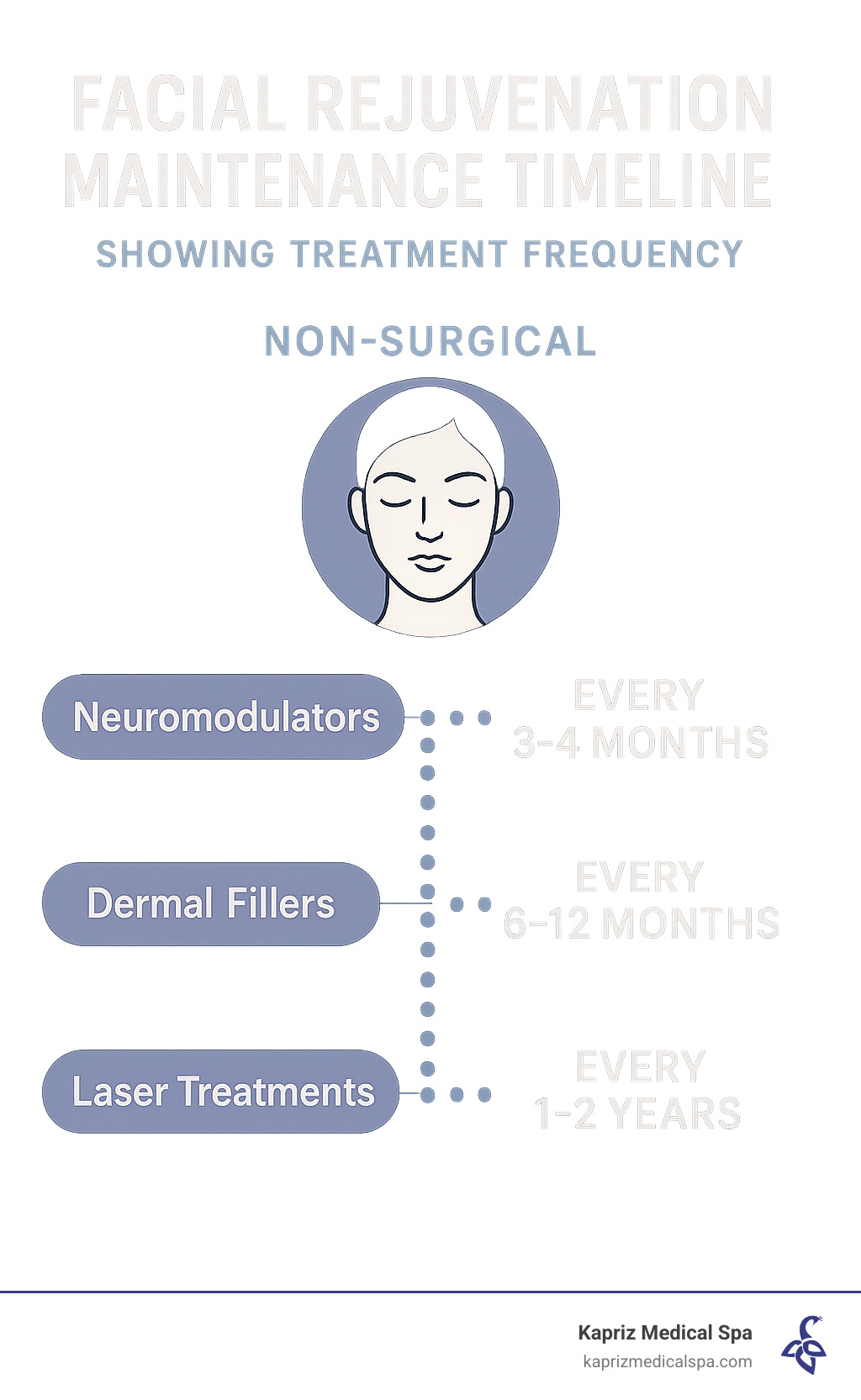
For quick refreshes, neuromodulators like Botox and Dysport work wonders. You’ll start seeing results in just 3-7 days, with the full effect blossoming around the two-week mark. These treatments typically last about 3-4 months, though many of our clients at Kapriz notice that with consistent treatments, their results gradually last longer—like training your muscles to relax more naturally.
If you’re looking for something with more staying power, dermal fillers offer varying longevity. Hyaluronic acid fillers like Juvederm and Restylane generally last 6-18 months depending on the specific product and where it’s placed. As a Cleveland Clinic facial plastic surgeon notes, “Dermal fillers can last anywhere from six months to several years.” The more structural calcium-based Radiesse typically lasts 12-18 months, while bio-stimulatory options like Sculptra can maintain results for up to 2 years by encouraging your own collagen production. For those seeking the longest-lasting option, PMMA fillers like Bellafill can persist for 5+ years.
Energy-based treatments offer some of the most enduring results. A well-performed ablative laser treatment can yield improvements that last several years with proper skincare. Radiofrequency treatments typically maintain their tightening effects for 1-3 years, gradually fading over time. Ultrasound therapy (Ultherapy) generally provides 1-2 years of lifted contours, while IPL treatments for pigmentation and vessels usually need refreshing every 6-12 months.
For those trying thread lifts, PDO threads typically provide 6-9 months of lift, while newer PLA and PCA threads can last between 12-24 months before your body naturally absorbs them.
As one provider of energy-based treatments explains, “Results typically appear gradually in 2–6 months and can last 1–2 years when part of an annual maintenance program.”
Maintenance Strategies to Prolong Results
Think of maintenance as tending a garden—consistent care yields the most beautiful results over time. Here’s how to make your investment last:
Your daily skincare regimen forms the foundation of maintaining your results. At Kapriz Medical Spa, we emphasize medical-grade products custom to your specific skin needs. Sunscreen is non-negotiable—apply a broad-spectrum SPF 30+ every morning, rain or shine. As a Cleveland Clinic facial plastic surgeon advises, “Maintain results by cleansing, moisturizing daily and avoiding sun exposure.”
Incorporate antioxidants to fight environmental damage and retinoids to keep collagen production humming along. These powerhouse ingredients work behind the scenes to preserve your treatments’ effects.
Regular touch-up treatments scheduled strategically can prevent the complete fading of results. For neuromodulators, booking your next appointment at around the 3-month mark—before movement fully returns—often yields the best long-term outcomes. With fillers, we typically recommend maintenance before volume loss becomes obvious, usually around 6-12 months depending on the product.
Your lifestyle choices dramatically impact how long your results last. Sun protection goes beyond just sunscreen—wear hats and sunglasses and seek shade during peak hours. If you smoke, quitting will significantly improve your skin’s ability to maintain results (and benefit your overall health). Staying well-hydrated, eating a nutrient-rich diet, exercising regularly, and managing stress all contribute to prolonging your rejuvenation results.
A combination approach often yields the most comprehensive and long-lasting outcomes. At Kapriz, we frequently layer treatments—perhaps using neuromodulators for dynamic wrinkles, fillers for volume loss, and energy-based treatments for skin quality. As a board-certified plastic surgeon notes, “A multi-modality approach is often necessary for optimal skin rejuvenation results. Patient commitment to ongoing skin protection post-treatment is crucial for longevity of results.”
Budgeting & Financing Options
Investing in your appearance shouldn’t break the bank. Understanding the costs and exploring payment options can help make non-surgical facial rejuvenation accessible and stress-free.
Treatment costs vary widely, with botulinum toxin treatments typically ranging from $300-$600 per area. Hyaluronic acid fillers generally run $600-$1,000 per syringe, while biostimulatory fillers like Sculptra cost between $800-$1,500 per treatment. More intensive treatments like laser resurfacing ($1,000-$3,000), radiofrequency ($800-$2,500), and thread lifts ($1,500-$4,500) represent larger investments but also offer longer-lasting results.
Several factors influence these prices, including your geographic location (treatments in Jacksonville may differ from New York or Los Angeles), your provider’s expertise (board-certified specialists typically charge more), how many areas you’re treating, and how much product is needed for your specific concerns.
Smart budgeting can make these treatments more manageable. Consider prioritizing treatments that address your most significant concerns first. Many of our clients at Kapriz Medical Spa choose to stage treatments over several months, addressing one area at a time to distribute costs. Ask about package pricing—we often offer discounts for booking multiple sessions upfront.
Don’t forget to factor maintenance costs into your long-term beauty budget. Sometimes investing more upfront in longer-lasting treatments proves more economical over time than frequently repeated less expensive options.
Several financing options can help make treatments more accessible. Medical credit cards like CareCredit and Alphaeon offer special financing terms for aesthetic procedures. Many practices, including Kapriz, offer payment plans that allow you to spread costs over time. Some medically-necessary treatments may qualify for Health Savings Account (HSA) funds. Many medical spas also offer membership programs with discounted services for regular clients.
“Cost varies by treatment area; your provider can give a personalized estimate,” explains a provider of energy-based treatments. At Kapriz Medical Spa in Jacksonville, we believe in transparent pricing and take time during consultations to provide detailed estimates custom to your specific needs and goals.
Latest Trends, FAQs & Choosing a Provider
The field of non-surgical facial rejuvenation continues to evolve rapidly, with new technologies and techniques emerging regularly. Staying informed helps you make the best choices for your aesthetic goals.

Emerging Technologies in Non-Surgical Facial Rejuvenation
The world of aesthetic medicine is constantly changing, bringing exciting innovations that deliver better results with less downtime than ever before.
The regenerative aesthetic movement is perhaps the most exciting frontier in facial rejuvenation. Exosome therapy has emerged as a breakthrough treatment, using cell-derived vesicles packed with growth factors that essentially “teach” your skin cells to behave younger. Unlike earlier regenerative treatments, exosomes work at the cellular communication level, enhancing everything from texture to tone.
“Combining modalities yields more natural, comprehensive rejuvenation than single-technique approaches,” notes a facial rejuvenation specialist. This philosophy drives many of the newest innovations.
Stem cell-derived growth factors have also entered the mainstream, offering the benefits of stem cell technology without using actual stem cells. These powerful formulations can be applied topically after treatments like microneedling or included in injectable protocols for improved results.
For patients seeking natural alternatives to traditional fillers, PRF (Platelet-Rich Fibrin) represents an advancement over earlier PRP treatments. Your own blood components create a fibrin matrix that releases growth factors gradually, providing both immediate volume and long-term regeneration.
Energy-based devices have also seen remarkable innovation. Nanofractional RF delivers radiofrequency energy through microscopic pins, creating precise, controlled heating that stimulates collagen with minimal surface disruption. The result? Significant improvement with dramatically reduced downtime.
Plasma devices represent another exciting advancement, using ionized gas to create controlled micro-injuries that trigger powerful skin tightening and rejuvenation. These treatments bridge the gap between non-invasive and surgical results for many patients.
The injectable world hasn’t stood still either. Long-chain hyaluronic acid fillers provide more natural movement and flexibility while lasting longer than earlier generations. Meanwhile, biostimulatory combinations offer immediate volumization plus long-term collagen production in a single treatment.
One particularly innovative approach is PlasmaSculpt®, which “combines PRF and PLLA injections to stimulate your own collagen and elastin over time for gradual volume and skin tightening.”
Technology has also improved the treatment planning process. AI skin analysis can identify concerns you might not even see yet, allowing for truly preventative treatment. 3D facial mapping creates detailed before-and-after comparisons, while virtual reality previews let you “try on” potential results before committing.
At Kapriz Medical Spa in Jacksonville, we continuously evaluate these emerging technologies, adopting those with proven safety and efficacy profiles to offer our clients the most advanced options available.
How to Select the Right Treatment & Provider
Finding your way through the maze of non-surgical facial rejuvenation options can feel overwhelming. The right approach combines understanding your unique concerns with finding a qualified provider you trust.
Start by identifying what truly bothers you when you look in the mirror. Is it fine lines around your eyes that make you look tired? Volume loss in your cheeks that’s created a hollowed appearance? Skin laxity that’s changing your jawline? Or perhaps texture and pigmentation issues that make your complexion look dull? Different concerns require different treatment approaches.
Your lifestyle and schedule matter too. If you can’t afford downtime, treatments like Botox and most fillers allow you to return to normal activities immediately. If you can manage a few days of social downtime, more intensive treatments like fractional lasers might be appropriate and deliver more dramatic results.
Consider your timeline as well. Planning for a special event? Fillers provide immediate volumization, while Botox takes about a week to fully develop. Treatments like radiofrequency and biostimulators deliver their best results over 2-3 months as your body produces new collagen.
“Even for non-surgical procedures, consulting a board-certified cosmetic surgeon is the best route to safe, natural-looking results,” advises a facial plastic surgeon. This wisdom extends to all providers – credentials and experience matter tremendously.
When selecting a provider, verify their credentials carefully. Board certification in a relevant specialty, specific training in aesthetic procedures, and years of experience with your desired treatment are essential indicators of expertise.
Take time to review before and after photos of their actual patients. Look for results similar to your goals, consistent quality across multiple patients, and natural-looking outcomes. If everyone looks oddly similar in their “after” photos, that might indicate a cookie-cutter approach rather than personalized treatment.
The consultation experience reveals much about a provider’s approach. The right professional will listen carefully to your concerns, offer realistic expectations, discuss alternatives, and thoroughly explain risks and benefits. They should never pressure you into treatments you don’t want or need.
At Kapriz Medical Spa, our providers are extensively trained in the latest non-surgical techniques. We believe in a collaborative approach, working with you to develop a personalized treatment plan that addresses your unique concerns and goals.
Frequently Asked Questions
When considering non-surgical facial rejuvenation, certain questions come up time and again. Let’s address the most common concerns:
Is There Any Downtime?
One of the biggest advantages of non-surgical treatments is minimal recovery time, but “minimal” doesn’t always mean zero.
Neuromodulators like Botox and Dysport truly have no downtime – you might have tiny injection marks for an hour, but you can immediately return to all normal activities. Many patients even get these treatments during lunch breaks.
Dermal fillers typically cause some swelling and occasionally bruising. The extent varies by both product and injection site – lip injections tend to swell more than cheek fillers, for instance. Most swelling resolves within 1-3 days, though bruising might take 5-7 days to fade completely.
“Most patients resume regular activities immediately after treatment,” notes a provider of energy-based treatments. This is generally true for IPL and non-ablative lasers, which might cause redness for 1-2 days but won’t keep you from your normal routine.
More intensive treatments like fractional lasers create controlled damage to stimulate collagen, resulting in redness and peeling for 5-7 days. Thread lifts typically cause swelling and tenderness for 3-5 days.
At Kapriz Medical Spa, we recommend scheduling treatments at least two weeks before important events if bruising is a possibility. We also provide detailed aftercare instructions to minimize recovery time.
Will I Still Look Natural?
This is perhaps the most important question – and the answer depends largely on both the provider’s skill and the treatment approach.
“Patients prefer natural, rested, ‘no one knows’ results rather than looking ‘puffy’ or fake,” explains a facial rejuvenation specialist. We couldn’t agree more. The best compliment after treatment isn’t “your Botox looks great” but rather “you look so rested and refreshed.”
Natural results start with appropriate product selection – different fillers have varying properties suited for specific areas. Conservative dosing is equally important. As a UT Southwestern plastic surgeon advises, “Filler injections should be performed conservatively to avoid drastic changes.”
Considering facial harmony rather than focusing on isolated areas prevents the unbalanced look that immediately signals “work done.” Sometimes addressing a minor issue in one area creates more natural balance throughout the face.
A gradual approach often yields the most natural results. Building volume over multiple sessions allows for adjustment and refinement, especially for patients new to aesthetic treatments.
At Kapriz Medical Spa, we prioritize natural-looking results that improve your features while preserving your unique facial expressions and character. Our goal is for you to look like yourself – just a more rested, refreshed version.
How Soon Will I See Results?
Patience is sometimes required with non-surgical facial rejuvenation, as different treatments reveal their results on different timelines.
Dermal fillers provide immediate volumization – you’ll see a difference when you leave the office. However, the final result emerges after swelling subsides, typically within 1-2 weeks.
Neuromodulators like Botox begin working in 3-5 days, with full effect at 10-14 days. Don’t be discouraged if you don’t see changes immediately – the magic happens gradually.
IPL and photofacials often create initial brightening immediately, followed by a process where pigment darkens and flakes off over 1-2 weeks. The complexion continues to improve for about a month.
Skin tightening treatments like radiofrequency create some immediate effect, but the real change happens as collagen rebuilds over 2-3 months. “Many patients see subtle skin tightening within two weeks and more reliable improvement at two months,” notes a provider of combination treatments.
Laser resurfacing follows a similar pattern – initial healing occurs in 5-7 days, but collagen remodeling continues for 3-6 months, with improvements becoming more noticeable over time.
Biostimulators like Sculptra work entirely differently, creating gradual improvement over 4-6 weeks, with final results at 3-6 months as your body produces new collagen.
At Kapriz Medical Spa, we encourage our clients to document their progress with photos, as gradual improvements can sometimes be difficult to notice day-to-day. We also schedule appropriate follow-up appointments to assess your results and make any necessary refinements.
Conclusion
Non-surgical facial rejuvenation has transformed aesthetic medicine, giving us powerful options to refresh our appearance without surgery’s commitment, risks, or recovery time. The modern toolkit—from wrinkle-smoothing injectables to collagen-stimulating energy devices—continues to expand, offering more refined and effective solutions every year.
Success in facial rejuvenation isn’t about following a one-size-fits-all approach. Your face tells your unique story, shaped by genetics, lifestyle choices, and environmental factors over time. What creates magic for your friend might not be your perfect solution. That’s why at Kapriz Medical Spa in Jacksonville, we start every relationship with a thorough consultation. We take time to understand your facial structure, skin condition, and personal goals before crafting your custom treatment plan.
One of the beautiful aspects of these non-surgical options is their temporary nature—which might initially seem like a drawback. In reality, this gives you flexibility as your face naturally evolves and as aesthetic preferences change over time. Your rejuvenation journey can adapt with you.
The confidence boost from these treatments shouldn’t be underestimated. There’s something powerful about looking in the mirror and seeing a refreshed version of yourself—still authentically you, just with a little less tired-looking than yesterday. Whether you’re noticing those first fine lines or maintaining the results of previous treatments, these minimally invasive options offer accessible solutions with little risk and virtually no downtime.
At Kapriz Medical Spa, we’re passionate about guiding your facial rejuvenation journey with expertise, warmth, and a commitment to natural-looking results that improve your unique beauty. We believe in building genuine connections with our clients, supporting you at every stage with honest recommendations and exceptional care.
Ready to find how non-surgical facial rejuvenation might help you look and feel your confident best? We’d love to meet you for a consultation with our experienced team to explore the possibilities that would work specifically for your face and goals.