
Minimally Invasive Vein Treatment: 5 Powerful Benefits in 2025
Understanding Your Vein Treatment Options
Minimally invasive vein treatment options have revolutionized how we address varicose and spider veins today. If you’re searching for solutions to problematic veins, here’s what you need to know:
Quick Answer: Minimally invasive vein treatments include sclerotherapy (injections), endovenous laser or radiofrequency ablation, foam therapy, medical adhesive closure, and microphlebectomy. These procedures take 30-60 minutes, use local anesthesia, require minimal downtime, and offer 75-80% improvement in most cases.
Gone are the days when treating varicose veins meant painful surgery, general anesthesia, and lengthy recovery periods. Modern vein treatments offer effective solutions with less pain, tiny or no incisions, and the ability to walk out of the office the same day.
For many people like you, varicose and spider veins aren’t just a cosmetic concern – they can cause aching, heaviness, itching, burning, and night cramps that affect your quality of life. These twisted, enlarged veins most commonly appear in the legs and feet where they’re visible beneath the skin’s surface.
As one patient shared after treatment: “I can finally wear shorts again without feeling self-conscious, and the constant aching in my legs is gone. I wish I hadn’t waited so long.”
The good news? Most minimally invasive procedures:
– Take less than one hour
– Use only local anesthesia
– Allow immediate walking
– Permit return to normal activities within days
– Show noticeable improvement within weeks
Whether you’re dealing with tiny spider veins or larger varicose veins, today’s treatment options provide targeted solutions with minimal disruption to your daily life.
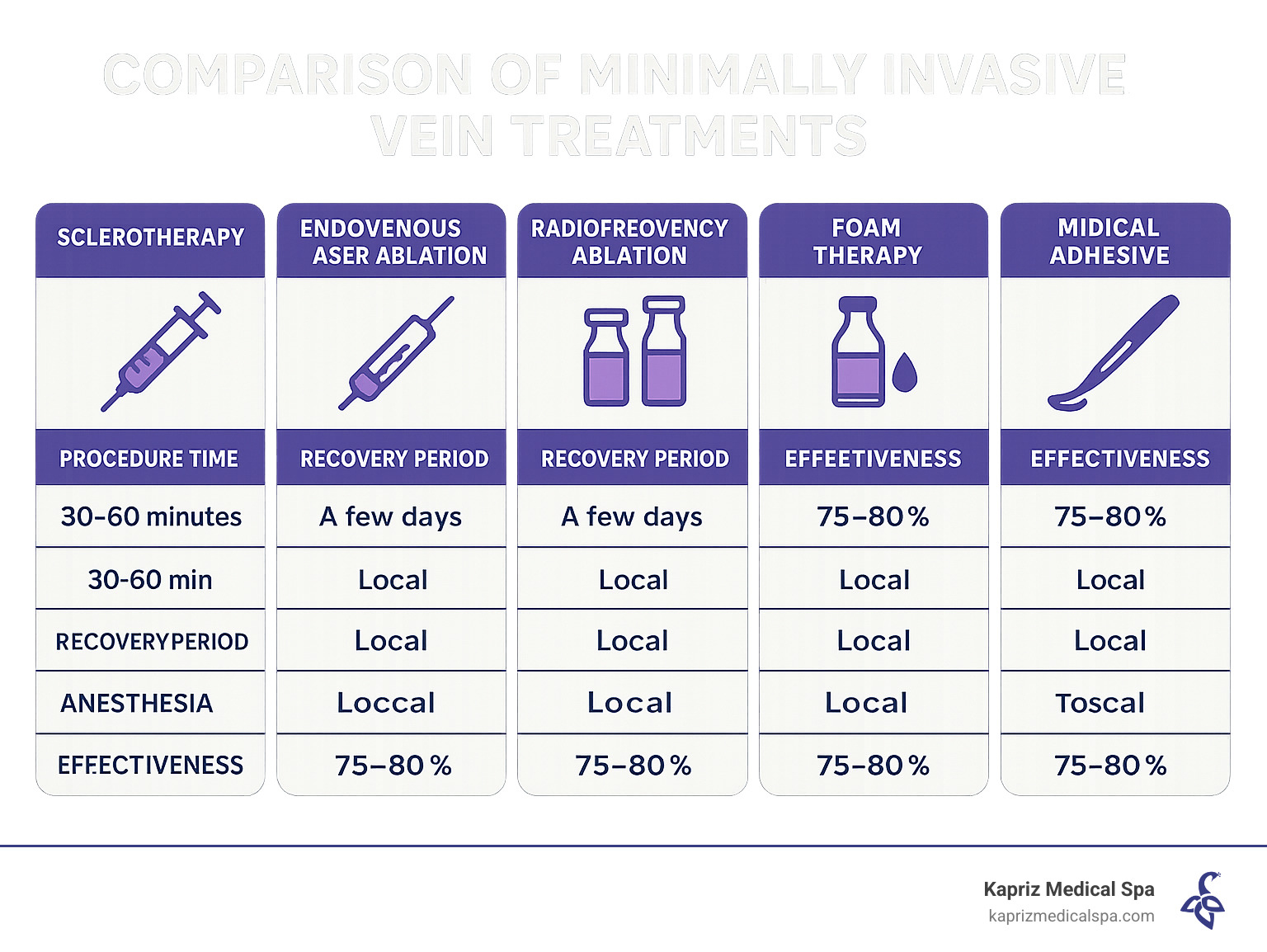
Find more about Minimally invasive vein treatment:
– Endovenous laser therapy Jacksonville
– Varicose vein consultation Jacksonville
Why & When to Treat Problem Veins
Have you ever wondered why those blue lines are appearing on your legs? Varicose and spider veins develop when the tiny valves inside your veins begin to weaken. Instead of efficiently pumping blood back to your heart, these compromised valves allow blood to pool, causing veins to enlarge, twist, and become visible beneath your skin.
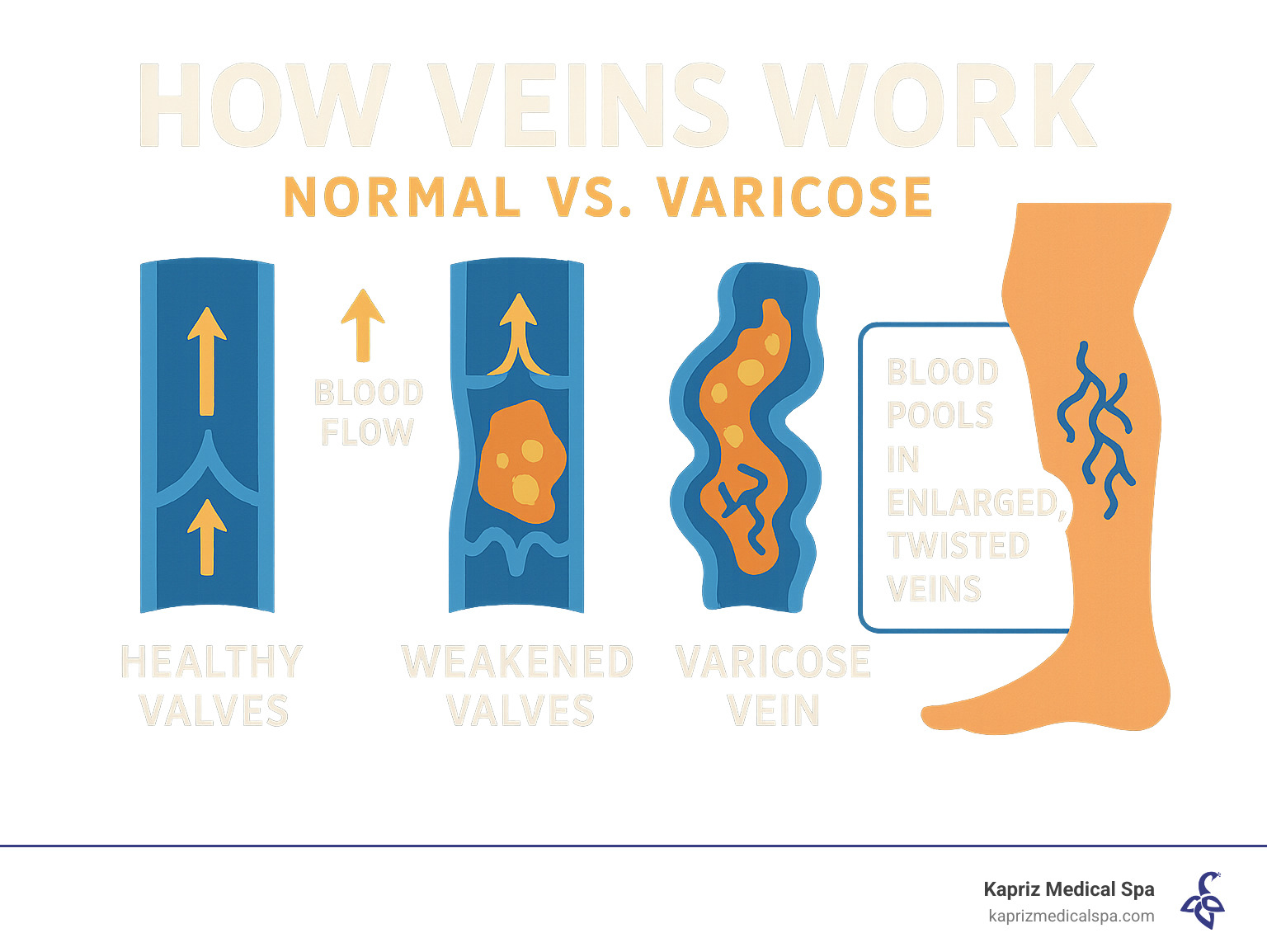
While many people initially seek treatment for cosmetic reasons (those shorts have been hiding in your drawer for too long!), problematic veins often cause uncomfortable symptoms that can truly impact your quality of life. You might experience aching or throbbing pain throughout the day, heaviness in your legs that worsens after standing, or swelling in your ankles and feet that makes shoes uncomfortable. Many of our patients also report a frustrating burning or itching sensation, restless legs (especially when trying to sleep), skin changes around affected veins, and even night cramps that interrupt peaceful sleep.
“I used to think I was just getting old when my legs started aching at the end of workdays,” shares one of our patients. “After treatment, I realized it wasn’t aging—it was my veins!”
Several factors increase your likelihood of developing these troublesome veins. As we age, vein walls naturally weaken—in fact, over 40% of women over 50 have varicose veins. Women are more susceptible due to hormonal influences, and if your parents or grandparents had varicose veins, you’re more likely to develop them too. Pregnancy creates a perfect storm with increased blood volume and hormonal shifts, while occupations requiring prolonged standing or sitting put extra strain on your veins. Carrying excess weight adds pressure on these delicate vessels, and a sedentary lifestyle reduces circulation efficiency.
Before jumping straight to minimally invasive vein treatment, we typically start with conservative approaches. Wearing graduated compression stockings daily can significantly improve symptoms for many people. Try elevating your legs above heart level for 15 minutes several times daily, and if your job keeps you stationary, take regular walking breaks to get your circulation moving. Low-impact exercises like swimming or walking, maintaining a healthy weight, and avoiding tight clothing around your waist and legs can all help manage symptoms.
Scientific research on conservative care confirms these measures effectively manage symptoms in early stages or mild cases. However, it’s important to understand they won’t eliminate existing varicose or spider veins—they simply help prevent progression and relieve discomfort.
Warning Signs You Shouldn’t Ignore
While many vein issues are merely uncomfortable, certain symptoms should prompt immediate medical attention. If you experience sudden leg swelling (especially in just one leg), notice skin ulcers or open sores near veins that won’t heal, or feel hardened veins like cords under your skin, it’s time to call us.
Other concerning signs include skin discoloration around your ankles (brownish or reddish patches), bleeding from a varicose vein (even minor bleeding), severe pain that limits your normal activities, or warm, tender areas along a vein. These symptoms might indicate more serious conditions like deep vein thrombosis (DVT) or chronic venous insufficiency requiring prompt evaluation.
As one patient told us after ignoring symptoms for months: “I wish I hadn’t waited until I developed skin changes. The earlier treatments are so much simpler.”
Who Makes a Good Candidate
Not everyone with visible veins needs medical intervention. However, you may be perfectly suited for minimally invasive vein treatment if conservative measures haven’t provided adequate relief or if your symptoms interfere with daily activities and sleep quality.
You’re likely an excellent candidate if you have visible varicose veins causing discomfort or if you’ve experienced complications like skin changes or ulcers. We typically recommend postponing treatments if you’re currently pregnant, though we can help manage symptoms during pregnancy and plan for treatment afterward.
Generally good health and realistic expectations about results also make you an ideal candidate. These treatments significantly improve symptoms and appearance but may not completely eliminate every visible vein.
Before recommending any procedure at Kapriz Medical Spa, we perform a comprehensive evaluation including a detailed medical history, physical examination, and duplex ultrasound imaging. This advanced imaging technique allows us to map affected veins and assess blood flow patterns, ensuring we create a treatment plan specifically custom to your unique vascular anatomy—never a one-size-fits-all approach.
“The ultrasound mapping was fascinating,” one patient recalled. “Seeing exactly which veins were causing my problems helped me understand why certain treatments would work better for me.”
Minimally Invasive Vein Treatment vs Traditional Surgery
Let’s take a walk down memory lane to truly appreciate how far vein treatments have come. Trust me, your legs will thank you for the medical advances of the last few decades!
The Old Way: Vein Stripping
Remember when treating varicose veins meant a hospital stay and weeks of recovery? For many years, surgical “stripping” was the gold standard—and it was about as pleasant as it sounds.
This old-school approach involved putting you completely under with general anesthesia, making large incisions in your groin and calf, and then literally pulling the problematic vein out of your leg like a garden hose. Patients endured hospital stays of several days followed by weeks of painful recovery. The scarring was significant, and to add insult to injury, the veins often came back anyway!
One of our patients, Margaret, recalls her mother’s experience with vein stripping in the 1990s: “Mom was off her feet for nearly a month. The scars were visible for years. When my own veins started causing problems, I was terrified I’d need the same procedure.”
The Modern Approach: Minimally Invasive Options
Fortunately for Margaret and countless others, today’s minimally invasive vein treatments have transformed the patient experience. These modern approaches offer remarkable improvements in every aspect of care:
| Factor | Traditional Vein Stripping | Minimally Invasive Options |
|---|---|---|
| Anesthesia | General | Local with optional mild sedation |
| Incision Size | Large (several inches) | Tiny (2-3mm) or none |
| Procedure Setting | Hospital | Office or outpatient center |
| Procedure Time | 1-2 hours | 30-60 minutes |
| Recovery Period | Weeks | Days |
| Pain Level | Moderate to severe | Minimal to moderate |
| Return to Work | 2-4 weeks | Same day to 1-2 days |
| Exercise Restriction | 4-6 weeks | 1-2 weeks |
| Scarring | Significant | Minimal to none |
| Success Rate | 60-70% | 90-95% |
| Recurrence Rate | 30-40% | Around 10% |
The best part? Most procedures now take place in a comfortable office setting under just local anesthesia. You’ll walk in with problem veins and walk out (yes, literally walk out) 30-60 minutes later to resume most of your normal activities.
“I was amazed that I could walk right out after my procedure,” shares James, one of our Jacksonville patients. “I had my treatment on Friday and was back at my desk job on Monday with only minimal discomfort. Nothing like what my father went through years ago.”
With tiny incisions (or sometimes none at all), minimal pain, and success rates hovering around 95%, these modern techniques have transformed vein treatment from a dreaded surgical ordeal into something more akin to a dental appointment—in and out with minimal disruption to your busy life.
At Kapriz Medical Spa, we’ve acceptd these advances wholeheartedly, knowing they offer our patients the quickest path back to comfortable, confident legs without the drawbacks of traditional surgery.
Choosing Your Procedure: The Modern Playbook
At Kapriz Medical Spa in Jacksonville, we offer a comprehensive range of minimally invasive vein treatments custom to your specific condition. Let’s explore your options with a friendly guide to modern solutions:
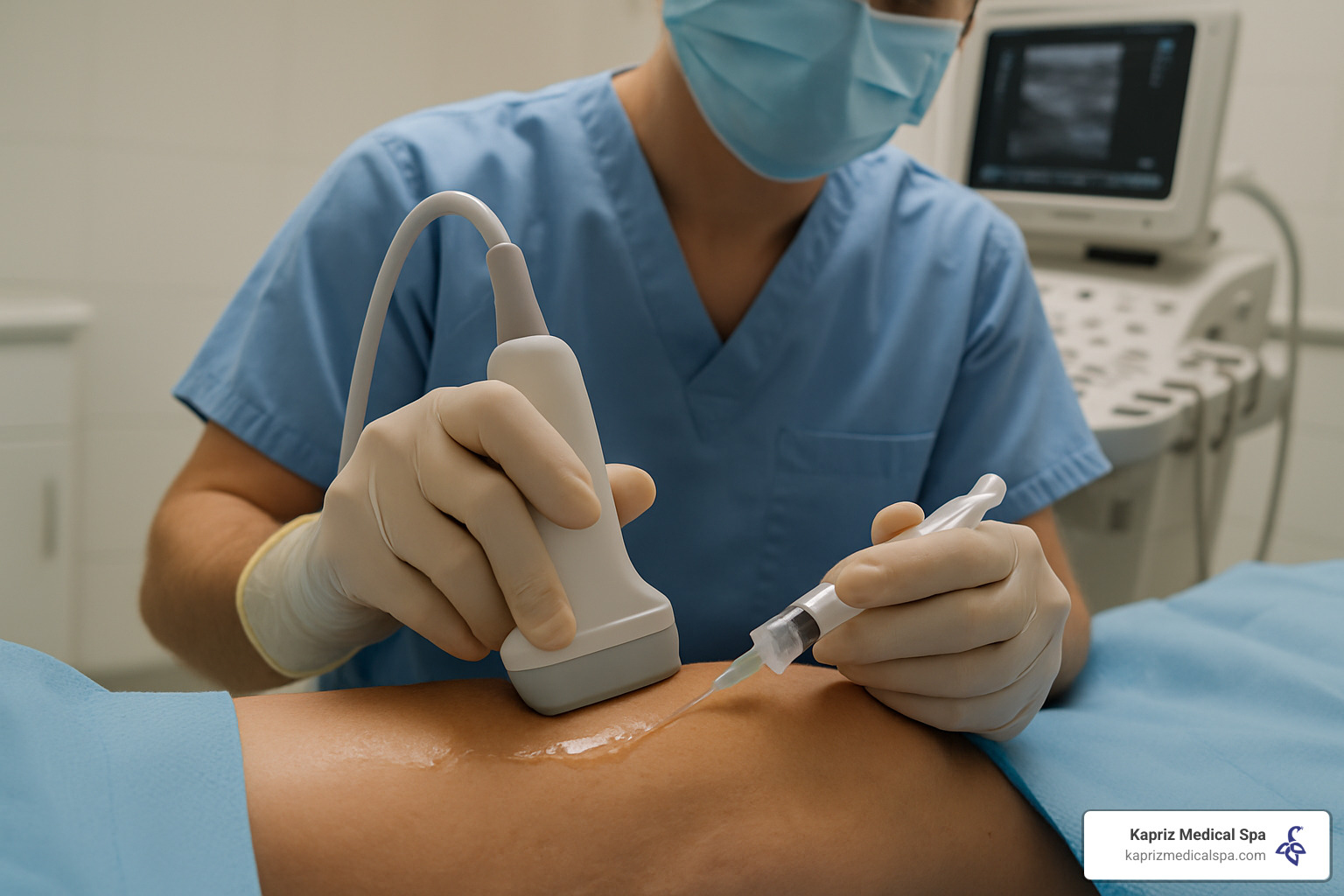
How Minimally Invasive Vein Treatment via Sclerotherapy Works
Think of sclerotherapy as the trusted veteran in vein treatment—it’s been refined over decades and remains the gold standard for spider veins and small varicose veins.
During this simple procedure, we inject a specialized solution (called a sclerosant) directly into the troublesome vein. This solution gently irritates the vein lining, causing it to collapse and seal itself shut. Your body then naturally reroutes blood through healthier veins, and over time, absorbs the treated vein completely. The beauty of sclerotherapy? No incisions or anesthesia needed!
Most of our patients are pleasantly surprised by how quick and comfortable the process is. Your session typically takes between 15-60 minutes, depending on how many veins we’re treating. You’ll be walking immediately afterward—in fact, we encourage it! Most people return to normal activities the same day.
Results develop gradually, with spider veins fading within 3-6 weeks and larger veins taking about 3-4 months to disappear. While 50-80% of injected veins are eliminated per session, most patients need 1-3 treatments spaced 6-8 weeks apart for optimal results.
We use two main types of sclerosants depending on your specific veins:
– Liquid sclerosants like sodium tetradecyl sulfate or polidocanol work beautifully for tiny spider veins
– Foam sclerotherapy uses the same medications in foam form to cover larger areas and tackle bigger veins more effectively
For deeper veins that we can’t see with the naked eye, we use ultrasound guidance to ensure precise placement, maximizing effectiveness while minimizing side effects. Scientific research on sclerotherapy confirms what we see in our practice daily—over 90% of patients report high satisfaction with their results.
How Minimally Invasive Vein Treatment with Endovenous Laser & Radiofrequency Delivers Results
When we’re dealing with larger varicose veins, especially those involving the great saphenous vein system, thermal ablation techniques offer remarkable outcomes.
Endovenous Laser Treatment (EVLT) works like this: through a tiny entry point, we insert a thin laser fiber into the problematic vein. The laser energy gently heats and seals the vein from inside, causing it to collapse. Over time, your body naturally absorbs the sealed vein while rerouting blood through healthy vessels. The entire procedure takes about 45 minutes, and local anesthesia ensures you’re comfortable throughout.
Radiofrequency Ablation (RFA) follows a similar concept but uses radiofrequency energy instead of laser light. Our ClosureFast™ system delivers controlled 20-second bursts of heat, providing a gentler heat profile that often results in less post-procedure discomfort. It’s equally effective at sealing veins and also takes about 45 minutes under local anesthesia.
Both thermal techniques boast impressive success rates—90-95% immediate success with only about 10% recurrence long-term. You’ll walk out of our office immediately after treatment, typically resume normal activities within 24 hours, and return to full exercise within 1-2 weeks. Any discomfort is usually minimal and easily managed with over-the-counter pain relievers.
Microphlebectomy for Bulging Surface Veins
For those visible, bulging varicose veins near the surface that can be both uncomfortable and cosmetically bothersome, microphlebectomy (also called ambulatory phlebectomy) offers excellent results.
During this procedure, we make tiny 2-3mm punctures along the course of the vein—so small that no stitches are needed, just small adhesive strips. Using a specialized hook, we gently remove the vein in segments. Local anesthesia ensures your comfort throughout the 30-60 minute procedure.
We encourage immediate walking afterward, and you’ll wear compression stockings for 1-2 weeks to support healing. Any scarring is minimal and fades over time, leaving your legs looking and feeling better.
Many of our patients choose to combine this technique with thermal ablation or sclerotherapy for a comprehensive approach that addresses both the underlying cause and visible veins.
Non-thermal Options: Foam & Medical Adhesive
Not everyone is a candidate for heat-based treatments, or you might have veins in locations where thermal methods aren’t ideal. For these situations, we offer advanced alternatives that are equally effective.
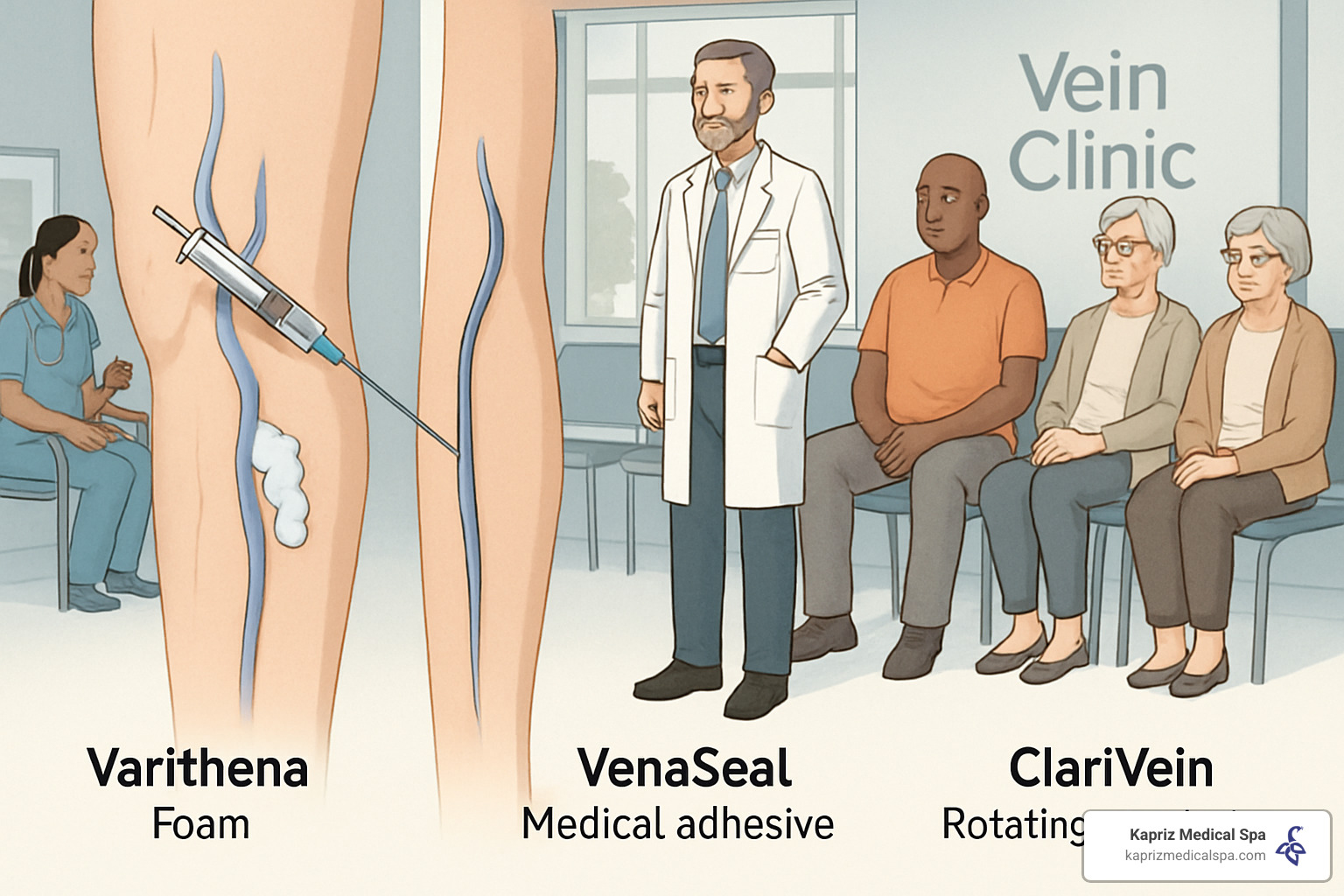
Varithena® Injectable Microfoam is an FDA-approved polidocanol foam that requires only 1-2 needle sticks to treat veins above and below the knee. The procedure takes less than an hour, and most patients need only a single treatment. In clinical trials, only 4.0% of patients reported injection site pain, and most people resume normal activities the same day.
VenaSeal™ Medical Adhesive uses what I like to call “medical superglue” to seal veins shut. This innovative approach eliminates the need for multiple anesthesia injections along the vein and doesn’t use heat, so there’s no risk of nerve injury. The best part? No compression stockings required after treatment, and you can immediately return to normal activities—making it perfect for our active Jacksonville patients who don’t want to slow down.
ClariVein® Mechanico-Chemical Ablation combines mechanical disruption with a chemical sclerosant—essentially a rotating wire plus liquid medication. This hybrid approach requires fewer anesthesia injections than thermal methods and typically results in less post-procedure pain. It’s particularly good for treating veins close to the skin surface or nerves.
At Kapriz Medical Spa, we carefully evaluate your specific vein issues, medical history, and lifestyle needs before recommending the perfect treatment approach. Many of our patients are surprised to learn they have so many options beyond what they’ve heard about from friends or family. The right choice depends on your unique situation, and we’re here to guide you every step of the way.
From Prep to Recovery: What to Expect Every Step
Your journey from consultation to full recovery should be as smooth as your legs will be after treatment. Let me walk you through exactly what happens at each stage of your minimally invasive vein treatment, so you’ll feel prepared and confident every step of the way.
Before Your Procedure
The road to healthier veins begins with thorough preparation. During your comprehensive consultation at Kapriz Medical Spa, we’ll review your medical history in detail and perform a physical examination. This is your opportunity to discuss your symptoms and goals openly.
“Many patients tell me they’re nervous before their first appointment,” says our lead vein specialist. “But they’re always surprised by how conversational and comfortable the consultation feels.”
We’ll use ultrasound mapping to create a detailed picture of your affected veins—this is crucial for developing your personalized treatment plan. Think of it as creating a roadmap that guides our specialists to precisely the right spots.
As your procedure date approaches, you’ll need to make a few simple preparations:
- Avoid blood thinners like aspirin and ibuprofen for 48 hours before treatment (with your primary doctor’s approval)
- Stop certain antibiotics (tetracycline, minocycline) 7-10 days before to prevent skin staining
- Skip lotions or oils on your legs the day of treatment
- Choose loose, comfortable clothing
- Eat lightly and stay well-hydrated
- Bring compression stockings if you already have them
During Your Procedure
On the day of your minimally invasive vein treatment, our team will make sure you’re comfortable from the moment you arrive. You’ll change into a gown (keeping your undergarments on), and we may take “before” photos for comparison later. Your leg will be cleansed with antiseptic solution—this might feel a bit cool but ensures a sterile treatment area.
Comfort is our priority. We’ll apply local anesthetic to the treatment areas, and while most patients find this sufficient, mild sedation is available if you’re feeling anxious. During laser procedures, we’ll provide protective eyewear—safety first!
The procedure itself typically takes 30-60 minutes, depending on which technique we’re using and how many veins we’re treating. Throughout the process, our team will explain each step as it happens. You’ll feel minimal to no discomfort thanks to the local anesthetic.
“I was surprised by how painless the whole thing was,” shares Jennifer, a recent patient. “I felt a tiny pinch with the numbing medication, then just slight pressure during the actual treatment.”
Using ultrasound guidance ensures we target veins with pinpoint accuracy. Once the treatment is complete, we’ll apply compression stockings or bandages and monitor you briefly (10-30 minutes) before sending you on your way. And yes—we’ll encourage you to walk immediately! This isn’t just a suggestion; walking helps prevent complications and promotes healing.
After Your Procedure
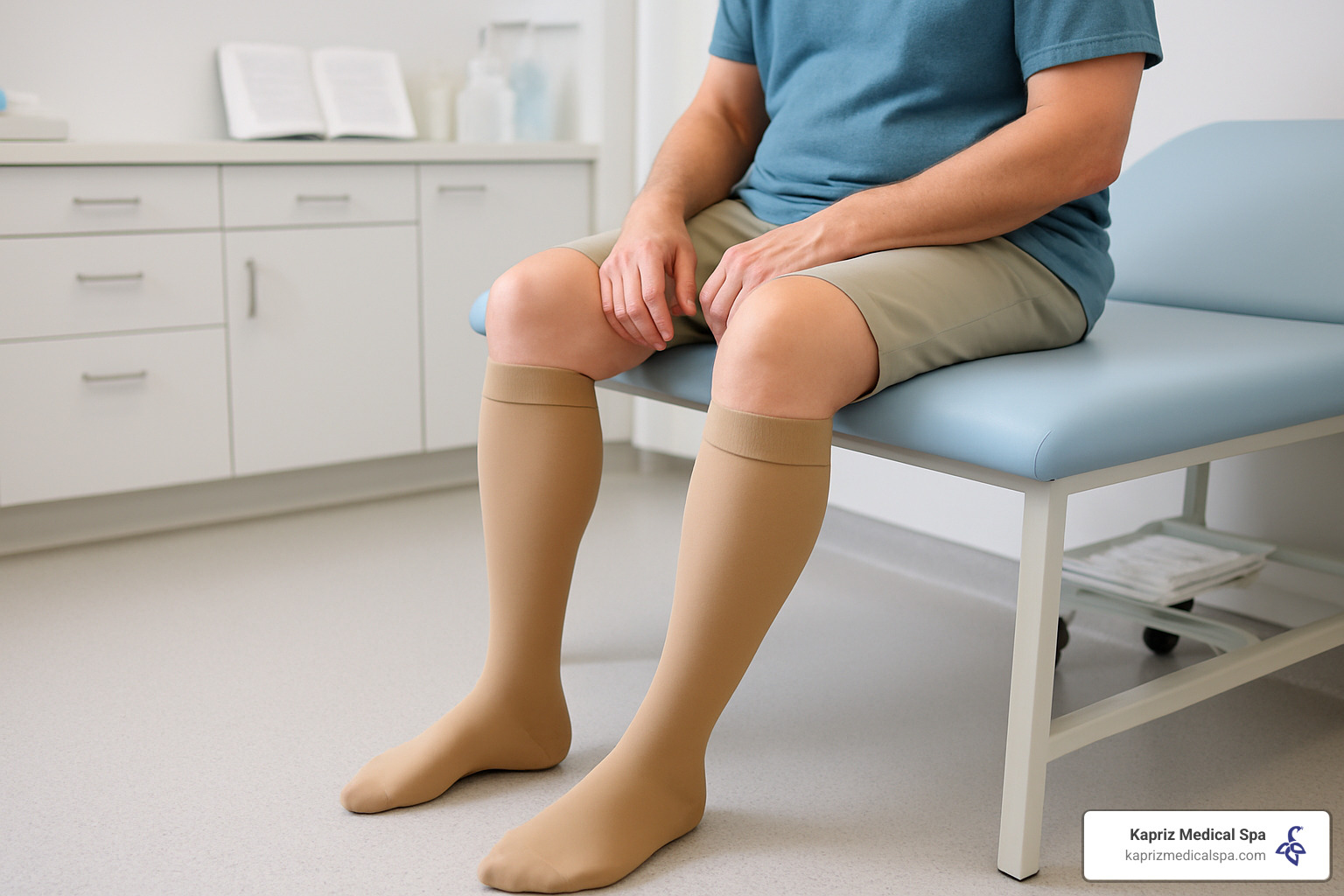
The first 24-48 hours are crucial for optimal results. You’ll need to walk at least 10 minutes every few hours while awake—this isn’t strenuous exercise, just gentle movement to keep blood flowing properly. Your compression stockings will be your new best friend, typically worn continuously for the first 24-72 hours.
For any mild discomfort, acetaminophen (Tylenol) usually does the trick. While you’ll need to skip hot baths, saunas, and hot tubs temporarily, cool showers are perfectly fine. Give your body a break from heavy lifting (anything over 15 pounds) during this initial recovery period.
During the first 1-2 weeks, you’ll continue wearing compression stockings during daytime hours. Most patients return to work and normal activities quickly—often the very next day for desk jobs. You can begin light exercise like walking or stationary biking, but hold off on high-impact activities and heavy weight lifting a bit longer.
Beyond the two-week mark, you’ll gradually return to all your favorite activities, including more vigorous exercise. Some patients benefit from wearing compression stockings during long periods of standing, even after full recovery. We’ll schedule a follow-up ultrasound to confirm successful vein closure and determine if any additional treatments might improve your results.
Reducing Risks & Side Effects
While minimally invasive vein treatments have an excellent safety profile, it’s important to understand potential side effects. Most patients experience some bruising (peaks at 1 week, resolves in 2-3 weeks), mild tenderness along treated veins (lasting 3-5 days), and temporary skin redness. Some notice skin pigmentation changes that fade over months or tiny areas of numbness that typically resolve within weeks.
Less common risks include superficial blood clots (treated with anti-inflammatory medication), skin burns with thermal treatments (extremely rare with proper technique), allergic reactions to sclerosants, deep vein thrombosis (very rare with proper screening), and nerve irritation (usually temporary).
At Kapriz Medical Spa, we minimize these risks through thorough pre-procedure screening, ultrasound guidance, appropriate compression therapy, encouraging immediate walking, and providing detailed aftercare instructions. Most importantly, we remain available to address any concerns that arise—you’re never left wondering if something is normal.
Tracking Your Results
Patience truly is a virtue when it comes to seeing the full benefits of your minimally invasive vein treatment. Spider veins typically fade over 3-6 weeks, while larger varicose veins may take 3-4 months to fully resolve. Many patients notice symptom relief (less aching, heaviness, or night cramps) before visible changes appear.
Most patients experience about 75-80% overall improvement—a significant change that makes a real difference in comfort and appearance. While these procedures are highly effective, they’re not magic. Some people require multiple sessions for optimal results, and new veins can develop over time due to underlying factors like genetics or occupation.
“I tell my patients to think of vein treatment as a journey, not a one-time fix,” explains our vein specialist. “The results are worth it, but they unfold gradually.”
We’ll track your progress through follow-up appointments at key intervals: 1-2 weeks post-procedure, 1-3 months for ultrasound verification of vein closure, and 6 months for final assessment and photos. These check-ins ensure you’re healing properly and achieving the results you expected.
With the right expectations and a bit of patience, you’ll soon be enjoying legs that not only look better but feel better too—often with life-changing improvements in comfort and confidence.
Frequently Asked Questions about Minimally Invasive Vein Treatment
Will my insurance cover these procedures?
When it comes to paying for your minimally invasive vein treatment, insurance coverage often depends on whether your procedure is considered medically necessary rather than purely cosmetic.
Good news – most insurance providers, including Medicare, will cover vein treatments when you’re experiencing symptoms that affect your quality of life. But there’s a process to steer.
To establish medical necessity, you’ll need documentation showing:
– Your symptoms (pain, swelling, heaviness) are impacting daily activities
– You’ve tried conservative treatments like compression stockings for at least 3 months
– An ultrasound confirms you have venous reflux (that backward blood flow causing problems)
“I was worried about the cost until I learned my insurance would cover my treatment,” shares one of our patients. “The Kapriz team handled all the paperwork and pre-authorizations, making the process surprisingly easy.”
At Kapriz Medical Spa, we understand insurance requirements can feel overwhelming. That’s why we help at every step – gathering the right documentation, submitting pre-authorization requests, and explaining any potential out-of-pocket costs before you commit to treatment. For treatments that aren’t covered, we offer financing options to make your care more affordable.
How long will I need to take off work or exercise?
One of the most common questions we hear is about recovery time. The beauty of minimally invasive vein treatment is how quickly you can return to your normal routine!
For work, your timeline depends on what you do:
– Office job? You’ll likely be back at your desk the very next day.
– Retail or teaching where you’re on your feet? Most patients return within 1-2 days.
– Construction or other physically demanding work? Plan for about 5-7 days off.
As for your exercise routine, here’s what to expect:
Walking is not just allowed but encouraged immediately after your procedure! It promotes healing and reduces complication risks. For other activities, you’ll need a bit more patience – light cardio like stationary biking within 3-5 days, swimming once incisions fully heal (about 7-10 days), and running or weight training after 1-2 weeks.
“I had my procedure on Thursday and was back to my yoga practice (modified) by Monday,” says Maria, a recent patient. “The recovery was so much easier than I expected.”
These are general guidelines. We’ll provide personalized recommendations based on your specific procedure, the extent of treatment, and your body’s healing process.
What lifestyle changes help prevent new veins?
While minimally invasive vein treatment effectively addresses existing problem veins, maintaining those results long-term requires some lifestyle adjustments.
Regular movement is your best defense against new vein problems. Walking daily activates your calf muscles, which act as natural pumps pushing blood back up to your heart. Simple calf raises (rising up on your toes) performed a few times daily can significantly improve circulation.
Weight management plays a crucial role too. Extra pounds put additional pressure on your veins, so maintaining a healthy weight reduces this strain. Staying well-hydrated and eating fiber-rich foods prevents constipation, which might surprise you, but straining can actually increase pressure in your leg veins!
“The small changes made the biggest difference for me,” explains Tom, who had vein treatment two years ago. “I take short walking breaks at work, lift my legs while watching TV, and wear compression socks on long flights. No new veins since my treatment.”
Avoid long periods of sitting or standing without breaks. If your job requires this, try to move around for a few minutes every hour. When resting, lift your legs above heart level when possible. And those fashionable high heels? They look great but limit them to special occasions since flat shoes allow better calf muscle pumping.
For many patients, wearing compression stockings preventively during high-risk activities (like long flights or days with lots of standing) provides extra protection against future vein issues.
With the right combination of treatment and lifestyle adjustments, you can enjoy those symptom-free legs for years to come!
Conclusion
Life’s too short for painful legs and self-consciousness about your veins. Minimally invasive vein treatment has truly revolutionized how we address varicose and spider veins – changing what was once a dreaded surgical ordeal into something as manageable as a dental cleaning.
Remember when treating veins meant hospital stays and weeks of recovery? Those days are thankfully behind us. Today, you can walk in with troublesome veins and walk out (yes, literally walk out!) with a solution underway and minimal disruption to your busy schedule.
At Kapriz Medical Spa in Jacksonville, we understand that healthy legs aren’t just about looking good in shorts – though that’s certainly a nice bonus! It’s about living without that constant aching, being able to stand at your child’s soccer game without discomfort, and having the confidence to enjoy Florida’s beautiful beaches without a second thought.
Our vein specialists combine cutting-edge imaging technology with advanced techniques to create treatment plans as unique as you are. Whether you’re dealing with delicate spider veins or more substantial varicose veins, we have solutions that deliver both symptom relief and aesthetic improvement – with success rates of 90-95% and recovery times measured in days, not weeks.
Your journey to healthier legs begins with a thorough evaluation to uncover the root causes of your vein issues. We’ll explain all your options – from sclerotherapy and thermal ablation to innovative adhesives and foam treatments – in simple, clear language. No medical jargon, just honest guidance to help you make the best decision for your specific needs.
Think about what you could do if vein problems weren’t holding you back. Wear those shorts with confidence. Take that beach vacation without packing cover-ups. Stand through your workday without counting the minutes until you can lift your legs.
Ready to take that first step toward legs that both feel and look better? Schedule your personalized vein consultation at Kapriz Medical Spa today and find how minimally invasive vein treatment can help you put your best leg forward – quite literally!