
How many units of botox for forehead and between eyes Top
Understanding Your Botox Unit Requirements for Upper Face Treatment
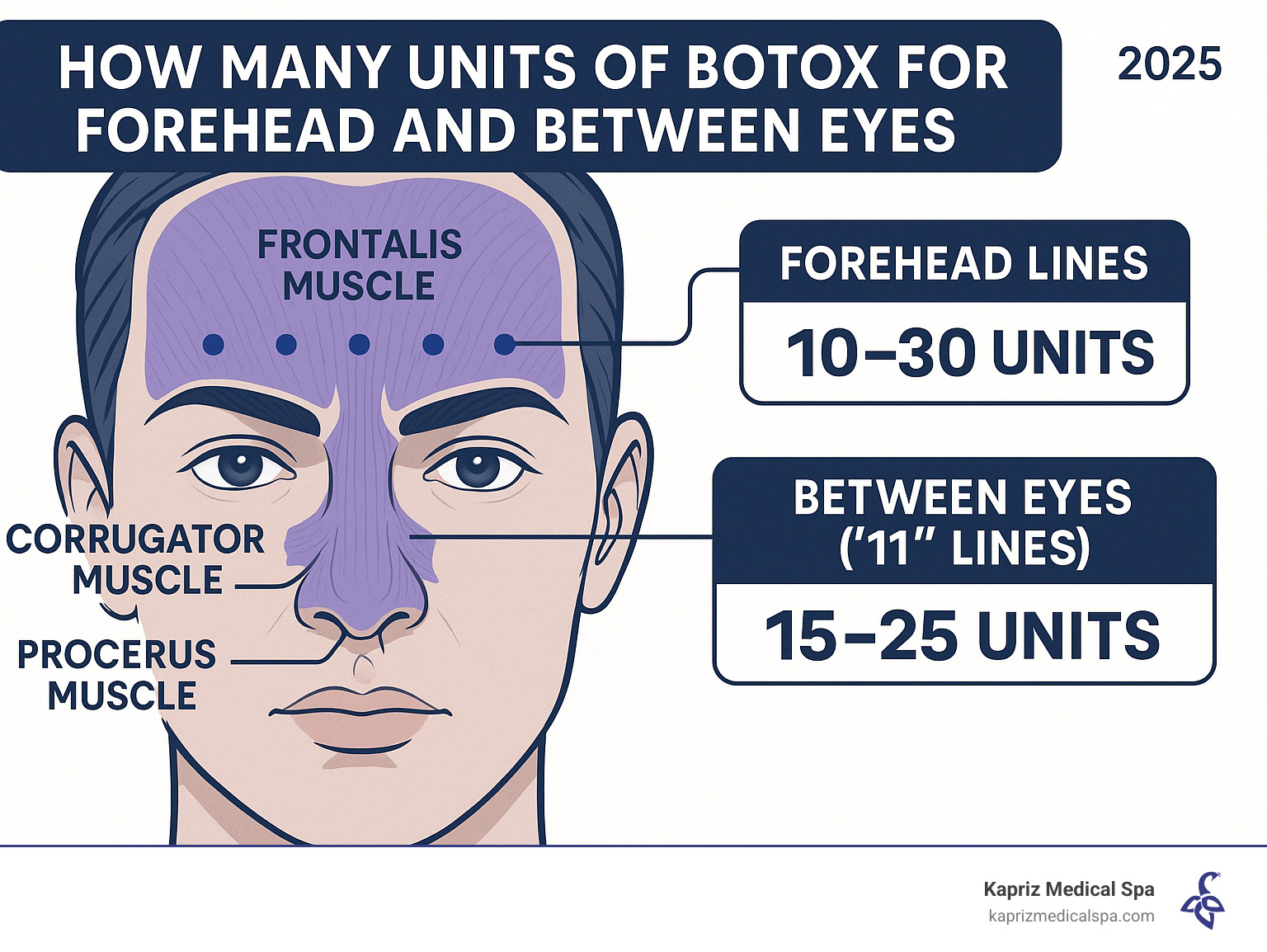
How many units of botox for forehead and between eyes is a top question for anyone considering treatment. While the exact number depends on your facial anatomy, muscle strength, and goals, we can provide a general guide.
Quick Answer – Typical Botox Units:
- Forehead lines: 10-30 units
- Between eyes (glabellar/”11″ lines): 15-25 units
- Total for both areas: 25-55 units
- First-time patients: Often start with 10-20 units per area
Botox dosing isn’t one-size-fits-all, which is why a personalized consultation is key. The forehead and the area between your eyebrows (the glabella) work together. When you frown or raise your eyebrows, these muscles create dynamic wrinkles. Over time, these can become static wrinkles that are visible even when your face is at rest.
Treating both areas together is crucial. Your forehead and glabellar muscles are a team; treating only one can create an unbalanced look or unwanted effects like brow heaviness. An experienced injector will create a personalized plan, often starting conservatively to see how your muscles respond before adding more if needed.
How many units of botox for forehead and between eyes terms at a glance:
- how many units are in a vial of botox
- how many units of botox are used for crow’s feet
- how to know how many units of botox you need
Understanding Botox: The Science Behind Smoother Skin
Botox has become synonymous with wrinkle reduction, but how does it work? Botox is short for Botulinum Toxin Type A, a purified protein that works as a neurotoxin. In the tiny, precise doses used for cosmetic treatments, Botox is incredibly safe and has been studied extensively.
The magic happens at the cellular level: Botox works by temporarily blocking nerve signals to specific muscles. This puts a temporary pause on strong muscle contractions, allowing the skin above to remain smoother.
This is key for treating how many units of botox for forehead and between eyes are needed. Every time you frown or squint, you create dynamic wrinkles—lines that appear with movement. Over time, these become static wrinkles that are present even when your face is relaxed. Botox targets the underlying muscle activity, softening existing lines and preventing new ones from forming.
The FDA approved Botox for cosmetic use in 2002 for treating frown lines, forehead lines, and crow’s feet, underscoring its proven safety profile when administered by qualified professionals.
Want to dive deeper? Check out What is Botox and how does it work? or explore our guide on Botox Basics.
How Botox Works on Forehead and Frown Lines
Let’s get specific about the muscles that cause worry lines and frown lines.
Your horizontal forehead lines come from the frontalis muscle, which lifts your eyebrows. The vertical “11s” between your eyebrows are caused by the corrugator and procerus muscles, which pull your brows down and inward when you frown or concentrate. These lines can make you look tired or stressed, regardless of your actual mood.
When we inject Botox into these specific muscles, we give them a break. The muscles can still move, but their contractions become much gentler. This allows the skin to smooth out and prevents the repetitive movements that etch permanent lines into your skin.
Treating just the forehead or just the frown lines can create an unbalanced look. For example, relaxing the forehead while leaving the frown muscles strong can pull the brow downward, creating a heavy appearance. That’s why experienced injectors at Kapriz Medical Spa treat these areas as a team, addressing both the frontalis and glabellar muscles together to maintain natural harmony while smoothing away unwanted lines.
How Many Units of Botox for Forehead and Between Eyes? A Detailed Breakdown
When you’re ready to smooth those forehead lines, the big question is: how many units of botox for forehead and between eyes will you need? The answer is entirely personal, depending on your muscle strength, line depth, and aesthetic goals.
At Kapriz Medical Spa, we take a personalized approach, often starting conservatively. It’s easier to add a few more units at a follow-up visit than to correct an overly “frozen” look. Our goal is a refreshed, natural appearance.
Typical Units for Horizontal Forehead Lines
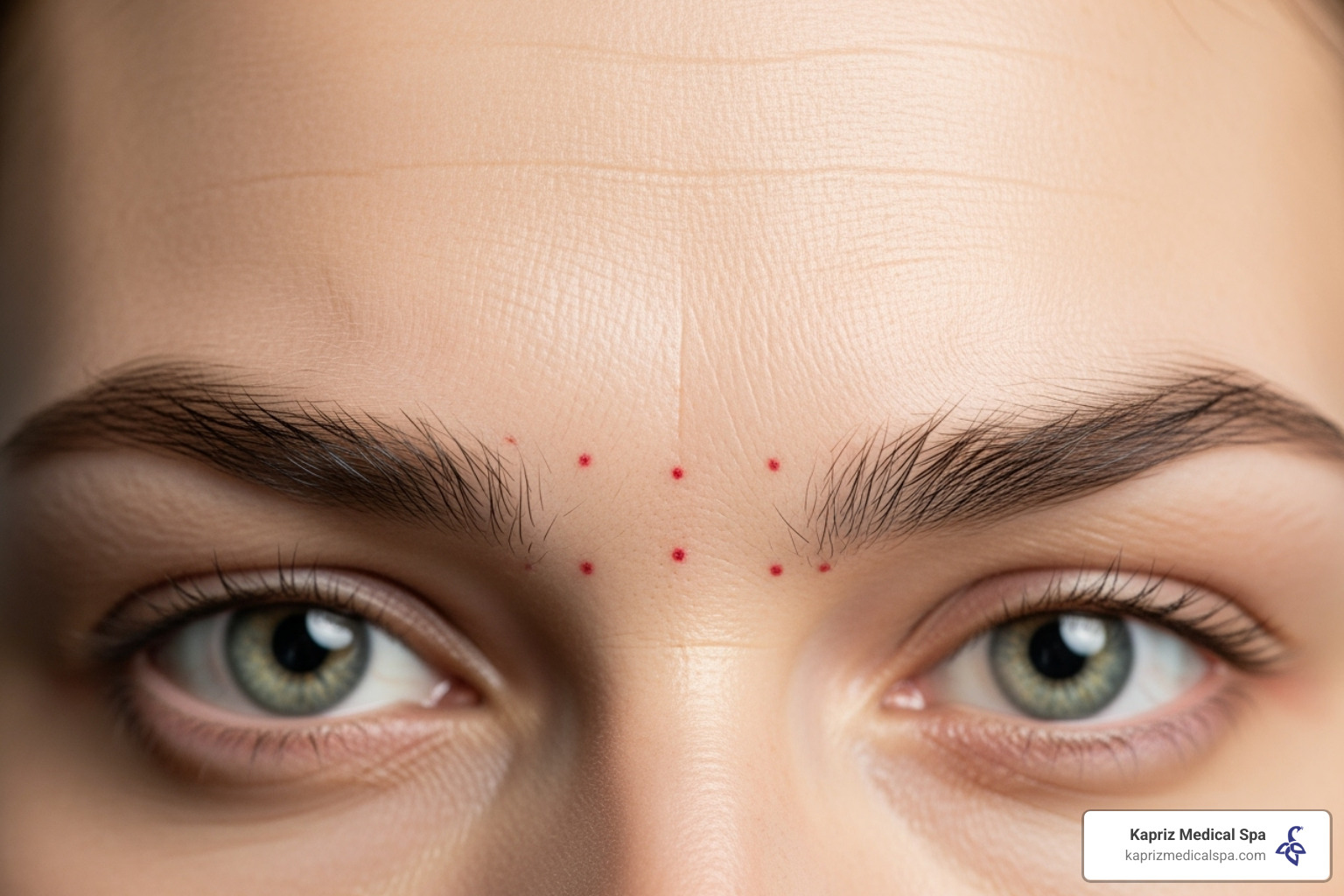
For the horizontal lines created by raising your eyebrows, most people need 10 to 30 units of Botox.
- Subtle lines: For newer lines that only appear with movement, 10-15 units may be sufficient.
- Moderate lines: If lines have started to linger when your face is relaxed, 15-20 units is a common dose.
- Deeper lines: For more established furrows, 20-30 units might be needed for a significant smoothing effect.
Your forehead size and the natural strength of your frontalis muscle also influence the final number. The goal is to smooth the skin while allowing for natural expression. For more details, see our guide: More info on forehead wrinkle units.
Typical Units for Glabellar Lines (The “11s”)
The vertical “11s” between the eyebrows typically require 15 to 25 units to smooth out.
These lines are caused by the corrugator and procerus muscles, which contract when you frown or squint. For lighter frown lines, 15-20 units often provides significant softening. If you have deep-set, permanent lines, you might need 20-25 units for a relaxed, smooth look.
This area requires precision to relax the correct muscles without causing unwanted effects like brow heaviness. When done correctly, treating the glabella can transform your resting expression from stressed or angry to calm and approachable.
Manufacturer Guidelines and Best Practices
Allergan, the maker of Botox, provides research-backed guidelines for treatment. For both horizontal forehead lines and glabellar lines, Allergan recommends a starting dose of 20 units for each area, injected into specific sites.
Crucially, these two areas work best when treated together. Treating the forehead alone can cause the untreated frown muscles to pull the brow down, creating a heavy look. Therefore, Allergan’s best practice suggests treating both areas as a unit, often using a total of 40 units for a comprehensive and balanced result.
The FDA has approved Botox for horizontal forehead lines, glabellar lines, and crow’s feet, based on extensive clinical trials proving safety and effectiveness. At Kapriz Medical Spa, we use these guidelines as a starting point, tailoring every treatment to your individual anatomy and goals. For technical details, review the Official Botox Prescribing Information.
Key Factors That Determine Your Ideal Dosage
When patients ask, “how many units of botox for forehead and between eyes?” they learn there’s no single answer. Your ideal dosage is unique to you. Factors like your facial anatomy, muscle patterns, and aesthetic vision all influence the perfect treatment plan.
During your consultation, we focus on understanding your goals. Some clients want to erase every line, while others prefer a subtle refresh that maintains natural expression. There’s no wrong approach—only what’s right for you. Learn more about our process here: How to know how many units you need.
Muscle Strength and Gender Differences
One of the biggest factors in your Botox dosage is your natural muscle strength. This is where we often see differences between men and women. Men typically have stronger facial muscles and thicker skin, meaning they often require 25-30% more Botox than a woman for the same effect. Your metabolism can also play a role; a faster metabolism may mean you process Botox more quickly.
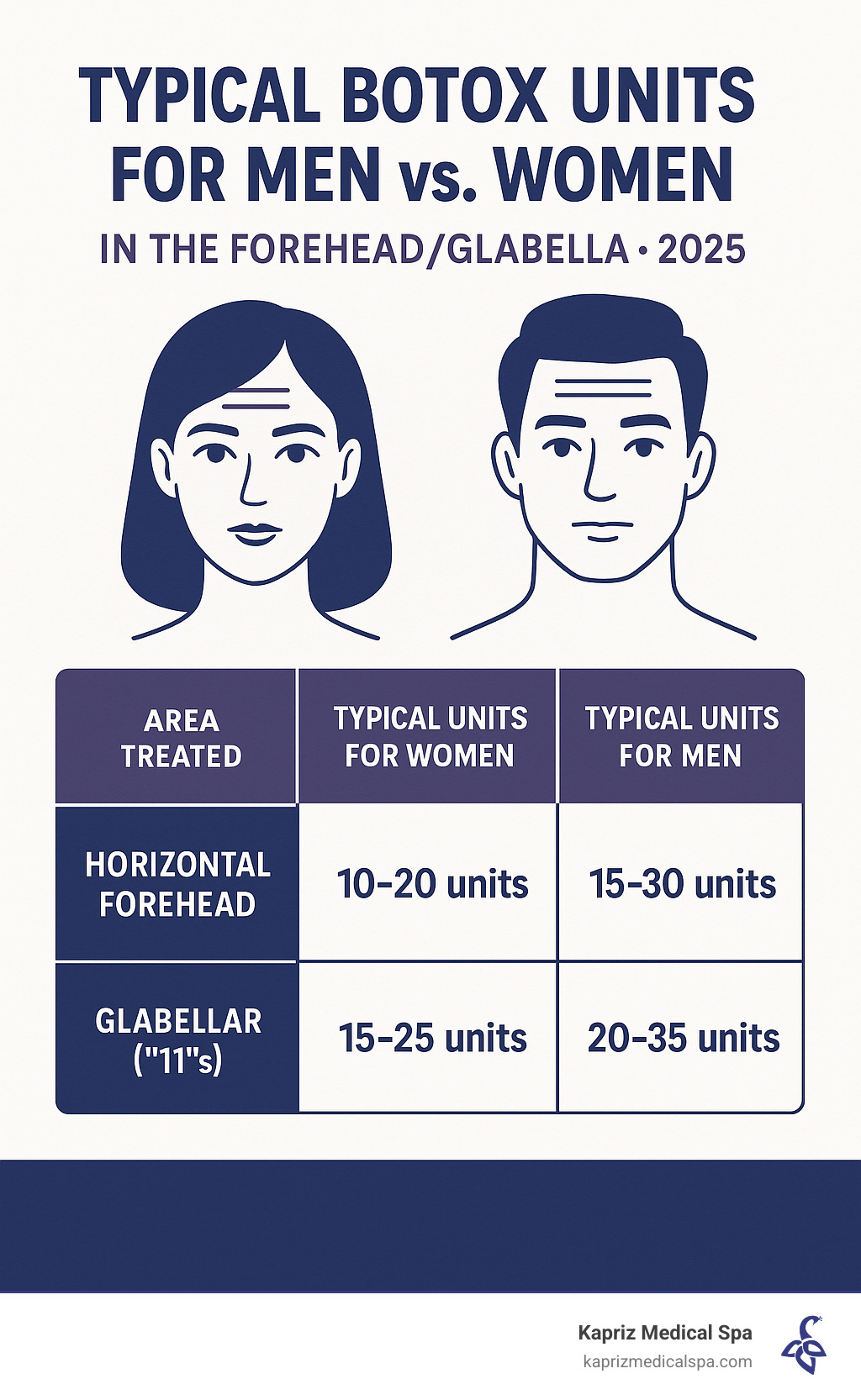
| Area Treated | Typical Units for Women | Typical Units for Men |
|---|---|---|
| Horizontal Forehead | 10-20 units | 15-30 units |
| Glabellar (“11″s) | 15-25 units | 20-35 units |
Note: These are general ranges. Your specific needs will be determined during a personalized consultation.
Your Aesthetic Goals: Natural Movement vs. a “Frozen” Look
Your desired outcome is perhaps the most important factor. Do you want complete smoothness with minimal movement, or subtle softening that preserves natural expression? Communicating this to your injector is key.
Most of our clients prefer natural-looking results—to look rested, not “worked on.” For those seeking a very gentle touch, “Baby Botox” uses fewer units for subtle improvements while maintaining most facial movement. It’s a great option for first-timers.
We can always add more units at a follow-up appointment, but we can’t undo too much. That’s why we always recommend starting conservatively to achieve a result you’ll love.
Your Treatment Journey: What to Expect
Starting your Botox journey can be exciting, but it’s normal to wonder how many units of botox for forehead and between eyes you’ll need and what the process involves. At Kapriz Medical Spa, we’ve designed our process to be comfortable and informative, guiding you every step of the way.
Finding a Qualified Practitioner
Choosing the right injector is the most important decision you’ll make. Your safety and results depend on their skill and expertise. Here’s what to look for:
- Credentials: Look for a board-certified dermatologist, plastic surgeon, or another qualified medical professional (like a nurse practitioner or physician assistant) with specific training in aesthetic injections.
- Experience: You want an injector who understands facial anatomy and has extensive experience with Botox.
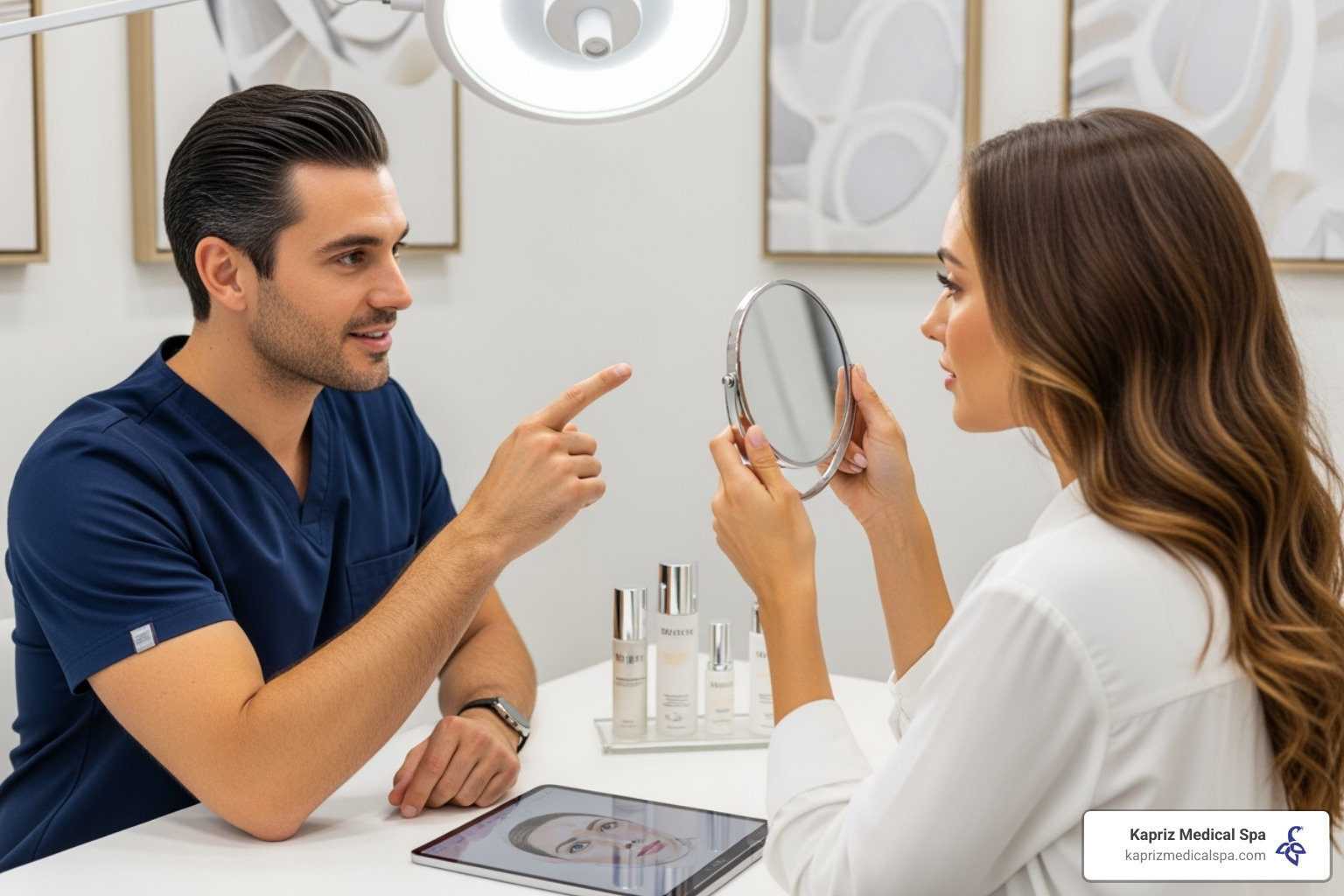
- Consultation: A great practitioner will conduct a thorough consultation, assess your facial anatomy, discuss your goals, review your medical history, and show you before-and-after photos of their work. They should never rush you.
Trusting your injector is key to a successful outcome. This relationship is built on expertise, communication, and a shared vision for your results.
Potential Side Effects and How to Minimize Them
While Botox is very safe when administered properly, some minor, temporary side effects can occur. The most common include mild bruising, swelling, or redness at the injection sites, and occasional headaches. These typically resolve within a few hours to a few days. To minimize bruising, we recommend avoiding alcohol and blood-thinning supplements like fish oil for a week before your appointment.
Rare but more serious side effects, such as droopy eyelids (ptosis) or asymmetry, are almost always preventable with proper injection technique by a skilled provider. An overly “frozen” look results from using too many units. We minimize these risks through precise injection placement and detailed aftercare instructions, like avoiding strenuous exercise or lying down for several hours post-treatment.
How Long Do Results Last and How Much Does It Cost?
You’ll enjoy your smoother, refreshed appearance for 3 to 4 months. This can vary based on your metabolism, muscle strength, and the dosage received. Many long-term clients find their results last longer over time as the muscles are “retrained.” Most people schedule maintenance appointments every 3-4 months.
Botox is typically priced per unit. In the Jacksonville area, you can expect to pay $10 to $15 per unit. Your total cost depends on how many units of botox for forehead and between eyes you need. For a combined forehead and glabella treatment (e.g., 40-50 units), the cost typically ranges from $400 to $800. While it’s tempting to price-shop, investing in a qualified, experienced practitioner ensures safety, value, and peace of mind. For more pricing details, see our guide: More info on Botox prices.
Frequently Asked Questions about Forehead Botox
We get these questions all the time at Kapriz Medical Spa. Here are answers to the most common concerns about Botox for the forehead and between the eyes.
What happens if I get too much Botox in my forehead?
Too much Botox can lead to an unnatural, “frozen” look where you lose the ability to raise your eyebrows. A more concerning side effect is brow heaviness or drooping, which can occur if the lifting muscles of the forehead are over-relaxed. This can create a tired or sad appearance.
The good news is that these effects are always temporary, as Botox naturally wears off in three to four months. However, those months can feel long. This is why we always advocate for a conservative approach, especially for first-time patients. It’s much better to add a little more at a follow-up than to wait for too much to wear off.
Are there alternatives to Botox for forehead and between-eye wrinkles?
Yes! While Botox is excellent for dynamic wrinkles (caused by movement), other treatments can also help:
- Other Neurotoxins: Dysport, Xeomin, and Jeuveau, a Botox alternative, work similarly to Botox.
- Dermal Fillers: These fill in static lines that are present at rest.
- Skin Rejuvenation: Treatments like laser therapy, microneedling, and chemical peels improve skin texture and stimulate collagen, reducing fine lines.
- Skincare: A consistent routine with retinoids can gradually improve skin texture.
Often, a combination of treatments yields the best results. We can create a comprehensive plan during your consultation.
How many units of botox for forehead and between eyes are needed for a first-timer?
For first-timers, we believe in starting small. A conservative approach allows us to see how your unique muscles respond.
- Forehead: We typically recommend 10-20 units.
- Between the eyes (“11s”): A starting dose is usually 15-20 units.
For a combined treatment, a first-timer can expect a total of 25-40 units. We schedule a follow-up appointment about two weeks later to assess your results. At that time, we can add more units if needed to achieve your desired look. This personalized approach ensures you get results you’ll love.
Achieve Your Best Look with a Personalized Plan
We’ve covered the typical ranges for how many units of botox for forehead and between eyes you might need, but the most important takeaway is this: your perfect dosage is entirely unique to you. While 25-55 units for both areas is a common range, factors like muscle strength, anatomy, and your personal goals will determine your ideal treatment plan.
At Kapriz Medical Spa in Jacksonville, FL, we reject a one-size-fits-all approach. Our practice is built on creating personalized treatment plans that deliver natural, beautiful results. Every treatment begins with a thorough consultation where we listen to your vision and assess your unique facial structure.
Our skilled injectors combine technical expertise with an artistic eye to achieve facial harmony, ensuring you look refreshed without sacrificing your natural expressions. We believe in a conservative approach, starting with the right amount for you and perfecting it as needed.
Ready to find what a personalized Botox plan can do for you? We’d love to create a treatment that is perfectly custom to your unique beauty.