
how many units of botox for eye area: 5 Powerful Tips 2025
Finding Your Perfect Botox Eye Dosage
How many units of botox for eye area depends on the specific zones being treated. Here’s what you need to know:
| Eye Area Treatment | Typical Dosage | Duration |
|---|---|---|
| Crow’s Feet | 12 units per eye (24 total) | 3-4 months |
| Under-Eye (off-label) | 8-10 units total | 3-4 months |
| Eyebrow Lift | 5 units per brow | 3-4 months |
| Frown Lines (Glabellar) | 20 units total | 3-4 months |
Looking in the mirror and noticing those fine lines around your eyes can be a wake-up call. Whether they appear when you smile or have become more permanent fixtures, these signs of aging are completely normal—but understanding how to address them can be confusing.
Botox (botulinum toxin) has become the gold standard for treating dynamic wrinkles around the eyes. It works by temporarily relaxing the muscles that cause those creases when you make expressions.
The eye area is particularly delicate and requires precision in dosing. Too little won’t give you the results you want; too much could leave you looking unnatural or cause unwanted effects.
What makes the perfect dose so individual? Several factors come into play:
- Muscle strength (men typically need more units than women)
- Age (older patients may need more initially)
- Metabolism (affects how quickly Botox breaks down)
- Severity of wrinkles (deeper lines need more units)
- Your aesthetic goals (subtle vs. more dramatic results)
At Kapriz Medical Spa, we understand that every face tells its own story. That’s why we never use a one-size-fits-all approach when determining how many units of Botox you’ll need for your eye area.
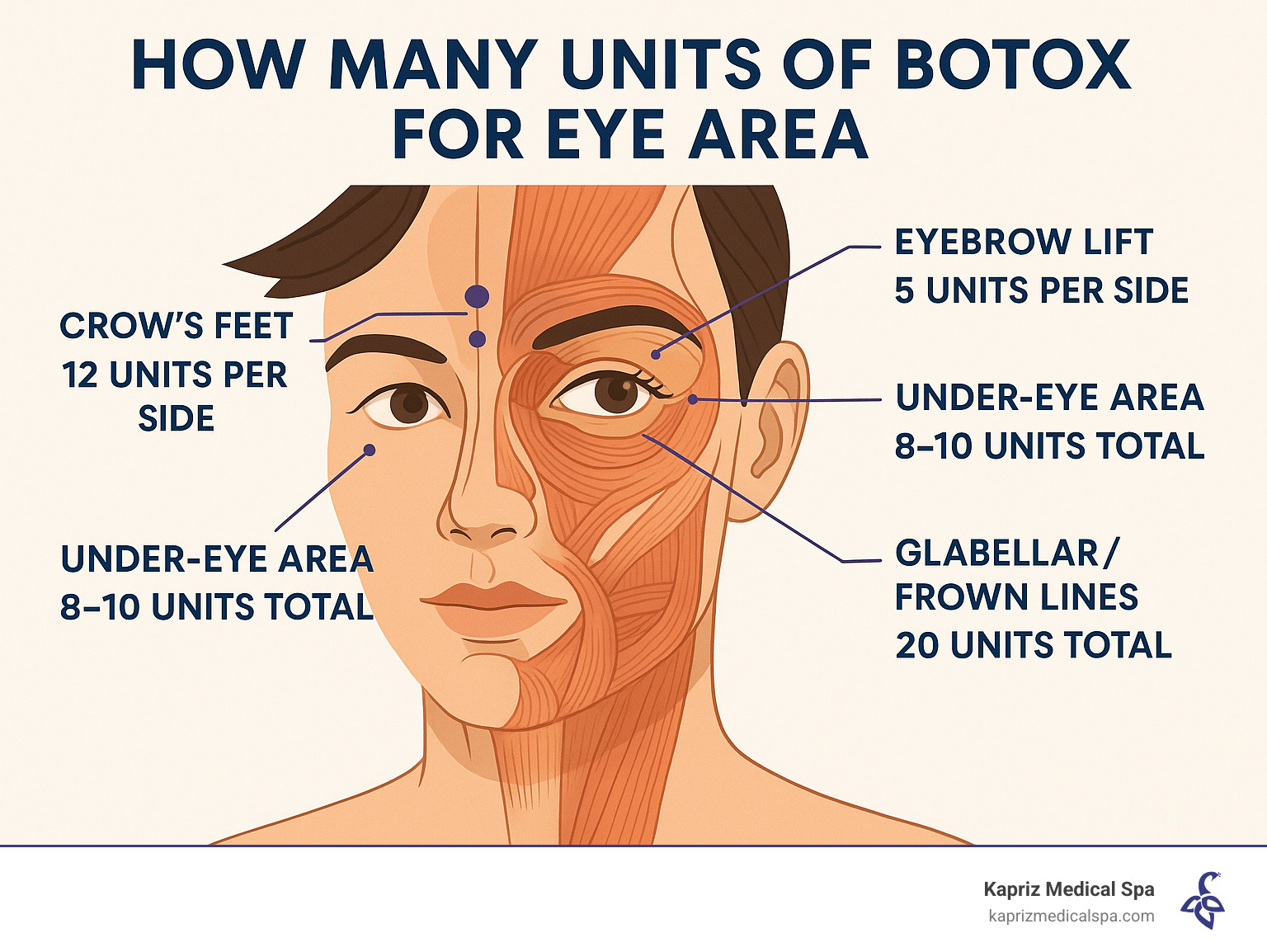
How many units of botox for eye area terms at a glance:
– how much botox do i need for the first time
– how many units of dysport equal botox
– how to know how many units of botox you need
How Many Units of Botox for Eye Area: At-a-Glance
When it comes to figuring out how many units of botox for eye area treatments, precision matters more than you might think. Your eyes are framed by some of the most delicate skin on your face, requiring a thoughtful approach to achieve that refreshed look without appearing “frozen.”
Let’s break down what you can typically expect for each eye-area treatment:
Crow’s Feet
Those little lines that fan out when you smile have met their match with Botox. The FDA-approved standard is 12 units per eye (24 units total). Most practitioners divide this into three injection points around each eye, with 4 units at each spot.
“I love treating crow’s feet because patients see such dramatic improvement,” shares our lead aesthetician at Kapriz Medical Spa. “That 12-unit-per-side guideline works beautifully for most people, though we might tweak it slightly depending on your specific facial structure.”
Under-Eye Area
This treatment falls into “off-label” territory (meaning it’s not specifically FDA-approved for this area), but it’s commonly used to soften those fine lines under your eyes. We typically use about 8 units total—4 units per eye. Because this area sits so close to muscles controlling your eyelids, it demands an expert’s touch.
Brow Lift
Looking for a little lift without surgery? A Botox brow lift usually requires about 5 units per eyebrow. We place these strategically to relax the muscles pulling your brows downward while letting your forehead muscles naturally lift the area.
Frown Lines (Glabellar Region)
While technically not part of the eye area, these vertical “11” lines between your eyebrows often get treated alongside eye-area Botox. The standard FDA-approved dosage is 20 units total, spread across five carefully selected injection points.
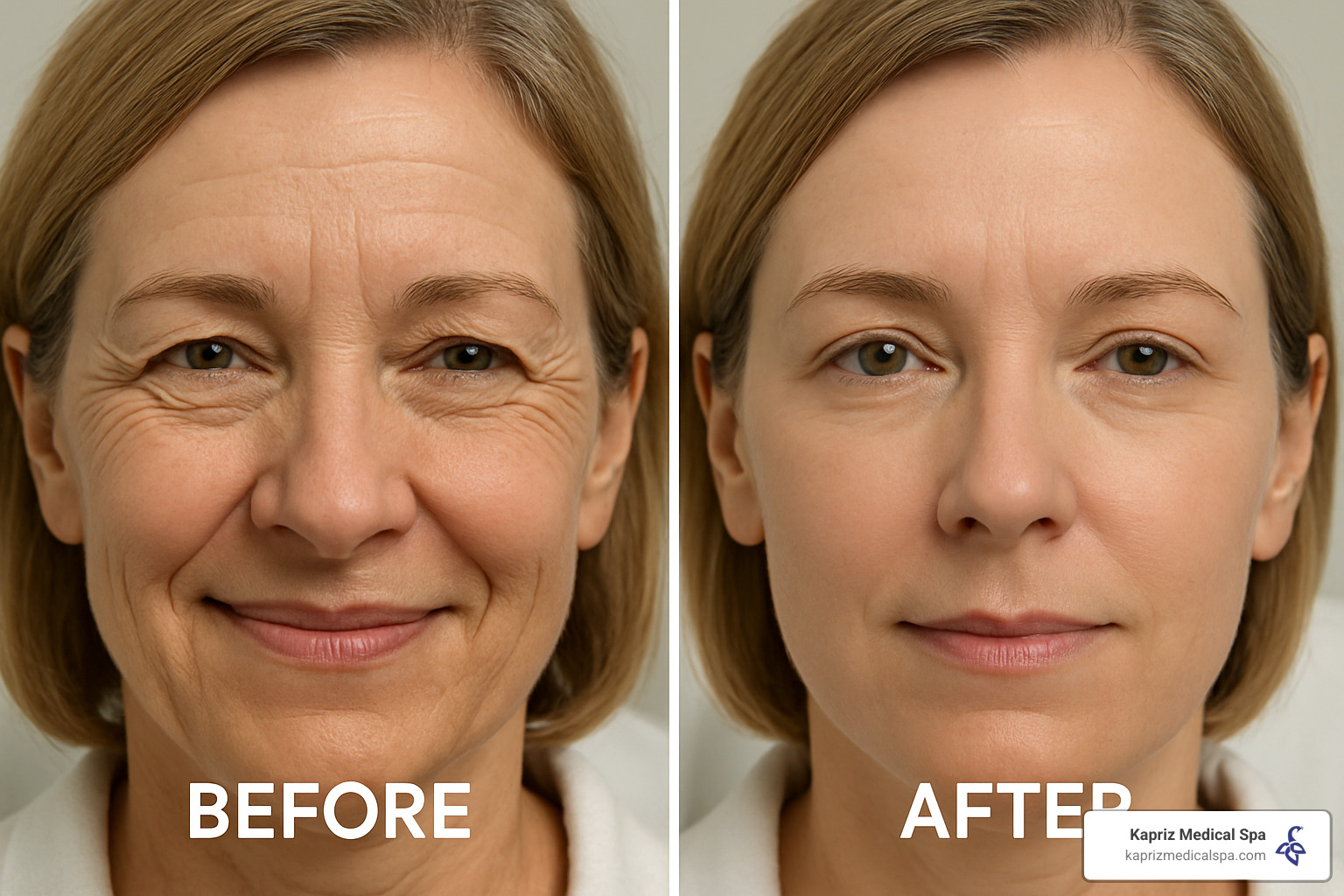
Standard Guidelines vs Personalized Plans
While these numbers give you a starting point, at Kapriz Medical Spa, we believe your face deserves better than a one-size-fits-all approach. Here’s why we personalize every treatment plan:
Your muscle strength plays a huge role—stronger facial muscles typically need more units to achieve the same effect. Your age matters too, as years of expressions can create deeper lines requiring more initial units.
Your body’s metabolism affects how quickly Botox breaks down, potentially influencing both dosage and how often you’ll need treatments. The severity of your lines makes a difference—fine lines just beginning to appear need less product than deeper, established wrinkles.
And perhaps most importantly, your aesthetic goals guide our approach. Some clients want a subtle refresh that maintains plenty of natural movement, while others prefer more dramatic smoothing.
As Dr. Sarah Thompson, a respected aesthetic specialist, puts it: “The real art of Botox lies in customization. One-size-fits-all approaches rarely yield the best results, especially around the delicate eye area.”
Want to learn more about our approach to those smile lines? Check out our detailed guide on Botox for Crow’s Feet.
How Many Units of Botox for Eye Area in Men vs Women
Did you know your gender significantly influences how many units of botox for eye area treatments you might need? It’s true—men typically have stronger, thicker facial muscles than women, which directly impacts dosing.
For crow’s feet, women generally need about 12 units per side, while men often require 15 units or more on each side. This difference isn’t just about strength—it’s also about muscle thickness and development.
“With our male clients, we usually start a bit conservatively at 12-15 units per side for crow’s feet,” explains our senior practitioner. “Then we have them come back after two weeks to see how things are settling. We can always add more during that follow-up if needed.”
This principle extends to other eye-area treatments too. For those frown lines between the brows, women typically need around 20 units, while men might require 25-30 units for similar results. For brow lifts, women generally need 5 units per side, while men may need 6-8 units.
Interestingly, the under-eye area is where we see the least gender difference—both men and women typically receive 8-10 units total. This area requires such precision and delicacy that gender-based muscle differences matter less.
At Kapriz Medical Spa, we always recommend starting conservatively, especially for first-time Botox clients. That’s why we include a two-week follow-up appointment to check your results and make any necessary adjustments. Your perfect dose might take a session or two to find, but the results are worth the personalized approach.
Botox Mechanics & Treatable Eye Zones
Ever wonder what’s actually happening when those tiny Botox needles work their magic? Let’s pull back the curtain on how this remarkable treatment smooths away those eye-area wrinkles.
Botox (botulinum toxin type A) works like a temporary pause button for your facial muscles. It blocks a neurotransmitter called acetylcholine—the chemical messenger that tells your muscles to contract. When strategically placed, Botox reduces muscle movement in just the right spots, allowing the skin above to relax and smooth out.
Around your eyes, we’re primarily focusing on the orbicularis oculi muscle. This circular muscle wraps around your eye socket and is responsible for both closing your eyelids and creating those crow’s feet when you smile or squint.
Your Botox journey follows a predictable timeline:
– You’ll notice initial changes within just 24-48 hours
– The full effect blossoms around day 14 post-treatment
– Your refreshed look typically lasts 3-4 months before muscle activity gradually returns
“Most of my patients are surprised at how quickly they start seeing changes,” shares our lead injector at Kapriz. “By day three, they’re already texting me happy selfies!”
According to scientific research on botox efficacy, while results vary based on individual factors like metabolism and muscle strength, that 3-4 month sweet spot is fairly consistent for most people.
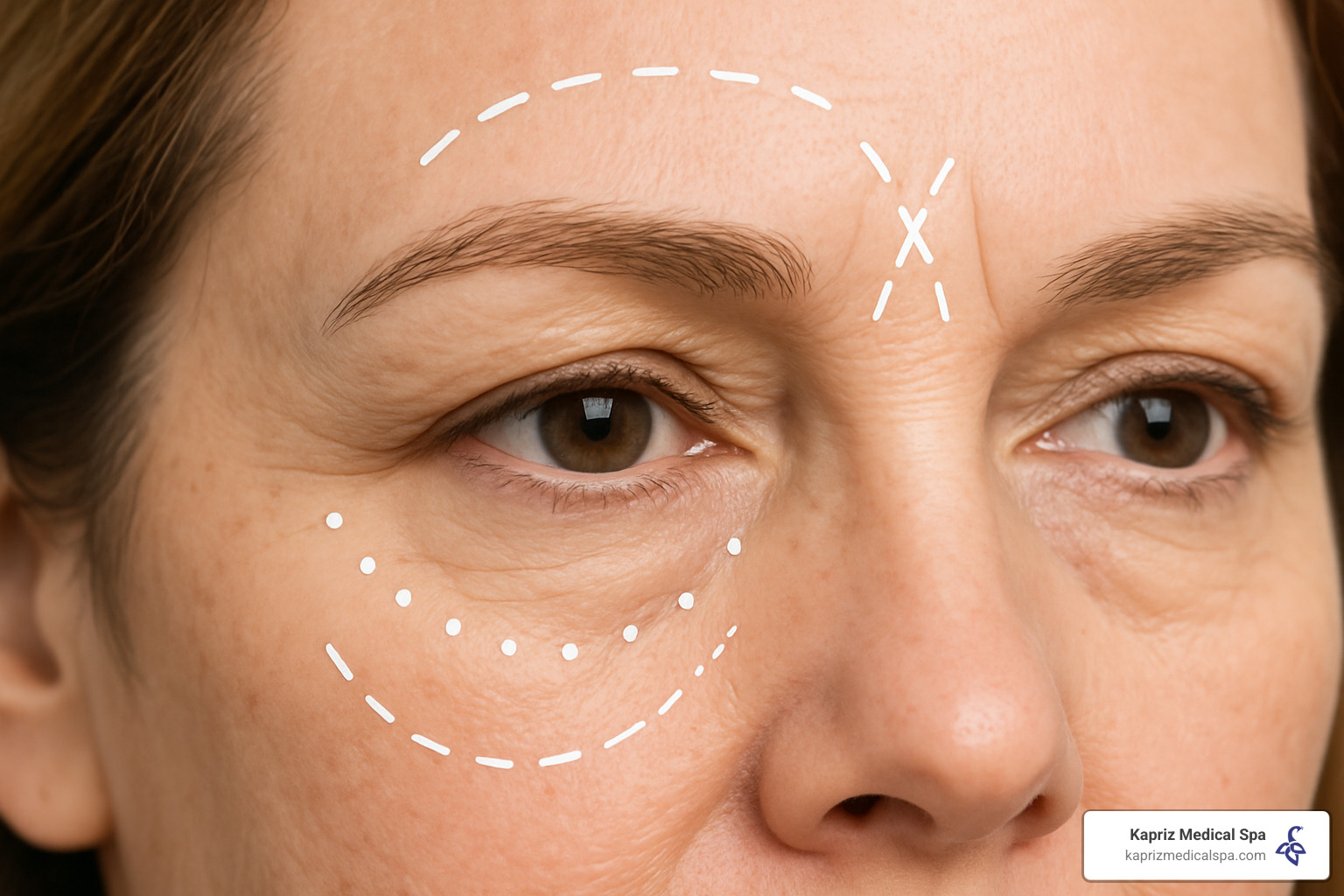
Eye Zones You Can Treat
When exploring how many units of botox for eye area treatments, it helps to understand the specific zones that respond beautifully to Botox:
Crow’s Feet: These sunshine-inspired lines fan out from the outer corners of your eyes when you smile. They’re the most commonly treated eye-area concern, with the FDA giving its official thumbs-up for a standard dose of 12 units per eye. Most people see dramatic improvement with this treatment.
Under-Eye “Jelly Roll”: Notice that little bulge that forms under your eye when you smile big? A tiny amount of Botox (just 1-2 units per side) can soften this area, creating a smoother appearance. While this is considered an off-label use, many experienced injectors include this in their eye-area treatments.
Glabellar ’11’ Lines: While technically not part of the eye area, these vertical lines between your eyebrows often get treated alongside eye concerns. Caused by frowning and concentration, they typically require about 20 units total to smooth away.
Eyebrow Lift: A clever placement of 5-8 units per brow can create a subtle yet noticeable lift, opening up your entire eye area for a more awake, refreshed appearance. It’s like a non-surgical eyelift with no downtime!
Tear-Trough Support: For advanced practitioners only, tiny amounts of Botox (1-2 units per side) can address fine lines in the tear trough area. This requires exceptional skill due to the proximity to important eye muscles.
Want to learn more about how Botox works throughout your face? Our Botox Basics: Your Guide to Youthful Skin page has everything you need to know.
How Many Units of Botox for Eye Area—Off-Label Under-Eye Focus
The under-eye area deserves special attention when discussing how many units of botox for eye area treatments. This delicate zone requires a gentle touch and precise dosing.
Under-eye Botox is considered “off-label,” meaning while not specifically FDA-approved for this location, many experienced practitioners safely perform it with excellent results. At Kapriz, we typically use a total of 8-10 units (just 4-5 units per eye) for this area. This conservative approach respects the delicate nature of under-eye skin while still delivering visible improvements.
“Under-eye Botox is truly an art form,” explains our senior aesthetician. “We use the tiniest amounts—often just 1-2 units per injection point—placed with incredible precision. It’s enough to soften those fine lines without affecting your natural expressions.”
A fascinating study in the Journal of Cosmetic Dermatology found that people who received both crow’s feet and lower eyelid injections reported significantly higher satisfaction compared to those who only had their crow’s feet treated. The magic number? About 8 units total for the under-eye area.
The potential benefits are subtle but meaningful:
– Those fine lines that appear when you smile? Softened.
– The little bulge (affectionately called the “jelly roll”) that forms when smiling? Reduced.
– The transition between your lower lid and cheek? Smoother.
However, this treatment isn’t right for everyone. If you have significant hollowing under your eyes, pronounced skin laxity, or prominent fat pads, you might benefit more from dermal fillers or other treatments. During your consultation at Kapriz Medical Spa, we’ll carefully assess your unique facial structure to determine if under-eye Botox is your ideal solution or if another approach would better achieve your goals.
From Consultation to Results: Dosage Factors, Procedure & Safety
The journey to determining how many units of botox for eye area begins with a comprehensive consultation. At Kapriz Medical Spa, this process isn’t just clinical—it’s conversational and thorough.
When you visit us, we’ll start with a friendly facial examination where we assess your unique muscle movements, skin quality, and existing wrinkles. We take detailed before photos (with your permission, of course!) to track your progress and celebrate your results later.
“The consultation is where the magic begins,” shares our lead injector. “It’s where we learn about your concerns and translate them into a personalized treatment plan.”
During this time, we’ll chat about your aesthetic goals—whether you’re looking for a subtle refresh or more dramatic smoothing. We’ll also review your medical history to ensure Botox is safe for you.
The actual procedure? Quick and virtually painless:
We use ultra-fine insulin needles that many clients barely feel. The entire treatment takes about 10 minutes—less time than your coffee break! Most of our patients describe the sensation as a slight pinch, nothing more. And the best part? You can head right back to your day with no downtime needed.
After your treatment, we’ll send you off with a few simple care instructions:
Don’t rub or massage the treated area for at least 4 hours (even if it’s tempting!). Hold off on that hot yoga class or intense workout for 24 hours. Try to stay upright for about 4 hours post-treatment. And here’s a pro tip: gently contract the treated muscles a few times in the first few hours to help the Botox settle in nicely.
Side effects are typically mild and temporary. You might see minor bruising at injection sites or experience slight swelling or redness that fades quickly. Rarely, some patients experience eyelid drooping (ptosis) if the product migrates, or temporary dry eye. But don’t worry—according to scientific research on safety, Botox has an excellent safety profile when administered by qualified practitioners like our team.
Your refreshed look typically lasts 3-4 months, after which muscle movement gradually returns. Most practices charge between $10-15 per unit, making a typical eye-area treatment (24 units for crow’s feet) approximately $240-360.

Key Factors Shaping Your Unit Count
When determining how many units of botox for eye area you’ll need, we consider several personal factors:
Face Size plays a surprising role—larger faces with more surface area often require more units to achieve the desired smoothing effect. It’s simple geometry!
Previous Injection History matters too. If you’re a Botox veteran with years of regular treatments, you might actually need fewer units over time as your muscles become “trained” to relax. It’s like they learn the behavior we want!
Are you a fitness enthusiast? Your Lifestyle & Workouts can influence your results. Very active individuals sometimes metabolize Botox faster—one study found that those who exercise vigorously might see a shorter duration of effect. Don’t worry, we factor this in.
Your natural Metabolism Rate affects how quickly your body processes Botox. Those with speedier metabolisms might need touch-ups a bit sooner than others.
We understand that Budget considerations are real. While we never compromise on results, we can develop a treatment plan that addresses your most concerning areas first, allowing you to space out additional treatments as your budget allows.
“One fascinating aspect of Botox is how individual the response can be,” explains our medical director at Kapriz Medical Spa. “Two patients with seemingly identical crow’s feet might respond differently to the same unit count, which is why we always schedule a two-week follow-up to assess results.”
Want to learn more about our comprehensive approach? Visit Botox Services Near Me.
Alternatives & Complements to Botox Around the Eyes
While Botox is fantastic for dynamic wrinkles, sometimes your eyes need a little extra love. At Kapriz Medical Spa, we often recommend complementary treatments for comprehensive rejuvenation.
Dermal Fillers work beautifully alongside Botox. While Botox relaxes the muscles, fillers can restore volume in hollow tear troughs or areas with significant volume loss. They’re like the dynamic duo of eye rejuvenation!
For skin texture concerns, Laser Resurfacing addresses fine lines and crepiness that Botox can’t correct. The laser energy stimulates collagen production, giving your skin that healthy bounce back.
RF Microneedling is another favorite complement. This treatment combines tiny needles with radiofrequency energy to tighten skin and improve overall texture. Many clients love combining this with their Botox treatments for more dramatic results.
Between appointments, we recommend Medical-Grade Eye Creams to maintain and improve your results. These aren’t your average drugstore finds—they contain active ingredients at therapeutic concentrations.
“The best approach is often multi-modal,” says our aesthetician with a smile. “Think of Botox as addressing the dynamic component of wrinkles—the ones that appear when you make expressions—while our other treatments tackle static lines, volume loss, and skin quality.”
At Kapriz Medical Spa, we create customized treatment plans as unique as you are. We’ll never push unnecessary treatments, but instead, guide you toward the combination that will give you the most natural, refreshed results.
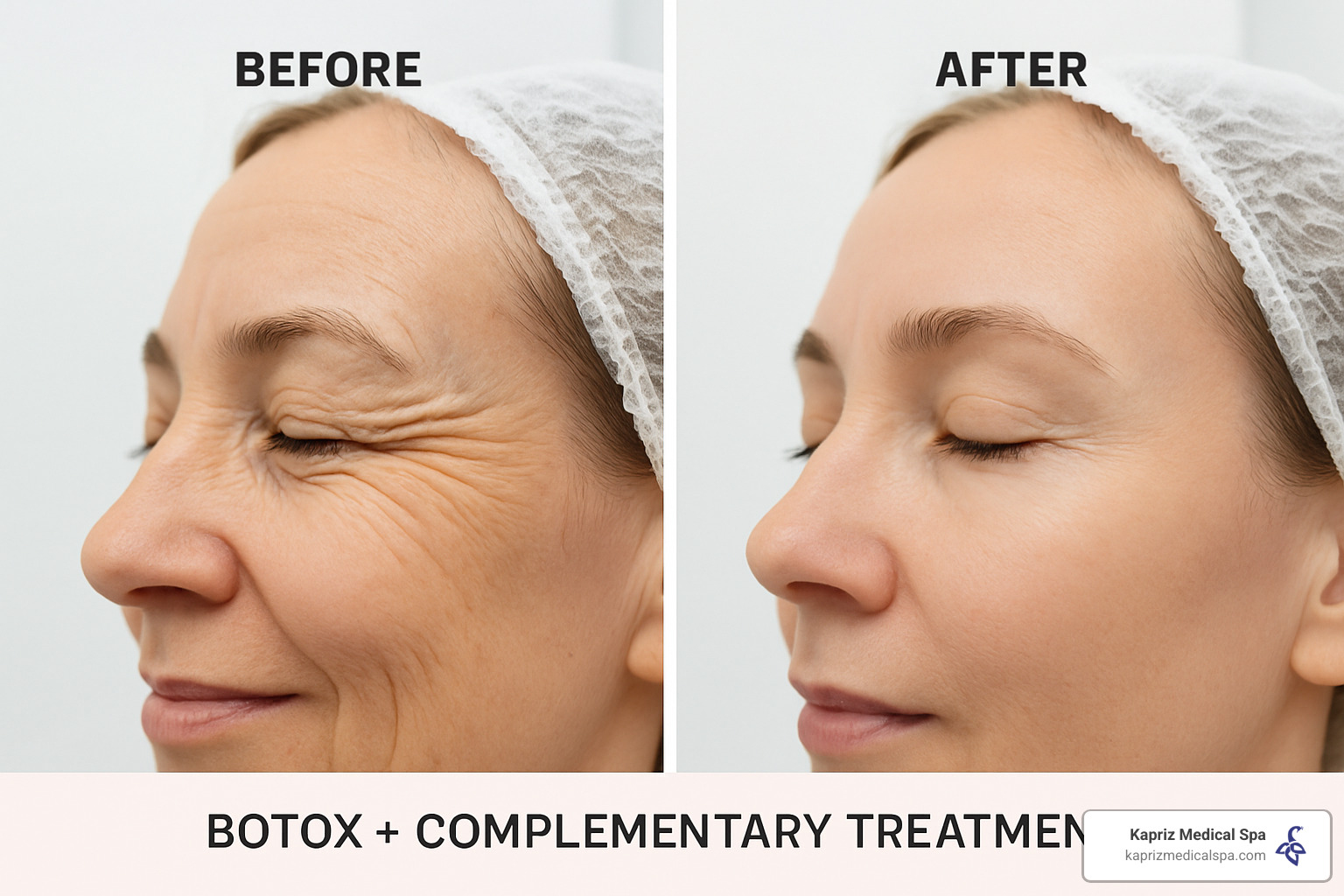
Frequently Asked Questions about How Many Units of Botox for Eye Area
How long do eye-area Botox results last?
When clients ask me about how long their eye-area Botox will last, I usually tell them to expect 3-4 months of that refreshed, smoother appearance. But like most things in aesthetics, it’s not quite one-size-fits-all!
Your personal “Botox timeline” depends on several factors that make you uniquely you. If you’re naturally blessed with a speedy metabolism, you might notice your results fading a bit sooner. Those with stronger facial muscles (especially our expressive clients who are animated speakers) may overcome the effects more quickly than others.
I’ve also noticed that first-time Botox users often see slightly shorter duration than our regulars. It’s almost as if your muscles need time to “learn” their new, more relaxed state. And yes, your activity level plays a role too—our marathon runners and fitness enthusiasts sometimes metabolize Botox faster than those with more sedentary lifestyles.
“Most of our clients at Kapriz Medical Spa come back for their refresh treatments right around that 3-4 month mark,” shares our lead injector. “But we have some clients with particularly expressive faces who prefer to come in closer to the 3-month point before movement fully returns.”
Here’s a little insider tip: scheduling your maintenance appointment before the effects completely wear off can actually be beneficial! This preventative approach helps “train” those muscles over time, and some of our long-term clients have gradually extended their time between treatments as a result.
Is Botox under the eyes FDA-approved?
This is such an important question when discussing how many units of botox for eye area. Let me clarify what the FDA has officially given its stamp of approval to:
The FDA has approved Botox specifically for treating:
– Crow’s feet (those lines at the outer corners of your eyes)
– The “11s” between your eyebrows (glabellar lines)
– Horizontal forehead lines
Botox for under-eye wrinkles, however, falls into what we call “off-label” territory. Now, don’t let that term scare you! Many perfectly safe and effective medical treatments are used off-label every day. It simply means the FDA hasn’t specifically evaluated and approved this particular application.
“Off-label just means we’re applying a well-studied medication in an area that wasn’t part of the original FDA approval process,” our medical director explains. “At Kapriz Medical Spa, we’ve safely performed countless under-eye Botox treatments, but it absolutely requires specialized knowledge of the delicate eye area anatomy and very conservative dosing.”
If you’re considering under-eye Botox, look for a provider who has extensive experience with this specific technique, uses conservative dosing (typically just 1-2 units per injection point), and takes time to thoroughly assess your unique facial structure. They should also be able to clearly explain both the benefits and potential risks, and show you their own before-and-after results.
How much does eye-area Botox cost?
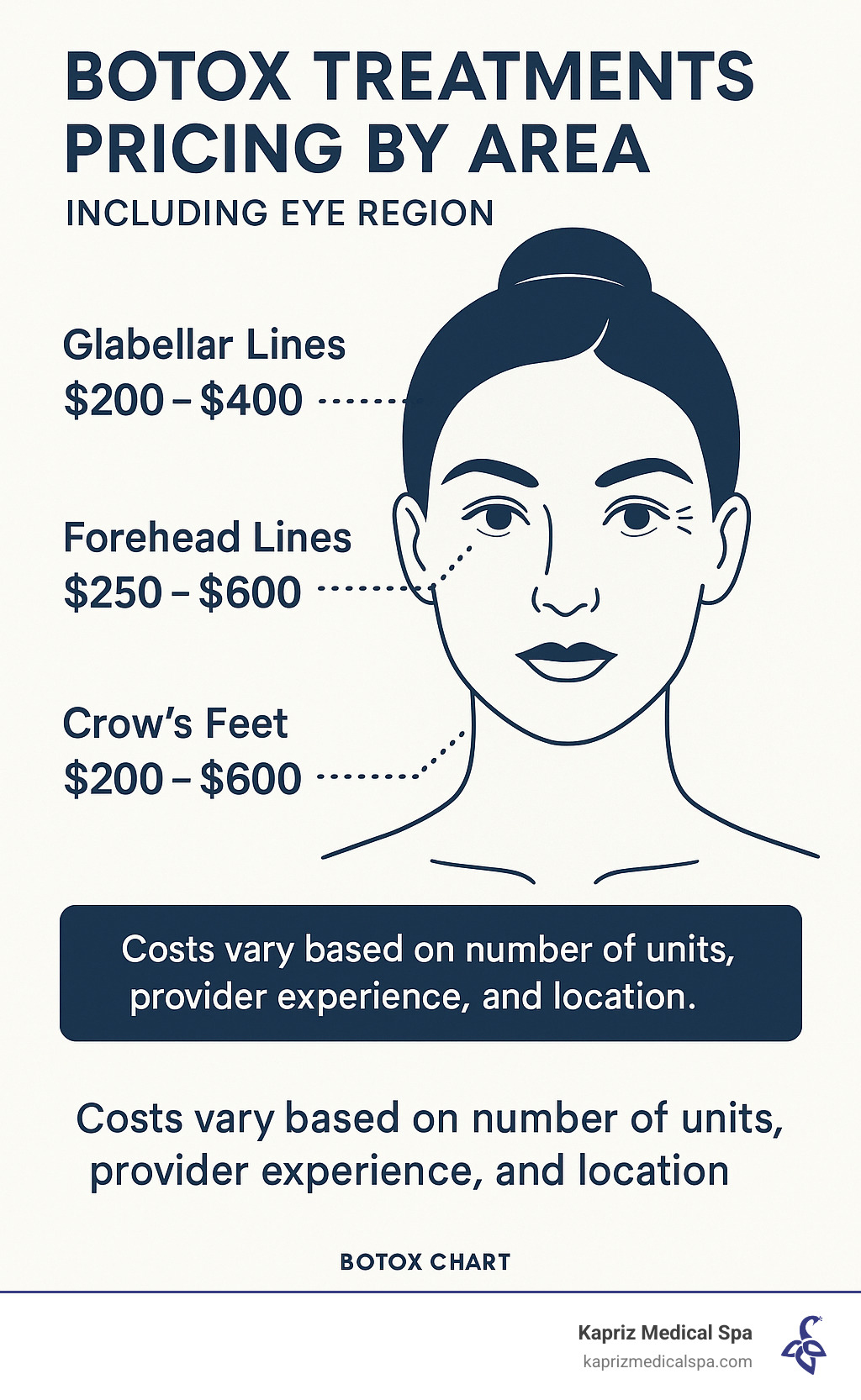
When clients ask about pricing for how many units of botox for eye area, I tell them to expect anywhere from $200 to $600 per session. Why such a range? Several factors come into play.
The number of units needed is the primary factor determining your cost. A complete eye-area treatment addressing crow’s feet and perhaps adding a subtle brow lift might use between 24-34 units total. Most practices charge by the unit, so more units equals higher cost.
Your provider’s experience and credentials also impact pricing. Board-certified dermatologists and plastic surgeons often command higher rates than nurses or physician assistants, reflecting their additional years of training and expertise.
Where you live matters too! Geographic location creates significant price variations. If you’re in Manhattan or Beverly Hills, you’ll likely pay more than someone in a smaller town. The practice setting also influences cost—a luxury medical spa in an upscale location typically has higher overhead costs that are reflected in their pricing.
At Kapriz Medical Spa in Jacksonville, we pride ourselves on offering competitive rates while maintaining the highest standards of care. Many practices, including ours, offer loyalty programs or package pricing for those who commit to regular maintenance treatments.
“We understand budget concerns, but I always encourage clients to prioritize experience and results over finding the absolute lowest price,” our clinic director often says. “The difference between good and great Botox often comes down to the injector’s understanding of facial anatomy and aesthetic principles.”
Conclusion
When it comes to how many units of botox for eye area, there’s truly a beautiful balance between science and artistry. While we typically start with standard guidelines—12 units per eye for crow’s feet, 8-10 units total for under-eyes, 5 units per brow for lifting, and 20 units for those pesky frown lines—your perfect dosage is as unique as your smile.
At Kapriz Medical Spa in Jacksonville, we accept the “less is more” philosophy, especially if you’re new to the Botox world. Starting conservatively gives us room to fine-tune your results, ensuring you look refreshed and natural—never frozen or overdone. After all, the goal is to look like yourself, just with a bit more sparkle in your eyes and fewer lines around them!
Think of your first Botox treatment as the beginning of a conversation between you and your provider. We might add a few units during your follow-up if needed, but it’s always easier to add than to subtract.
Remember these golden nuggets of wisdom:
– Your treatment should be as individual as you are—cookie-cutter approaches rarely yield the best results
– The guys in our lives typically need more units than women (those stronger facial muscles need a bit more convincing to relax!)
– Under-eye Botox requires special expertise—it’s an advanced technique that’s technically “off-label” but can work wonders in the right hands
– You’ll likely want a refresh every 3-4 months to maintain those smooth results
– Sometimes Botox works even better when paired with friends like fillers or laser treatments for complete rejuvenation
Your eyes tell your story—they light up when you’re happy, crinkle when you laugh, and sometimes show the journey you’ve been on. With thoughtfully administered Botox, we can help preserve that sparkle while softening the lines that might make you look tired or worried when you’re feeling anything but.
Ready to find your personal Botox sweet spot? We’d love to welcome you to Kapriz Medical Spa for a consultation. Our experienced team will get to know you, understand your goals, and create a treatment plan that’s perfectly, uniquely yours.
For more details about our comprehensive approach to Botox, visit our Botox treatments page.