
How many units of botox between eyes: Best 2025
Understanding the “11s”: Your Guide to Botox for Frown Lines
Do you catch a glimpse of yourself in the mirror and notice faint, or perhaps not-so-faint, vertical lines etched between your eyebrows? You’re not alone. These lines, often called the “11s” or frown lines, are one of the most common cosmetic concerns we see. They can inadvertently make you look tired, stressed, or even angry, regardless of how rested and happy you feel inside. If you’re wondering how many units of botox between eyes are needed to smooth these pesky lines, you’ve come to the right place.
This area, known clinically as the glabella, is a hot spot for dynamic wrinkles. These lines aren’t just from frowning; they develop over years of repeated muscle contractions from everyday expressions like concentrating on a task, squinting at a screen, or reacting to bright sunlight. Over time, these temporary expression lines can become permanently etched into the skin.
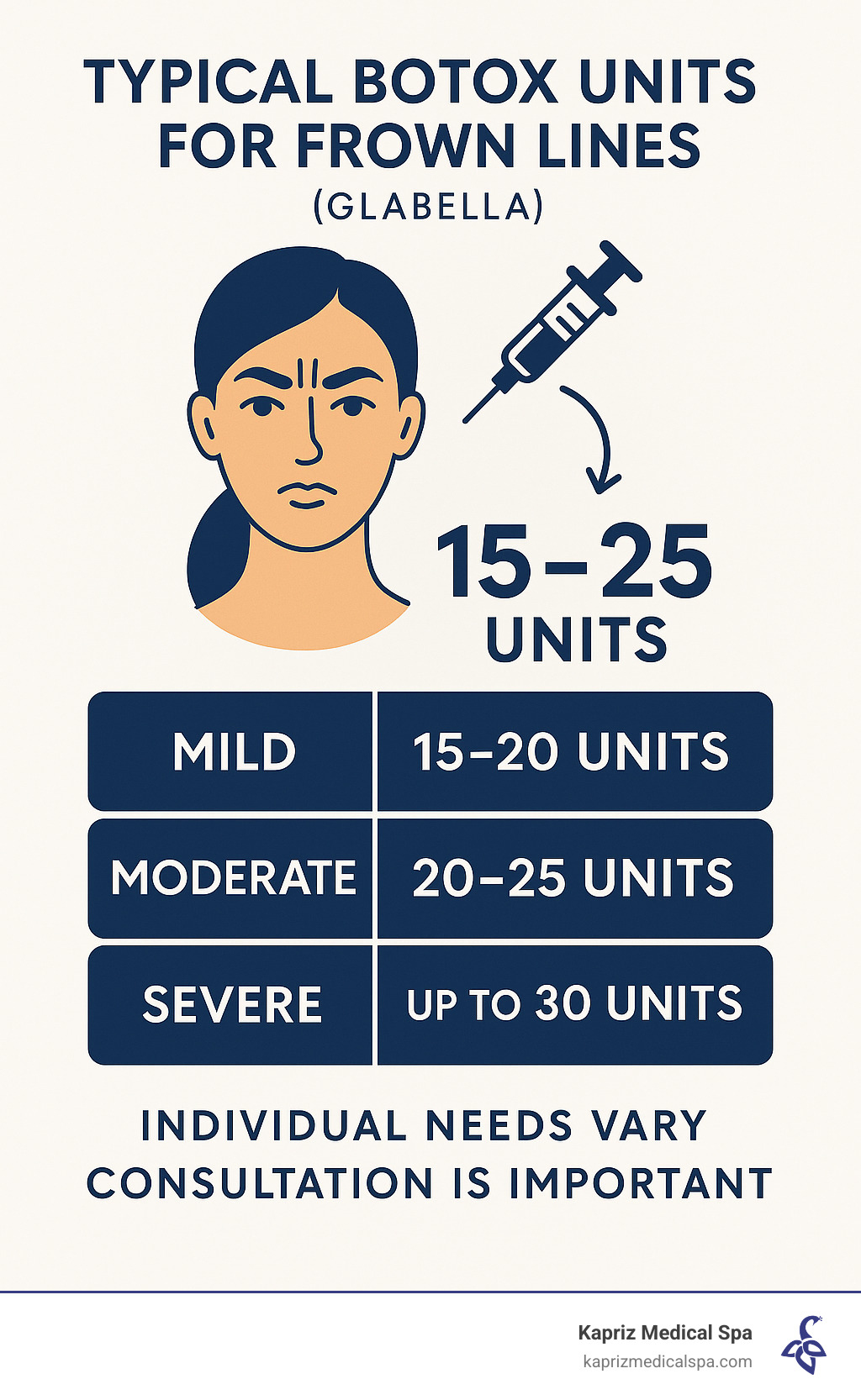
The good news is that Botox offers a highly effective and reliable solution. Here’s a quick look at the typical units used to treat the glabella:
- Typical Range for Glabellar Lines: 15 to 25 units
- Mild Frown Lines: 15-20 units
- Moderate Frown Lines: 20-25 units
- Severe Frown Lines: Up to 30 units
These are general guidelines, not a one-size-fits-all prescription. Your ideal dosage depends on a variety of personal factors, including your unique muscle strength, wrinkle depth, and aesthetic goals. A personalized assessment with an experienced injector is always the key to achieving beautiful, natural-looking results.
Botox works by precisely targeting and relaxing the specific muscles responsible for creating these lines. By softening the muscle contractions, the overlying skin becomes smoother, and the “11s” soften or disappear. The goal of modern Botox treatment isn’t to “freeze” your face but to create a refreshed and more relaxed appearance while preserving your ability to express yourself naturally. Knowing the typical unit ranges can help you feel more informed, but remember, the best treatment plan is always the one that is customized specifically for you. This guide will walk you through everything you need to know about treating your frown lines with Botox.
How many units of botox between eyes basics:
- how many botox units for forehead wrinkles
- how many units of botox are used for crow’s feet
- how much botox do i need for the first time
How Many Units of Botox Between Eyes Are Typically Needed?
When we talk about treating those stubborn lines between your eyebrows, we’re targeting a group of muscles known as the glabellar complex. This isn’t just one muscle working overtime—it’s a dynamic team! The primary muscles responsible are the two corrugator supercilii muscles, which act like drawstrings to pull your eyebrows inward and downward when you concentrate or frown. Working with them is the procerus muscle, which sits at the bridge of your nose and pulls your brows straight down. Together, their repeated contractions etch those persistent vertical “11” lines and sometimes horizontal “bunny lines” into your skin, which can make you look worried or tired, even when you’re feeling fantastic.
Botox works its magic through a fascinating biological process. It’s a purified protein that, when injected in tiny amounts, temporarily blocks the release of a chemical messenger called acetylcholine. This is the chemical that nerve cells release to make muscles contract. By interrupting this signal, Botox tells the overactive glabellar muscles to relax. Think of it as giving those muscles a well-deserved vacation! This relaxation allows the overlying skin to smooth out, dramatically softening the appearance of frown lines without freezing your natural expressions.
But what exactly is a Botox unit? It’s not a measure of volume, like a milliliter. A unit is a standardized measurement of the neurotoxin’s biological activity and potency, determined by the manufacturer, Allergan. This strict standardization is critical because it ensures that one unit of Botox has the same strength and effect, whether you’re being treated at Kapriz Medical Spa in Jacksonville or anywhere else in the world. Botox is typically supplied in 100-unit vials, allowing your injector to draw up a precise, customized dose based on your individual needs.
The great news is that Botox is FDA-approved for treating glabellar lines. This means it has undergone extensive clinical trials to prove its safety and effectiveness for this specific purpose. You can learn more about the FDA’s oversight on their consumer information page: FDA Consumer Update – Botulinum Toxin Products. The manufacturer guidelines provide a solid, evidence-based foundation for treatment, but a skilled injector will always use your unique facial anatomy and aesthetic goals as their ultimate guide.
The Standard Recommendation for Frown Lines
So, how many units of botox between eyes do you actually need? While every face is unique, most patients achieve excellent results with a typical range of 15 to 25 units for the glabella area. The exact number is determined by the severity of your lines and the strength of your underlying muscles.
- For mild frown lines—those faint lines that are just starting to appear and are primarily visible when you’re actively frowning—we usually recommend a conservative dose of 15-20 units. This gentle approach effectively softens the lines while ensuring your expressions remain completely natural.
- If you have moderate frown lines—lines that are noticeable even when your face is at rest but aren’t deeply set—you’ll likely need 20-25 units. This dosage provides more significant muscle relaxation to smooth the skin and create that refreshed, well-rested look you’re after.
- For severe frown lines—deeply etched lines that are prominent at all times—we may use up to 30 units. In some cases, particularly for men or individuals with exceptionally strong glabellar muscles, the dose can be as high as 40 units.
While the FDA-approved standard guidelines recommend a 20-unit dose, an experienced injector knows this is just a starting point. At Kapriz Medical Spa, we champion the “start low and go slow” philosophy, especially for first-time patients. We prefer to begin with a conservative dose and schedule a follow-up appointment about two weeks later. Since Botox takes up to 14 days to show its full effect, this allows us to assess your results and make precise adjustments if needed. It’s always better to add a little more than to risk an over-treated, unnatural look. After all, you can always add more Botox, but you can’t take it away once it’s injected!
Comparing Glabella, Forehead, and Crow’s Feet Dosages
Understanding how the glabella dosage compares to other popular treatment areas helps you see the bigger picture of facial aesthetics. For a truly natural and harmonious result, many clients choose to treat areas together.
| Area Treated | Typical Botox Units (Range) | Notes |
|---|---|---|
| Glabella (between eyebrows) | 15-25 units | Can go up to 30-40 for severe lines |
| Forehead | 10-30 units | Varies greatly with forehead size and muscle strength |
| Crow’s Feet | 10-15 units per side | Usually treated on both sides for symmetry |
Treating areas together is often the key to avoiding an “overdone” or unbalanced look. The muscles of the upper face work in a delicate balance of push and pull. The forehead muscle (frontalis) is an “elevator,” pulling your brows up, while the glabellar complex muscles are “depressors,” pulling them down. If you only treat the forehead, the unopposed pull of the glabellar muscles can sometimes make the brows feel heavy or drop. Conversely, treating only the glabella can sometimes result in a subtle, pleasant brow lift.
By addressing both the forehead and glabella, we can create a smooth, balanced result. Adding treatment for crow’s feet (caused by the orbicularis oculi muscle) completes the picture, giving the entire eye area a more open and relaxed appearance. When we combine treatments, we’re not just adding up units; we’re developing a comprehensive plan that respects the intricate interplay of your facial muscles. This thoughtful, holistic approach ensures you get balanced results that improve your natural beauty.
Beyond the Numbers: Maximizing Your Results
Dosage is only part of the story. To make the most of your treatment:
- Follow post-treatment guidance – Avoid strenuous exercise, alcohol, and lying flat for at least four hours. These simple steps reduce the chance of bruising and help the product remain exactly where we placed it.
- Keep your skin hydrated – A healthy skin barrier lets the smooth look of relaxed muscles shine through. Pairing Botox with a physician-grade moisturizer or a hyaluronic acid serum can amplify your glow.
- Be consistent – Regular maintenance (about every three to four months) can actually “train” the targeted muscles to stay more relaxed over time, meaning you may need fewer units down the road.
- Live the wellness lifestyle – Good sleep, balanced nutrition, and daily sunscreen protect your investment and keep your skin looking youthful from the inside out.
Getting the right unit count, guided by these insights, means lasting, confidence-boosting results. Ready to achieve your glabellar goals?