
How Many Units of Botox Are Used for Forehead: 5 Vital Tips 2025
Finding Your Perfect Forehead Botox Dosage
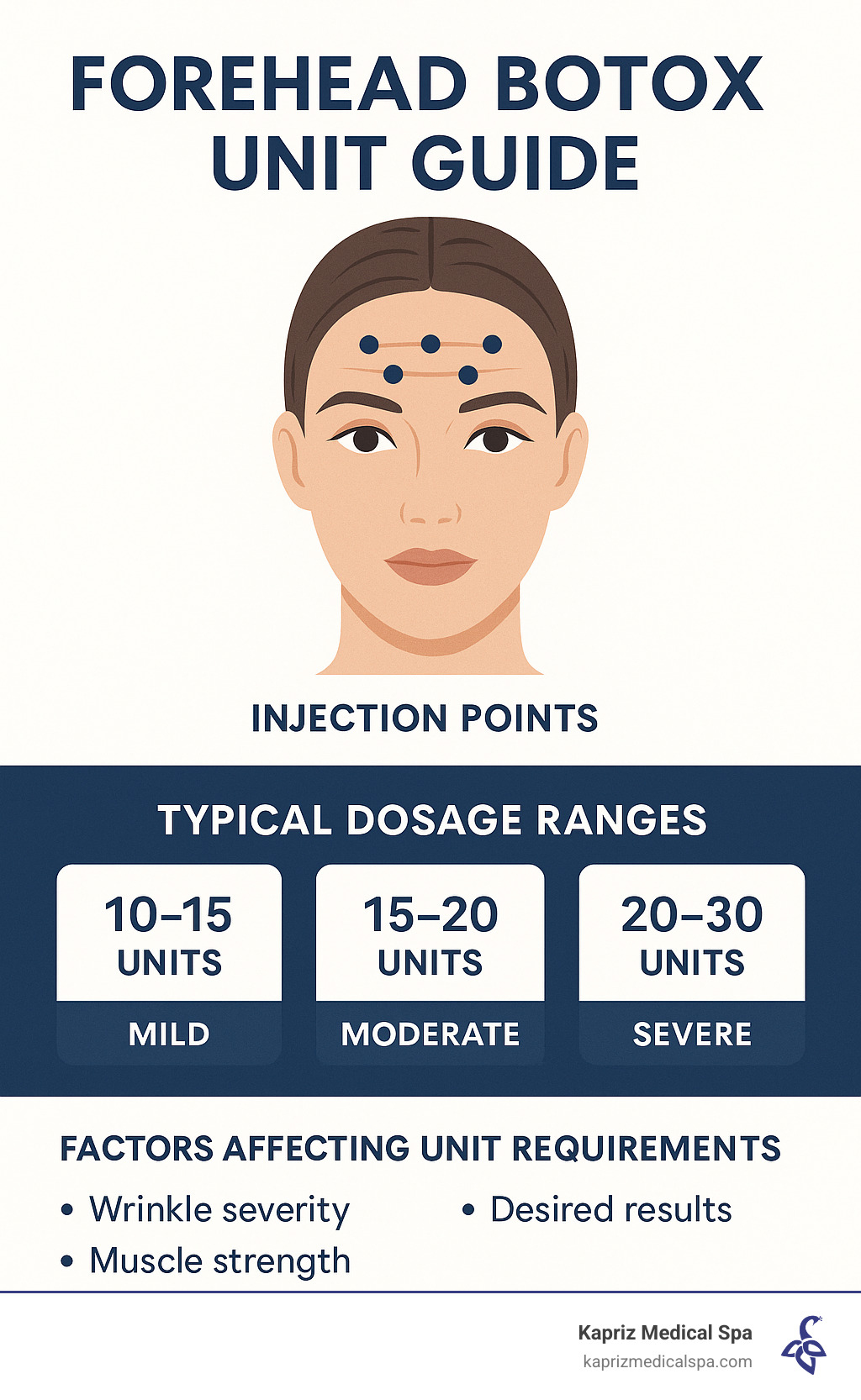
How many units of botox are used for forehead treatments typically ranges from 10 to 30 units, depending on several factors including wrinkle severity, muscle strength, and desired results. For quick reference:
| Wrinkle Severity | Typical Units | Notes |
|---|---|---|
| Mild | 10-15 units | For fine lines or preventative treatment |
| Moderate | 15-20 units | Standard dosage for most patients |
| Severe | 20-30 units | For deeper, more pronounced lines |
| First-time users | 10-20 units | Conservative approach to assess response |
Standing in front of the mirror, you’ve likely noticed those horizontal lines appearing across your forehead when you raise your eyebrows. Maybe they’ve started to linger even when your face is relaxed. You’re not alone – forehead wrinkles are among the first visible signs of aging, appearing for many people by their late 20s to early 30s.
Botox (botulinum toxin) offers a quick, effective solution for smoothing these lines by temporarily relaxing the frontalis muscle responsible for forehead movement. But one of the most common questions patients ask is exactly how many units they’ll need for optimal results.
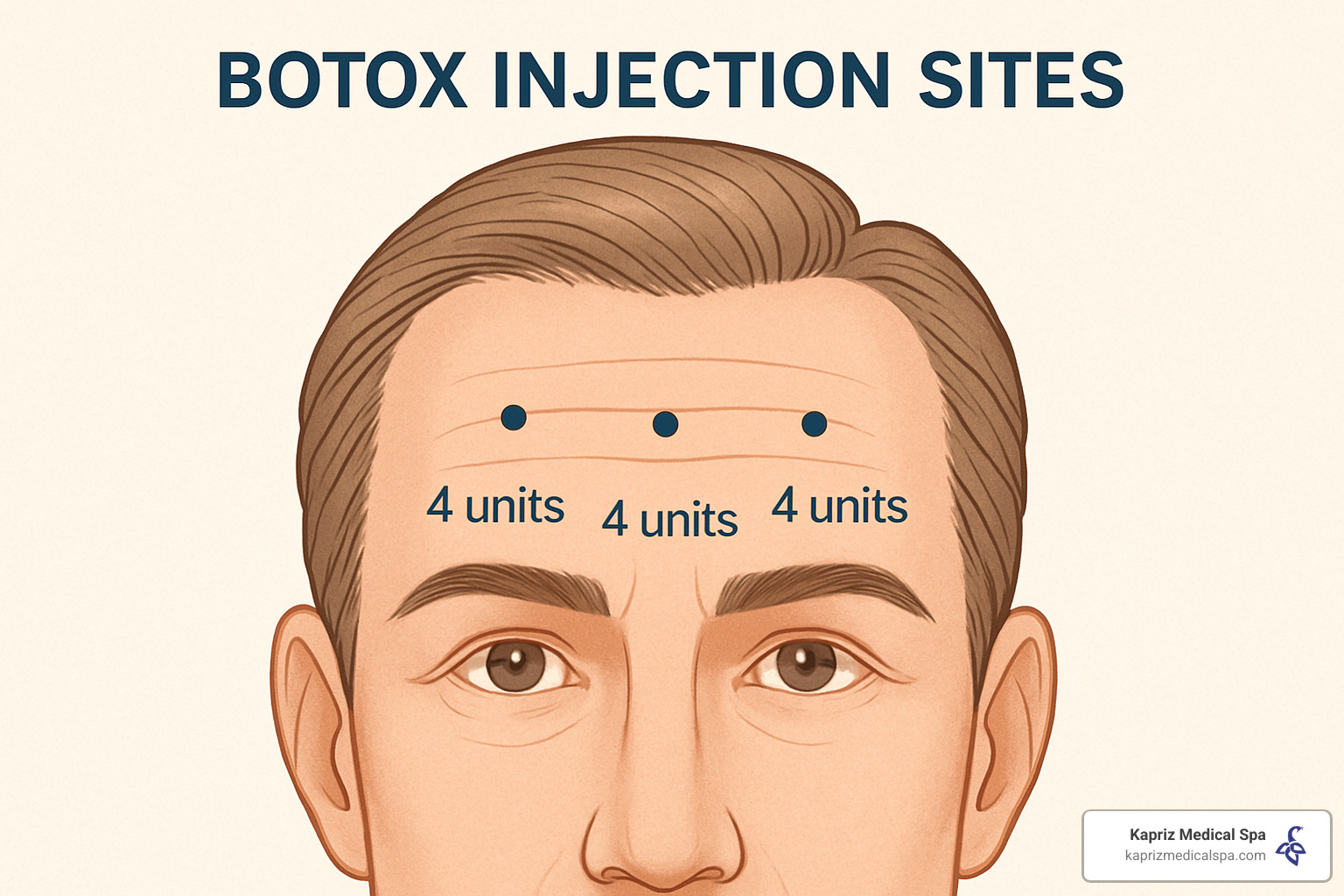
The truth is, there’s no one-size-fits-all answer. While Allergan (the manufacturer of Botox) suggests a standard dosage of 20 units (4 units at each of five injection sites across the forehead), your treatment should be customized based on your unique facial anatomy and aesthetic goals.
For first-time Botox recipients, practitioners often start conservatively with 10-20 units to achieve natural-looking results while avoiding potential side effects like brow drooping. Men typically require higher dosages (often 5-15 units more) than women due to stronger facial muscles.
Treating the forehead area alone without addressing the glabellar “11 lines” between the eyebrows can sometimes lead to an unbalanced appearance or brow heaviness. Many practitioners recommend combining these treatments for optimal facial harmony, which may require approximately 40 units total.
At Kapriz Medical Spa, we believe in personalized treatment plans that consider your unique facial structure, muscle strength, and aesthetic goals to determine the perfect unit count for your forehead Botox treatment.
Essential how many units of botox are used for forehead terms:
– how many units of botox for face slimming
– how many units for under eye botox
– how many units of dysport equal botox
Understanding Botox & Forehead Anatomy
Ever wonder what’s actually happening under your skin when you get Botox? Let’s take a friendly tour of your forehead’s inner workings before we talk about units and needles!
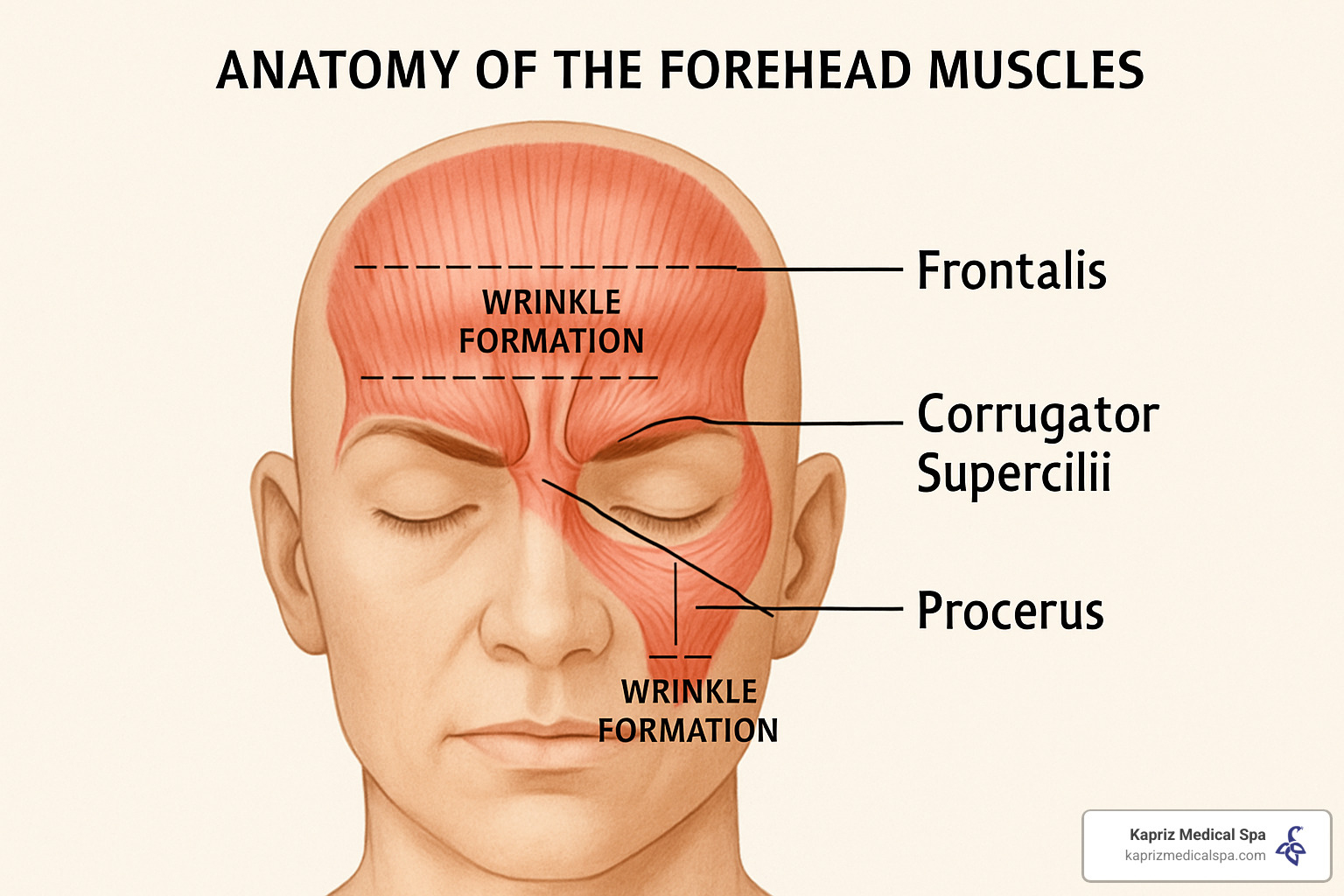
Your forehead features the frontalis muscle – a large, fan-shaped muscle that spans from just above your eyebrows all the way up to your hairline. Unlike most facial muscles that pull downward, this unique muscle lifts your eyebrows upward. Every time you look surprised, concerned, or raise your eyebrows in conversation, your frontalis is hard at work.
Just below, between your eyebrows, sits the glabellar complex – a group of muscles including the corrugator supercilii and procerus. These are the culprits behind those vertical “11 lines” that appear when you concentrate or frown.
When Botox is injected, it works as a neuromodulator that temporarily blocks the release of acetylcholine – the chemical messenger that tells your muscles to contract. Without this signal, the muscle relaxes, and voilà – the skin above smooths out!
As we age, our skin naturally loses collagen and elastin, the proteins responsible for keeping skin firm. Scientific research on elastin and aging reveals that by age 30, we begin losing about 1% of our collagen each year. This natural breakdown, combined with thousands of facial expressions, gradually creates those lines we see in the mirror.
Why Forehead Lines Form
Your forehead wrinkles aren’t just about birthdays – several factors contribute to when and how deeply these lines develop:
Sun exposure is perhaps the biggest culprit. Those UV rays accelerate the breakdown of collagen and elastin, making your skin more vulnerable to wrinkles. (This is why your dermatologist – and probably your mother – have been telling you to wear sunscreen since forever!)
Repetitive expressions play a huge role too. Every time you raise your eyebrows in surprise or furrow them in concentration, you’re creating temporary lines that eventually become permanent residents.
Genetics definitely have a say in the matter. If your parents developed forehead lines early, chances are you might follow suit. Some of us are simply predisposed to more expressive foreheads.
Lifestyle factors round out the picture. How many units of botox are used for forehead treatments might need to be adjusted based on whether you smoke, how well you hydrate, your sleep quality, and even your stress levels – all of which can contribute to premature wrinkling.
How Many Units of Botox Are Used for Forehead?
Let’s talk about the question on everyone’s mind: how many units of botox are used for forehead treatments? While there’s no one-size-fits-all answer, most people typically receive between 10 and 30 units. Allergan (the company behind Botox) suggests a standard dose of 20 units, usually spread across five injection points with 4 units at each site.
But your perfect dose depends on your unique situation:
If you have fine, barely-there lines, you might only need 10-15 units. For those moderate, more noticeable wrinkles, 15-20 units usually does the trick. And if you’re dealing with deeper, more pronounced lines that stick around even when your face is relaxed, you might need 20-30 units or even more.
First-time Botox users, I’m talking to you! Your provider will likely start on the conservative side with 10-20 units. This cautious approach lets them see how your muscles respond before adjusting your treatment plan.
Something important to note: treating just your forehead without addressing those “11 lines” between your eyebrows (the glabella area) can sometimes create an unbalanced look. When the forehead muscle that lifts your eyebrows is relaxed, but the muscles pulling downward remain active, you might experience an unwanted brow droop. That’s why many experts recommend treating both areas together, which typically requires about 40 units total (20 for each area).
| Treatment Area | Mild Lines | Moderate Lines | Severe Lines |
|---|---|---|---|
| Forehead Only | 10-15 units | 15-20 units | 20-30 units |
| Glabella (“11s”) | 15-20 units | 20-25 units | 25-30 units |
| Combined Forehead & Glabella | 25-35 units | 35-45 units | 45-60 units |
Want more detailed information? Check out our comprehensive guide on How Many Botox Units for Forehead Wrinkles?
How Many Units of Botox Are Used for Forehead: Quick Reference
Need a quick answer about how many units of botox are used for forehead treatments? Here’s your cheat sheet:
The standard dose follows Allergan’s recommendation of 20 units, typically injected across 5 sites on your forehead with 4 units per site. If you’re interested in “Baby Botox” (a more subtle, natural-looking approach), expect around 10-15 units total. Men, your stronger facial muscles usually need about 5-15 more units than women to achieve similar results. And if it’s your first Botox experience, your provider will likely start with a conservative 10-20 units.
Factors That Change How Many Units of Botox Are Used for Forehead
Your perfect Botox dose is as unique as you are. Here’s what affects how many units you’ll need:
Age plays a significant role – if you’re in your 20s or 30s, you’ll typically need fewer units than someone in their 50s with more established lines. Gender matters too – men generally have stronger facial muscles than women and may need 25-50% more units for the same effect.
Muscle strength varies from person to person, regardless of gender. If you have particularly expressive eyebrows that shoot up dramatically when you’re surprised, you’ll likely need more units to calm those powerful muscles. Your skin thickness also affects your dosage – thicker skin typically requires more units to achieve the same smoothing effect.
Do you have a fast metabolism? You might process Botox more quickly than others, potentially requiring more units or more frequent touch-ups. Interestingly, your treatment history matters too – long-term Botox users often develop a “muscle training” effect, where muscles become weaker over time and may eventually require fewer units.
Finally, your desired results determine your perfect dose. Want to maintain some natural movement? You’ll need fewer units than someone seeking complete smoothness.
If you’re new to Botox, we’ve created a special guide just for you: How Many Units of Botox for Forehead First Time?
Personalizing Your Forehead Botox Plan
When you walk into Kapriz Medical Spa in Jacksonville, FL, you’re not just another appointment on the calendar. We see you as a unique individual with your own facial structure, expressions, and beauty goals. That’s why we never take a cookie-cutter approach to how many units of botox are used for forehead treatments.
During your consultation, our warm, knowledgeable injectors will take time to truly understand your face. We’ll watch as you raise your eyebrows, furrow your brow, and make expressions that are uniquely yours. This facial animation analysis tells us exactly how your muscles move and where your wrinkles form – essential information for creating your perfect treatment plan.
We’ll gently assess your muscle strength through palpation (feeling the muscles as you make expressions), examine your skin thickness, and discuss your wrinkle depth. All these factors play crucial roles in determining your ideal dosage.
The conversation about your goals matters tremendously to us. Some clients want a completely smooth forehead, while others prefer to maintain some natural movement. Your preference guides our approach – after all, it’s your face!
For first-timers, we typically recommend starting conservatively. We can always add more units during a touch-up visit if needed, but we can’t take them away once injected. This incremental approach helps ensure you’re thrilled with your results and comfortable with how your face looks and feels.
We’ll also discuss whether treating adjacent areas might create better overall facial harmony. The glabellar area (those “11 lines” between your eyebrows) often complements forehead treatment beautifully, creating a more balanced, refreshed appearance.
For younger clients in their 20s or early 30s, we might suggest “Baby Botox” – using fewer units as a preventative approach. This can help train muscles early on to prevent deeper wrinkles from forming while maintaining very natural movement.
For more personalized guidance on determining your needs, visit How to Know How Many Units of Botox You Need
Dosage Calculation Steps
Behind the scenes, our expert injectors use a thoughtful, systematic approach to calculate your ideal forehead Botox dosage:
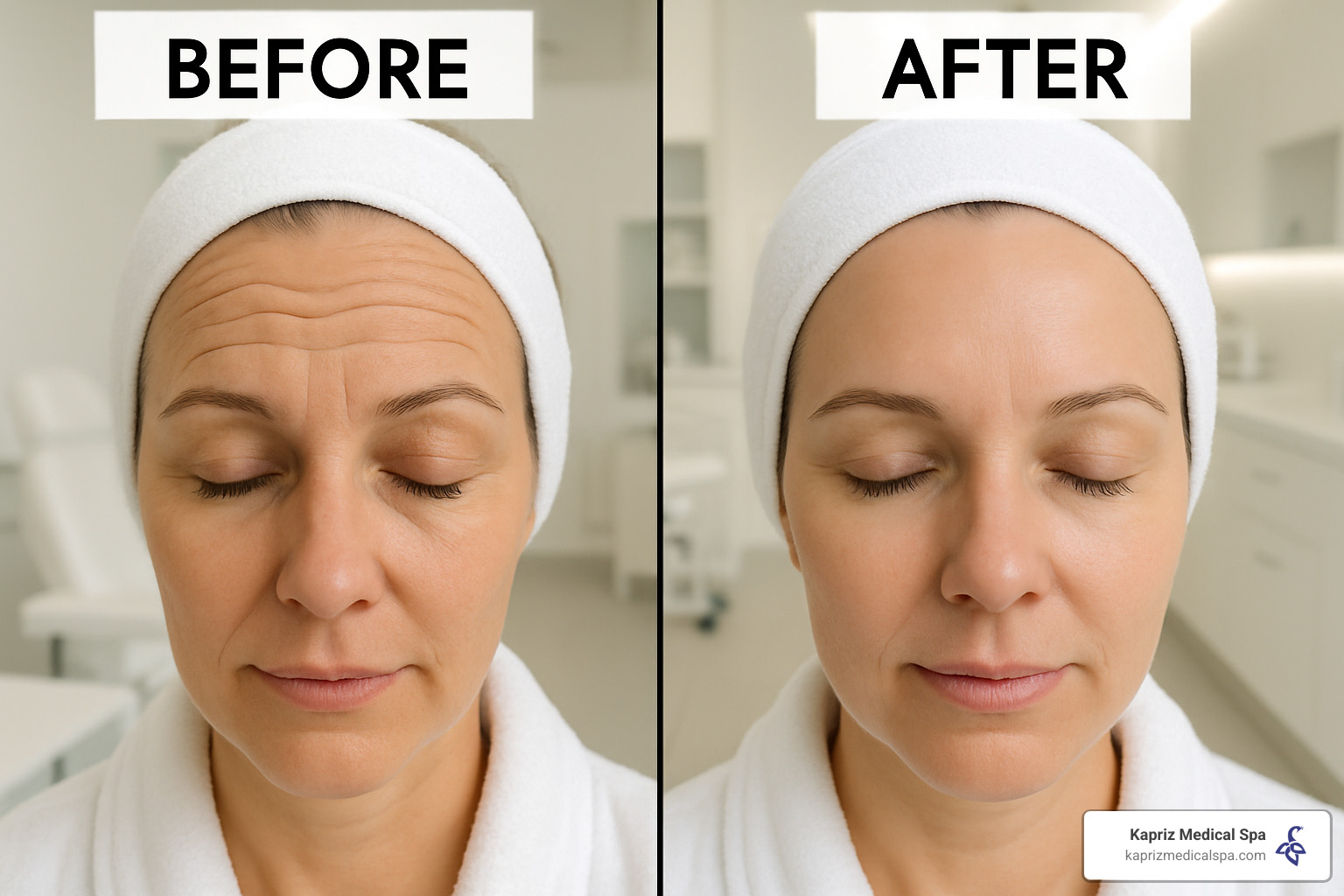
First, we’ll take “before” photos to document your natural expressions and wrinkle patterns. These serve as an important baseline and help us track your progress over time.
Next comes the muscle assessment, where we evaluate the strength and size of your frontalis muscle. Some people naturally have stronger forehead muscles that need more units for the same effect.
Finally, we consider several factors in our unit estimation:
– Your wrinkle depth (from fine lines to deep creases)
– Your muscle strength (from mild to strong)
– Your desired level of movement (from subtle relaxation to maximum smoothing)
– Gender considerations (men typically need 30-50% more units than women)
This thoughtful, personalized approach ensures you receive exactly what you need – not too much, not too little – for natural-looking results that still look like you, just refreshed and more confident.

Cost, Longevity & Maintenance Tips
Let’s talk about what’s probably on your mind right now – the investment you’re considering in your appearance. Botox is typically priced per unit, with costs ranging from $10 to $20 per unit depending on who’s doing the injecting and where you’re located. Since the average forehead treatment uses about 20 units, you’re looking at approximately $200 to $400 per session.
Here at Kapriz Medical Spa in Jacksonville, we believe you deserve complete transparency when it comes to pricing. We want you to feel comfortable with your decision without any surprise costs popping up later. For our specific pricing details, check out our Botox Cost Jacksonville FL page.
Now, about how long you’ll enjoy those smooth results – how many units of botox are used for forehead treatments affects duration, but most patients find their Botox lasts between 3 and 4 months. Your personal timeline might vary based on a few factors:
Your metabolism plays a significant role – if you’re someone who burns through everything quickly, you might notice your Botox fading a bit sooner. The strength of your facial muscles matters too; stronger muscles tend to overcome the effects more quickly. Regular Botox users often develop what we call a “muscle training” effect, where your results might eventually stretch to 4-6 months as those muscles become conditioned to being relaxed.
Want to get the most bang for your Botox buck? Try these insider tips:
Consider adding a zinc supplement to your routine – some research suggests zinc may help prolong Botox effects since the toxin actually depends on zinc to work properly. Stay hydrated! Well-hydrated skin simply shows fewer wrinkles overall. And please wear your SPF daily – sun protection prevents further collagen breakdown that leads to more wrinkles.
Many of our clients find that using quality skincare with retinol and peptides between treatments helps maintain that smooth appearance. And perhaps most importantly, staying on a regular treatment schedule (typically every 3-4 months) often leads to better long-term results and may eventually require fewer units.
Stretching Results Between Visits
After your treatment, a few simple habits can help you maximize your investment. For the first 24 hours, avoid anything that increases blood flow to your face – no hot yoga, saunas, or steamy showers. This prevents the Botox from migrating before it settles into place.
Resist the urge to touch or rub your forehead after treatment, even if you feel a little itchy or strange. Some practitioners (including ours) might suggest making some exaggerated facial expressions during the first hour after injection to help distribute the product evenly.
Consistency is key with Botox treatments. Scientific research on regular treatments shows that maintaining a regular schedule – ideally booking your next appointment before your current results completely wear off – can lead to longer-lasting effects over time.
Many of our clients at Kapriz have found that combining their how many units of botox are used for forehead treatments with collagen-stimulating procedures like microneedling creates a synergistic effect. While Botox handles the dynamic wrinkles, microneedling improves skin texture and stimulates collagen production, giving you comprehensive rejuvenation.
Safety, Side Effects & Alternatives
Let’s talk about the elephant in the room – is Botox safe for your forehead? The good news is that Botox has an excellent safety profile when administered by qualified professionals. That said, it’s always smart to know what you might experience after treatment.
Most people experience only minor side effects, if any. The most common include slight bruising at injection sites (think tiny pin-pricks that fade within days) and temporary headaches that typically resolve within 24-48 hours. More rarely, some patients might experience brow or eyelid drooping (ptosis), which happens when Botox migrates to muscles it wasn’t intended for. Occasionally, you might notice slight asymmetry where one side responds differently than the other – but a good injector can easily correct this during a follow-up visit.
Not everyone is a candidate for forehead Botox, though. You should skip these treatments if you’re pregnant or breastfeeding, have neuromuscular disorders like myasthenia gravis, have active infections at the injection site, or have known sensitivity to botulinum toxin.
At Kapriz Medical Spa, we take safety seriously – it’s not just a checkbox for us, but our absolute priority. All our treatments are performed by highly trained, board-certified injectors who understand the intricate dance of facial muscles and proper injection techniques. For more detailed safety information, our Botox Safety Information page has you covered.
If you’re curious about alternatives to standard Botox for your forehead, we’ve got options! Baby Botox uses micro-doses (typically 10-15 units) for a more subtle effect that maintains some natural movement – perfect if you’re worried about looking “frozen.” Xeomin is another botulinum toxin A product with fewer proteins, which may be less likely to cause resistance for long-term users. Dysport works similarly but tends to diffuse more widely, making it potentially ideal for forehead application.
Not ready for injections? Consider high-quality skincare with peptides like argireline (sometimes called “topical Botox”), which can provide mild improvements. Microcurrent treatments offer another non-invasive option that temporarily lifts and firms the forehead.
Keeping Treatments Safe
Safety starts before you even sit in our treatment chair. To ensure your forehead Botox treatment goes as smoothly as possible, we recommend avoiding blood thinners (including aspirin, NSAIDs, fish oil, and vitamin E) for 1-2 weeks before treatment if medically appropriate. Skip alcohol for 24 hours before your appointment, and arrive with a clean, makeup-free face.
After your treatment, a few simple rules go a long way: stay upright for at least 4 hours (no lying down for naps!), resist touching or massaging the treated area for a full day, and postpone strenuous workouts, saunas, hot tubs, and facials for 24 hours. If you notice any bruising, gentle cold compresses can help.
Perhaps most importantly, choose your provider wisely. At Kapriz, we believe your face deserves nothing less than expert care.

How many units of botox are used for forehead treatments is important, but who administers those units matters even more. The right provider will prioritize both your safety and your satisfaction, giving you natural-looking results you’ll love.
Frequently Asked Questions About Forehead Botox
How long until I see results?
The magic of Botox doesn’t happen overnight, but you won’t be waiting long! Most people notice the first subtle changes within 1-3 days after their forehead treatment. Your friends might start commenting that you look “well-rested” or “refreshed” without quite knowing why.
The full change takes about 10-14 days as the neurotoxin gradually binds to your nerve receptors. This gradual onset is actually a good thing—it creates a natural-looking transition rather than a sudden, dramatic change that might raise eyebrows (though yours will be beautifully relaxed!).
Planning for a wedding, reunion, or important event? Do yourself a favor and schedule your Botox appointment at least two weeks beforehand. This timeline ensures you’ll be enjoying your smoothest forehead when it matters most.
Can I treat forehead without glabella?
While we technically can treat just your forehead without addressing those “11 lines” between your eyebrows (the glabella), it’s usually not the best approach. Here’s why:
Think of your facial muscles as a balancing act. Your frontalis muscle naturally lifts your eyebrows upward, while the glabellar complex pulls them downward. When we relax only the lifting muscle (forehead) without addressing the pulling-down muscles, we create an imbalance that can result in a heavy, droopy brow appearance.
For most patients, we recommend treating both areas together for balanced, harmonious results. This typically requires about 40 units total—20 for the forehead and 20 for the glabella. The combination creates that refreshed look without the risk of brow heaviness.
What happens if I under-dose?
If you receive fewer how many units of botox are used for forehead than your muscles really need, several things might happen:
Your results might fade faster than the typical 3-4 month duration. You might notice improvement in some areas while others still show movement and lines. In some cases, under-treated areas might even appear more prominent as surrounding muscles compensate by working harder.
The silver lining? Under-dosing is easily fixable! If you feel your results aren’t quite what you hoped for after the full 2-week activation period, simply schedule a touch-up appointment. We can add more units precisely where needed.
At Kapriz Medical Spa, we often take a “start conservative” approach with first-time clients. We’d rather add a few more units later than over-treat from the beginning. Many clients appreciate this incremental approach—it ensures natural-looking results and helps ease any first-timer nervousness about looking “frozen” or overdone.
Conclusion
Let’s face it—when it comes to answering “how many units of botox are used for forehead” treatments, there’s no magic number that works for everyone. While the 10-30 unit range gives you a starting point, your perfect dose is as unique as your smile.
At Kapriz Medical Spa in Jacksonville, we see Botox as more art than science. We follow the guidelines, but we’re really looking at your specific facial movements, the strength of your frontalis muscle, and most importantly—what look you’re hoping to achieve. Some clients want that perfectly smooth runway, while others just want to soften their expression while keeping natural movement.
Our expert injectors take their time during consultations, watching how your forehead moves when you’re surprised, concerned, or concentrating. This careful observation helps us determine not just how many units you need, but exactly where they should go for the most flattering result.
What makes us different? We’re building relationships, not just smoothing wrinkles. Many of our clients have been with us for years because we take the time to track their results, adjust their dosage as their muscles respond to treatment over time, and create truly personalized care plans that evolve as they age.
For first-timers, we typically err on the side of caution. We’d rather have you come back for a touch-up than give you that frozen look that screams “I just got Botox!” Our goal is to have people commenting on how rested and refreshed you look, not asking what procedure you had done.
Treating your forehead is just one piece of the facial harmony puzzle. Most clients benefit from addressing the glabellar “11 lines” at the same time to maintain proper muscle balance and prevent that heavy brow feeling that can happen when treating the forehead alone.
Ready to smooth those worry lines and take a few years off your appearance? Schedule your consultation with us at Kapriz Medical Spa today. We’ll help you find your perfect Botox unit count and create a treatment plan that keeps you looking naturally youthful for years to come. For more information about our comprehensive approach to Botox and other aesthetic services, visit More info about Botox services.
The perfect Botox treatment isn’t about maxing out your units—it’s about finding that sweet spot where you look like yourself, just on your best day.