
How many units are in a vial of botox: The #1 Truth!
Understanding Botox Vial Sizes and Units
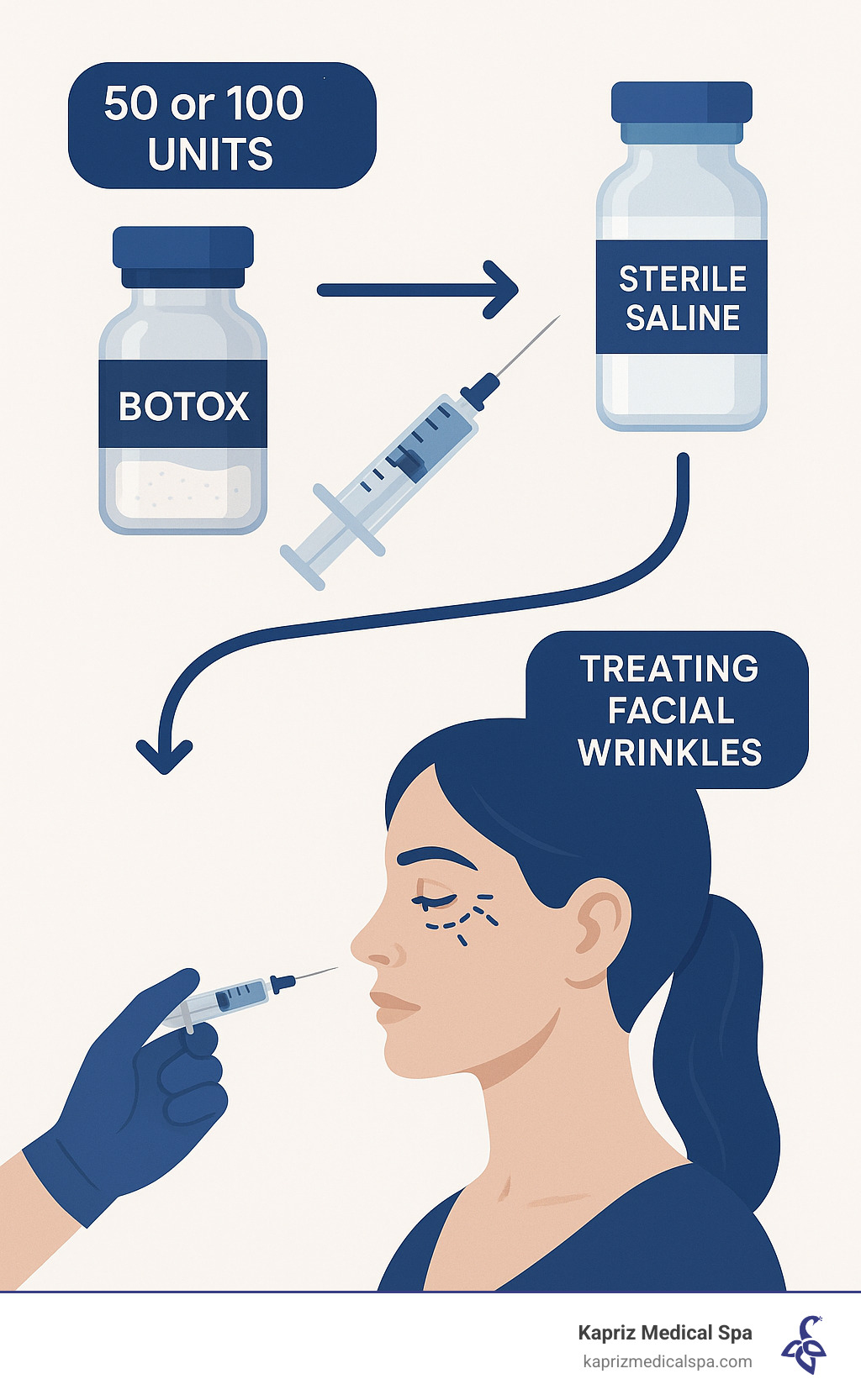
How many units are in a vial of botox is one of the most common questions patients ask when considering their first cosmetic treatment. The answer is straightforward: Botox vials come in two standard sizes – 50 units and 100 units, with the 100-unit vial being the most commonly used in medical practices.
Quick Answer:
- 100-unit vials – Most common size used by practitioners
- 50-unit vials – Smaller option, less frequently used
- 200-unit vials – Available for medical (non-cosmetic) applications
Each vial contains Botox as a freeze-dried powder that must be mixed with sterile saline before injection. This reconstitution process determines how many units you’ll receive per injection site.
If you’re wondering why this matters for your treatment, understanding vial sizes helps you grasp how Botox is measured, priced, and administered. Unlike dermal fillers that are measured in milliliters, Botox uses a unique “unit” system that measures the biological strength of the botulinum toxin.
The number of units you’ll need depends on several factors including your treatment areas, muscle strength, and aesthetic goals. Most patients require anywhere from 20 to 60 units total for common areas like the forehead, crow’s feet, and frown lines.
At Kapriz Medical Spa, we believe in transparent pricing and personalized treatment plans. Knowing how vial sizes work empowers you to make informed decisions about your cosmetic treatments.
Related content about how many units are in a vial of botox:
- how many botox units in 1 ml syringe
- how many units of dysport equal botox
- how to know how many units of botox you need
Cracking the Code: What Exactly is a Botox ‘Unit’?
If you’ve ever wondered how many units are in a vial of Botox, you first need to understand what a “unit” actually means. It’s not like measuring flour for cookies or water for coffee – Botox units work completely differently.
Think of a Botox unit as a tiny, precise dose of muscle-relaxing power. It’s not measuring volume (like milliliters) or weight (like grams). Instead, each unit measures the biologic strength of the botulinum toxin – basically, how much muscle-relaxing oomph it packs.

Here’s why this matters: Allergan (the company that makes Botox) created this standardized measurement system so every single unit delivers the same predictable effect. Whether you’re getting treatment in Jacksonville or anywhere else in the world, 20 units of Botox will always have the same strength.
This standardization is what keeps your treatments safe and gives you predictable results. When your injector says you need 25 units for your forehead lines, they know exactly how much muscle relaxation you’ll get. No guessing games, no surprises.
It’s like having a universal language for Botox. Your practitioner can look at your facial muscles, consider your goals, and prescribe the exact number of units needed for natural-looking results. This precision is what separates professional treatments from anything else.
Want to learn more about how Botox works its magic? Check out our comprehensive guide on Botox Basics: Your Guide to Youthful Skin. For those curious about the technical side, you can dive deeper into the biologic strength of botulinum toxin and how it’s measured.
The Big Reveal: How Many Units Are in a Vial of Botox?
Here’s the moment you’ve been waiting for: how many units are in a vial of Botox? The answer is refreshingly straightforward. Most cosmetic practices use 100-unit vials as their go-to standard, though you might occasionally encounter 50-unit vials for smaller practices or specific treatments.
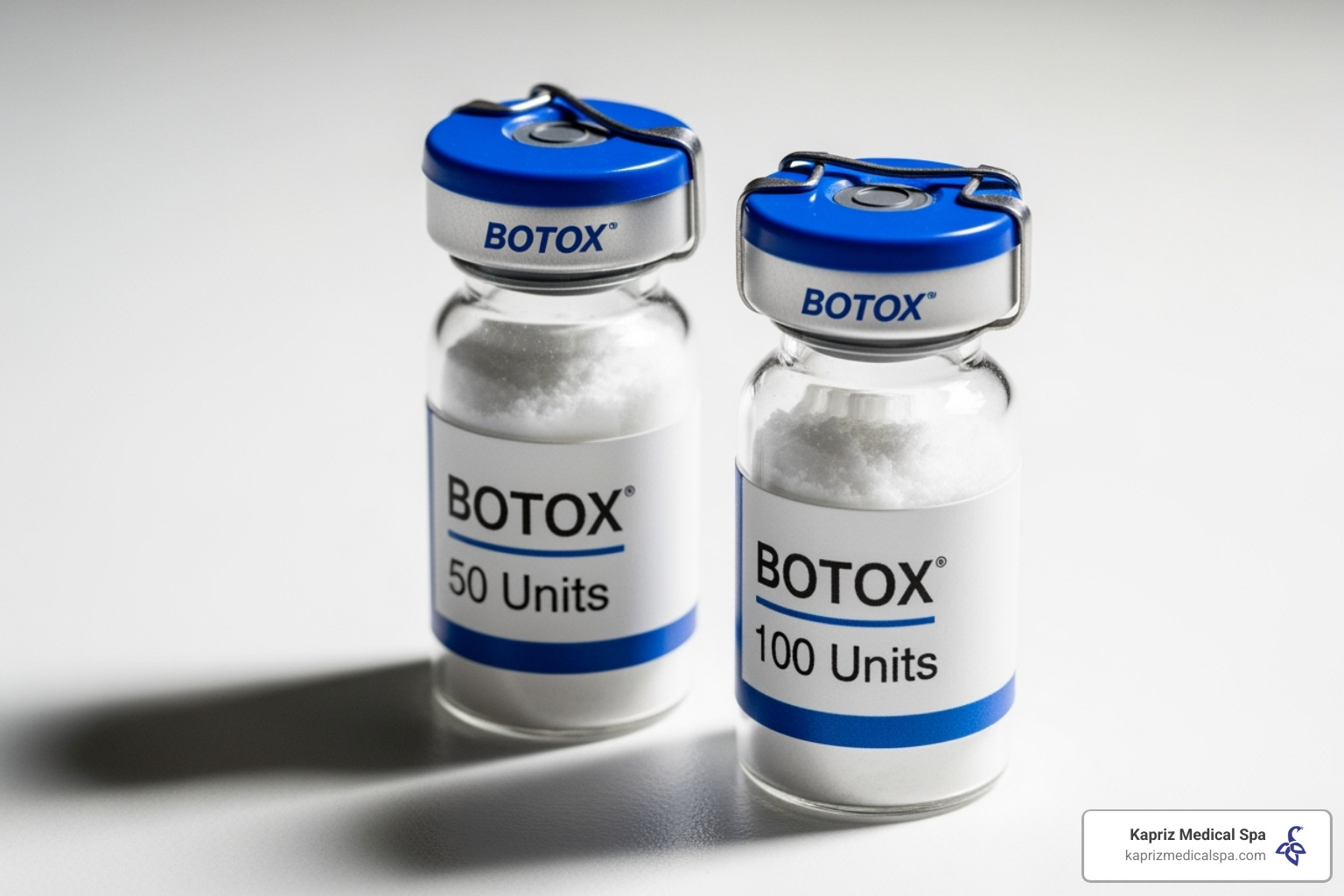
When you first peek at a fresh Botox vial, you might do a double-take. There’s no ready-to-inject liquid waiting inside. Instead, you’ll find a tiny amount of freeze-dried powder that looks almost insignificant for something so transformative. This powdered form contains the onabotulinumtoxinA – the active ingredient that works its wrinkle-smoothing magic.
The numbers on the vial label – whether it says 50 or 100 – tell you exactly how many units of biologic strength are packed into that little bit of powder. But here’s where things get interesting: this powder can’t be used as-is. It needs to be awakened with a careful process that turns it into the smooth, injectable solution your practitioner will use.
From Powder to Potion: The Critical Role of Reconstitution
Think of reconstitution as the crucial bridge between the powder in the vial and the treatment you receive. This process involves adding a precise amount of sterile saline solution to transform the powder into a liquid that can be safely injected.
Here’s where your practitioner’s expertise really shines. The amount of saline they add determines the concentration of the final solution – essentially deciding how many units fit into each tiny drop. This isn’t a one-size-fits-all decision. Different dilutions work better for different treatment areas and injection techniques.
A more concentrated solution (less saline added) means more units packed into each small injection. A more diluted solution (more saline added) spreads the same number of units across a larger volume, which can be perfect for treating broader areas with subtle precision.
The dosage accuracy of your entire treatment depends on getting this step exactly right. It’s like baking a perfect cake – the recipe matters, but so does the skill of the baker. This is why choosing an experienced practitioner isn’t just important; it’s everything.
Here’s how the math works out for common reconstitution ratios:
| Vial Size | Saline Added | Resulting Concentration (Units per 0.1 mL) |
|---|---|---|
| 100 Units | 1.0 mL | 10.0 Units |
| 100 Units | 2.0 mL | 5.0 Units |
| 100 Units | 2.5 mL | 4.0 Units |
| 50 Units | 1.0 mL | 5.0 Units |
| 50 Units | 1.25 mL | 4.0 Units |
At Kapriz Medical Spa, we follow the gold standard guidelines from the Botox Cosmetic Dosage Guide – Drugs.com to ensure every reconstitution is perfect. This attention to detail means you get consistent, predictable results every single time.
Understanding how many units are in a vial of Botox is just the beginning. The real artistry happens when those units are carefully prepared and skillfully placed to help you achieve your aesthetic goals naturally and beautifully.
Your Personalized Dose: How Many Units Will You Need?
Now that we’ve demystified the Botox unit and vial, the next natural question is: “How many units will I need?” This is where the art and science of aesthetic medicine truly come together. There’s no universal answer because your Botox treatment is, and always should be, highly personalized.
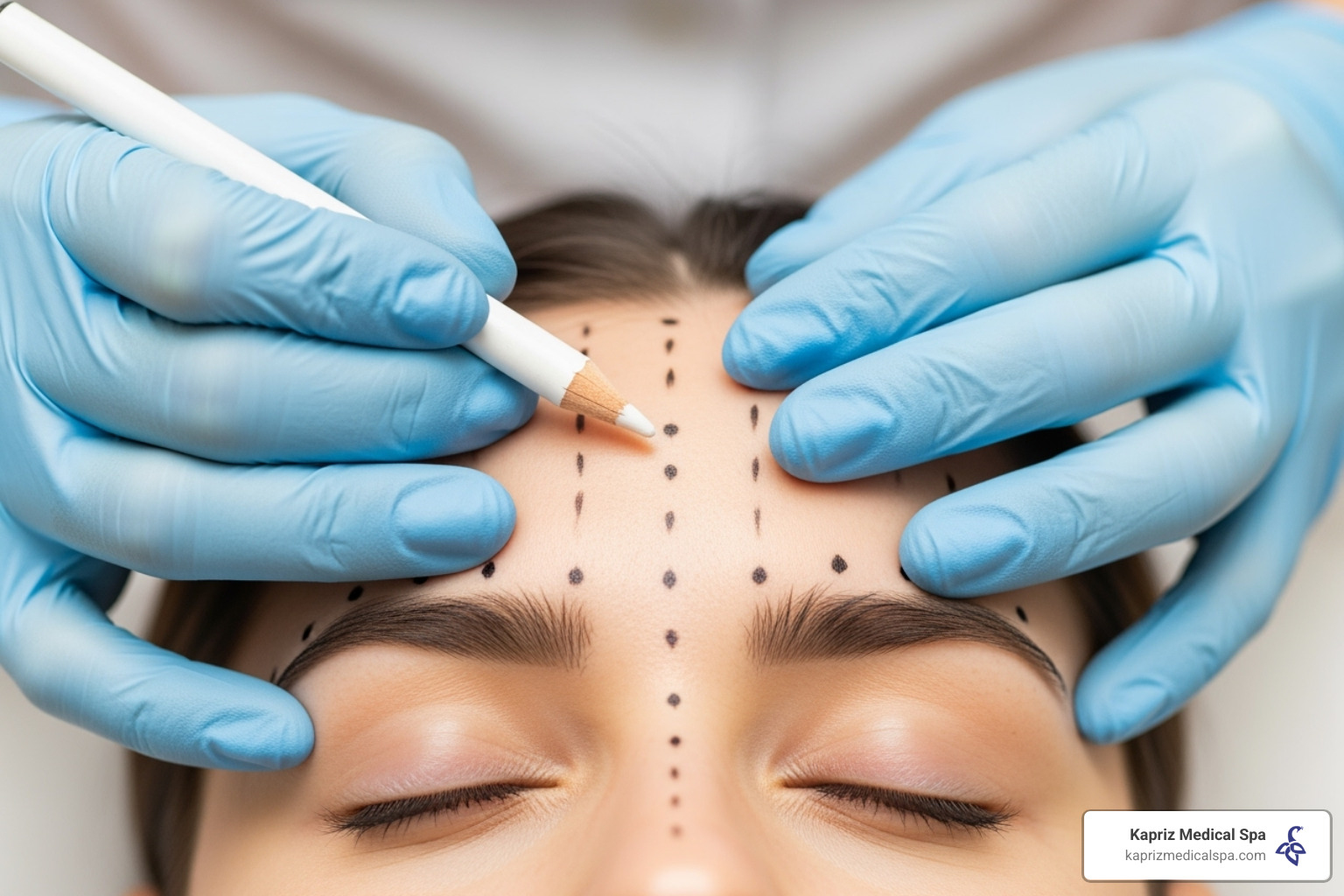
At Kapriz Medical Spa, we believe that understanding how many units are in a vial of botox is just the beginning of your journey. The real magic happens when we determine exactly how many of those units will work best for your unique face and goals.
Think of it this way: knowing there are 100 units in a vial is like knowing how many slices are in a whole pizza. But how many slices you need depends on your appetite, right? Similarly, your Botox dosage depends on your individual facial anatomy, muscle strength, and what you want to achieve.
During your consultation with us, we’ll assess your unique facial muscles and discuss your aesthetic goals to create a custom treatment plan. Some people want dramatic smoothing, while others prefer a subtle refresh that maintains natural movement. Both approaches are perfectly valid, but they require different amounts of product. To learn more about this personalized approach, visit our guide on How to Know How Many Units of Botox You Need.
How many units are in a vial of Botox for common treatment areas?
While every face tells its own story, we can share some typical ranges for common treatment areas. These are starting points for our conversation, not rigid rules.
For forehead lines, most patients need between 10-30 units, depending on the size of their forehead and how expressive they are. Those animated storytellers among us might need a few more units than someone with naturally subtle expressions.
Glabellar lines (those pesky “11s” between your brows) typically require 15-25 units. These muscles are often quite strong since we use them every time we concentrate or squint in the sun.
Crow’s feet around the eyes usually need 5-15 units per side. The delicate skin here requires a gentle touch, so we often use fewer units to maintain that natural sparkle in your eyes.
For under-eye treatments, we typically use 2-5 units per side. This area requires an extremely skilled hand, as the muscles are small and the results need to look completely natural.
A lip flip uses 4-8 units to gently relax the muscle that pulls your upper lip down, creating a subtle pout without adding volume.
Masseter treatments for jaw slimming require 20-30 units per side, as these are some of the strongest muscles in your face from all that chewing and (let’s be honest) occasional teeth grinding.
For deeper insights into specific areas, check out our detailed articles: How Many Botox Units for Forehead Wrinkles? and How Many Units of Botox for Under Eyes?.
What Factors Influence Your Required Dosage?
Several personal factors determine how many units you’ll need from that vial of Botox. Muscle strength is the biggest player here. If you have naturally strong facial muscles (and there’s nothing wrong with being expressive!), you’ll likely need more units to achieve the same level of relaxation as someone with gentler muscle activity.
Gender differences play a significant role too. Men typically have larger, stronger facial muscles than women and often need about 30% more units for similar results. It’s not about being “stronger” or “weaker” – it’s simply biology.
Your metabolism affects how your body processes Botox. If you’re someone who burns through everything quickly (lucky you with that fast metabolism!), you might find your results don’t last quite as long, or you might benefit from slightly higher doses.
Your aesthetic goals are crucial in determining dosage. Are you going for that completely smooth, polished look, or do you prefer the trending “baby Botox” approach with fewer units for subtle, natural-looking results? Both are beautiful choices, but they require different amounts of product.
Wrinkle severity matters too. If you’re starting Botox as prevention in your twenties or thirties, you’ll likely need fewer units than someone addressing deeper, more established lines. Think of it as maintenance versus renovation.
Finally, your unique facial anatomy is like a fingerprint – completely individual. During your consultation, we’ll analyze how your specific muscle patterns contribute to your expressions and lines. This helps us determine not just how many units you need, but exactly where to place them for the most natural, flattering results.
If you’re considering Botox for the first time, our guide on How Much Botox Do I Need for the First Time? offers valuable insights to help you feel confident about your decision.
How Does the Unit-Based System Affect the Cost of Your Treatment?
Understanding how many units are in a vial of botox directly impacts your treatment cost, and we think the unit-based pricing system is the fairest way to charge for your procedure. When you know there are typically 100 units in a vial and understand how many units you’re receiving, you know exactly what you’re paying for.
At Kapriz Medical Spa, we price Botox per unit because it offers complete cost transparency. You’ll know the exact cost per unit upfront, which typically ranges from $10 to $15 per unit in our Jacksonville location. This means you can budget accurately and understand your total investment before we even start.
The beauty of paying for what you need means you’re never overpaying for product you don’t use. If your treatment plan calls for 25 units instead of 50, you only pay for those 25 units. It’s honest, straightforward pricing that respects both your budget and your individual needs.
This customization in pricing reflects our commitment to personalized care. Because every face is different, every treatment plan is different, and every cost is custom to your specific needs. You’re not paying for a one-size-fits-all approach.
The cost also reflects our practitioner expertise. When you choose an experienced injector, you’re investing in their skill, artistic eye, and ability to optimize every unit for the most beautiful, natural-looking results. That expertise is invaluable and often means you’ll need fewer touch-ups or corrections.
Geographic location does influence pricing, and we’re transparent about that too. For specific details on Botox Cost in Jacksonville, FL, we encourage you to visit our dedicated page or schedule a consultation where we can discuss your individual treatment plan and associated costs.
We believe this upfront approach to pricing builds trust and helps you make informed decisions about your aesthetic journey. After all, when you understand both the product and the pricing, you can focus on the most important part – achieving the beautiful, confident results you’re looking for.
Frequently Asked Questions About Botox Vials and Units
When patients come to us asking how many units are in a vial of botox, they often have follow-up questions that dig deeper into the practical aspects of treatment. We love these conversations because they show you’re taking an active role in understanding your care.

Let’s tackle the most common questions we hear at Kapriz Medical Spa, so you can feel completely confident about your upcoming treatment.
Can a single vial of Botox be used for multiple patients?
This is one of our most frequently asked questions, and the answer is absolutely yes! It’s not only common practice but also perfectly safe when proper protocols are followed.
Think about it this way: a 100-unit vial contains enough product for several patients. Unless someone is having an extensive full-face treatment, most people don’t need anywhere close to 100 units in a single session. The typical patient uses between 20-60 units total, which means one vial can safely treat multiple people.
Safety is our top priority, so we follow strict sterile protocols. We sterilize the vial top with alcohol before each use, always use a new syringe and needle for every patient, and never reuse injection equipment. The reconstituted Botox can be safely stored in the refrigerator for up to 24 hours, after which any remaining product is properly discarded.
These safety standards aren’t just best practices—they’re essential for preventing cross-contamination and ensuring every patient receives the highest quality care.
Are Botox units the same as units for other neurotoxins?
Here’s where things get really interesting, and it’s crucial information that many people don’t realize: Botox units are not interchangeable with other neurotoxin units. This is one of the most important distinctions in aesthetic medicine.
While Botox is the household name, other FDA-approved neurotoxins like Dysport and Jeuveau each have their own unique unit measurements. It’s like comparing apples to oranges—they’re all fruit, but they’re completely different.
Dysport units typically require about 2.5 to 3 times more units to achieve similar results as Botox. So if you need 20 units of Botox for your forehead, you might need 50-60 units of Dysport for the same effect. Jeuveau units are generally closer to a 1:1 ratio with Botox, but individual responses can still vary.
This is precisely why practitioner knowledge is so valuable. An experienced injector understands these unit conversion ratios and will adjust dosages accordingly. We’ve seen patients confused when they hear they need “more units” with a different product, but it’s simply due to different potency measurements.
For detailed comparisons, check out our guides on How Many Units of Dysport Equal to Botox? and How Many Units of Jeuveau Are Equal to Botox?.
How many units are in a vial of Botox versus a syringe?
This question comes up because there’s often confusion between the vial supply and the syringe dose. Let me clear this up in simple terms.
A vial is like a medicine bottle—it’s the original container from the manufacturer that holds either 50 or 100 units of freeze-dried Botox powder. This represents the total units available in that sealed container.
A syringe, however, is just the delivery tool. It doesn’t come pre-loaded with any specific number of units. Instead, after we reconstitute the powder with saline, we draw up a customized amount into the syringe based on your specific treatment area needs.
So while the vial might contain 100 total units, your syringe will only hold exactly what you need—maybe 15 units for your crow’s feet or 25 units for your frown lines. This precision is where your injector’s precision really matters. We’re not just drawing up random amounts; we’re calculating exactly how many units will give you the best results for your unique facial anatomy and aesthetic goals.
This customized approach ensures you get precisely the right dose for natural-looking results, nothing more and nothing less.
Your Path to Smooth, Natural-Looking Results
We’ve taken quite a journey together exploring how many units are in a vial of botox, haven’t we? From understanding that mysterious powder in the vial to finding how it transforms into your personalized wrinkle-smoothing treatment, you now have the inside scoop on what happens behind the scenes.
Let’s recap what we’ve learned. Botox vials come in two main sizes – the standard 100-unit vial that most practices use, and the smaller 50-unit option. Each unit represents a precise measure of biologic strength, not just a random number on a label. This standardization is what makes your results predictable and safe.
The magic happens during reconstitution, when that tiny amount of freeze-dried powder gets mixed with sterile saline. This step determines how concentrated your final injection will be, which is why working with a skilled practitioner matters so much.
Your personalized dosage is where the art meets science. Whether you need 20 units for subtle forehead smoothing or 60 units for comprehensive facial rejuvenation, your treatment plan should be as unique as you are. Factors like your muscle strength, aesthetic goals, and even your metabolism all play a role in determining what’s right for you.
We’ve also cleared up some common confusion – like how units aren’t interchangeable between different neurotoxin brands, and why the per-unit pricing system actually works in your favor by ensuring transparency and customization.
At Kapriz Medical Spa, we believe knowledge is power. When you understand what goes into your treatment, you can make confident decisions about your aesthetic journey. Our team is passionate about building lasting relationships while delivering the natural-looking results you’re dreaming of.
Ready to see what personalized Botox can do for you? We’d love to create a treatment plan that’s perfectly custom to your unique needs and goals.